Trunk development
Use a wide, shallow pot and avoid frequent up‑potting so the plant invests more energy into thickening its caudex-like trunk rather than producing excessive top growth when growing Boab from seed.

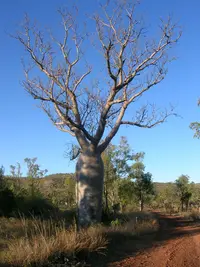
Adansonia gregorii, commonly called the boab, is a small to medium baobab tree native to the tropical savannas of northwestern Australia. It is a long-lived species with a swollen, bottle-shaped trunk that stores water and a broad, irregular crown.
In habitat, it grows in open woodland and rocky sites, tolerating strong sun, seasonal drought, and poor, sandy or stony soils. These adaptations make it relatively tough in cultivation but slow-growing and sensitive to prolonged cold and excess moisture.
For growers, understanding how to care for Boab starts with providing very free-draining soil, plenty of light, and a distinctly dry rest period after the growing season.

Care Difficulty
Moderate Care

Light Preference
Full Sun

Water Requirements
Low Water

Temperature Preference
Tropical / Frost Sensitive

Hardiness Zone
10–12

Soil Texture
Sandy, Loamy, Rocky

Soil pH
Slightly acidic (6.5–7.0), Neutral (7.0)

Soil Drainage
Well-drained

Fertilization
Minimal (feed rarely)
Scan your plant to receive care tips personalized for your specific plant
Available on iOS and Android
This Australian baobab prefers high light and warmth similar to its native savanna habitat.
This drought-adapted tree stores water in its swollen trunk and must dry between waterings.
This species thrives in hot, dry climates and struggles in cool, damp conditions.
Adansonia gregorii tolerates a wide humidity range and usually does not need special humidity control.
Use a very free-draining, mineral-based mix that mimics dry, sandy woodland soil.
This species can be grown in containers if the pot and medium prevent waterlogging and support a strong root system.
Adansonia gregorii grows well in poor soils and needs only light feeding in containers or very depleted ground.
Adansonia gregorii needs minimal pruning, mainly to maintain structure and remove damaged growth.
Container-grown Adansonia gregorii or young transplants respond best to infrequent but careful moves.
New Adansonia gregorii plants are usually raised from seed under warm, bright conditions.
Adansonia gregorii is not frost tolerant and needs protection in cooler climates.

Plant Health Check
Not sure what's wrong with your plant? Check your plant's health inside the app.
This boab is naturally restricted to the Kimberley region of northwestern Australia and nearby areas, where it dominates savanna landscapes on sandstone and lateritic soils, unlike African baobab species that occur across a much wider range.
Older trees often develop large, hollow trunks formed by natural decay of inner wood, which then serve as shelter or nesting sites for birds, bats, reptiles, and invertebrates in otherwise exposed savanna environments.
Its characteristic swollen, bottle-shaped trunk is a pachycaul stem that stores water, helping the tree survive long dry seasons typical of monsoonal northern Australia.

Some large Kimberley boabs have been used historically as temporary lockups or holding shelters by European colonists, because their naturally hollow trunks can be spacious enough to confine several people inside.
Growth is slow to moderate. Seedlings may add 10–30 cm per year in warm, dry climates, slowing as the trunk thickens. Container plants generally stay smaller due to restricted root space and cooler, shorter growing seasons.
Keep your plants happy and healthy with plant identification, disease detection, and easy care guidance.