Use sturdy supports
Install strong posts and horizontal wires or a metal fence before planting, then fan out and tie the long canes loosely with soft ties to keep the framework open and stable in wind and snow.

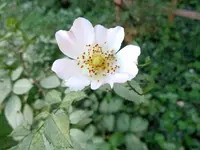
Rosa corymbifera, commonly called hairy dog-rose, is a hardy wild rose species often used as a vigorous rootstock and for natural hedging. It forms dense, arching shrubs with prickly stems, small pale pink flowers, and abundant red hips that attract birds.
This species is native to Europe and western Asia and is well adapted to cool and temperate climates. It tolerates poor soils and exposed sites, which makes it relatively easy to establish.
Gardeners who care for Hairy dog-rose value its resilience more than ornamental refinement, since the flowers are simple but reliable. It prefers sunny positions with moderately moist, well-drained soil and benefits from enough space to spread.

Care Difficulty
Moderate Care

Light Preference
Full Sun

Water Requirements
Moderate Water

Temperature Preference
Cold Hardy

Hardiness Zone
4–7

Soil Texture
Sandy, Loamy, Clay

Soil pH
Slightly acidic (6.5–7.0), Neutral (7.0)

Soil Drainage
Well-drained

Fertilization
Minimal (feed rarely)
Scan your plant to receive care tips personalized for your specific plant
Available on iOS and Android
Rosa corymbifera grows best in open, bright conditions with consistent daily sun exposure.
Rosa corymbifera prefers evenly moist, well-drained soil rather than frequent shallow watering.
This rose is a hardy outdoor shrub that tolerates a wide range of temperatures when established.
Rosa corymbifera handles a wide humidity range and rarely needs special adjustment outdoors.
This species prefers moderately fertile, well-structured mineral soil that drains freely yet holds some moisture.
This rose can be grown in containers, but large, stable pots are required for long-term success.
Rosa corymbifera generally needs modest feeding, especially when grown in lean or disturbed soils.
Pruning helps maintain Rosa corymbifera structure, health, and flowering in hedges or landscape plantings.
This species is usually grown in the ground, so focus on careful transplanting rather than frequent repotting.
Rosa corymbifera is commonly propagated for rootstock and hedging through cuttings, seed, and layering.
This shrub is cold hardy in most temperate climates and usually needs minimal winter care.

Plant Health Check
Not sure what's wrong with your plant? Check your plant's health inside the app.
This species is widely used by commercial nurseries as a vigorous, disease-tolerant rootstock for grafting many modern garden roses, especially in cooler and wetter parts of Europe.
Botanists consider it part of the Rosa canina complex, and many populations show hybrid characteristics with related dog-roses, which makes its identification and classification challenging in the wild.
Its abundant red hips are an important winter food source for birds such as thrushes, which disperse the seeds after passing them through their digestive system.

Under the cultivar name Rosa corymbifera 'Laxa', this species has become one of the standard understock choices in the global rose trade, shaping the growth habit and longevity of countless garden roses without being visible above ground.
This species spreads mainly by suckering and seeds, forming thickets over time if not managed. In larger spaces it works well, but in small gardens regular pruning and removal of unwanted shoots are important to limit spread.
Keep your plants happy and healthy with plant identification, disease detection, and easy care guidance.