Early canopy training
Install sturdy stakes and soft ties while the plant is young to guide a single straight leader and form a balanced canopy, which simplifies harvesting and structural pruning later.

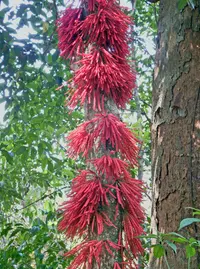
Koli Kukke, Baccaurea courtallensis, is a tropical evergreen tree from the Western Ghats of India. It is mainly grown for its small, tangy, edible fruits that hang in clusters along the branches and trunk. The tree has a dense crown and simple, glossy green leaves, giving it a neat, rounded appearance in suitable climates. It prefers warm, humid conditions, consistent moisture, and fertile, well-drained soil. In cultivation, it can be slow to establish and usually needs a reliably frost-free environment, which makes it less suitable for cooler regions. Gardeners who want to care for Koli Kukke should be prepared to provide shelter from cold and long-term space for its tree-sized growth.

Care Difficulty
Moderate Care

Light Preference
Partial Shade

Water Requirements
Regular Water

Temperature Preference
Tropical / Frost Sensitive

Hardiness Zone
11–12

Soil Texture
Loamy, Sandy, Organic-rich

Soil pH
Acidic (5.5–6.5), Slightly acidic (6.5–7.0)

Soil Drainage
Moist but well-drained

Fertilization
Minimal (feed rarely)
Scan your plant to receive care tips personalized for your specific plant
Available on iOS and Android
This tropical tree prefers bright, warm conditions with protection from harsh midday sun.
This species prefers consistently moist, well‑drained soil rather than alternating extremes of wet and dry.
This lowland tropical tree needs warm, frost‑free conditions year‑round for reliable growth and fruiting.
This species prefers consistently moist air and benefits from higher humidity when grown outside its native range.
This tree performs best in deep, fertile, well-aerated soil that stays evenly moist without waterlogging.
This species can be grown in containers when young or kept small, but it requires careful attention to root space and stability.
Baccaurea courtallensis benefits from light, balanced feeding when grown in managed gardens or containers, while wild trees usually cope with poor soils.
Baccaurea courtallensis needs only light structural pruning to stay healthy and accessible for observation or harvest.
This species is generally grown in the ground, so management focuses on careful transplanting of young trees rather than frequent repotting.
Propagation of Baccaurea courtallensis is typically done from seed and is considered slow, so it is not common in casual home collections.
This tropical tree has low frost tolerance and needs protection in regions with cool or freezing winters.

Plant Health Check
Not sure what's wrong with your plant? Check your plant's health inside the app.
This species occurs naturally only in the Western Ghats of India, where it grows in moist evergreen and semi-evergreen forests from low to mid elevations.
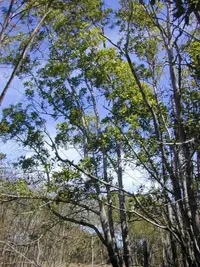
In mature forest it often occupies the subcanopy to lower canopy layers, contributing to multi-layered forest structure and providing shade and habitat for understory species.
The fleshy fruits are eaten by wildlife such as birds and mammals, which then disperse the seeds through their droppings, helping maintain natural regeneration in fragmented forests.

The species is considered an important component of relic evergreen forest patches in parts of the southern Western Ghats, and its presence is sometimes used by field botanists as an indicator of relatively undisturbed, old-growth forest conditions.
This species is an evergreen tree, keeping foliage year-round in suitable climates. Older leaves are shed gradually as new ones form, so the canopy usually stays dense and green without a pronounced leafless period.
Keep your plants happy and healthy with plant identification, disease detection, and easy care guidance.