glaucous dog rose Care (Rosa dumalis)

glaucous dog rose

About glaucous dog rose

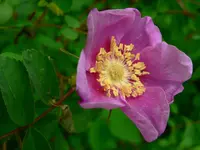
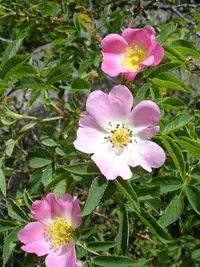
Glaucous dog rose, Rosa dumalis, is a hardy deciduous shrub rose known for its arching stems, pale bluish-green foliage, and pink single flowers. It typically forms a dense, thorny thicket that provides shelter and food for wildlife through its nectar-rich blooms and bright red hips.

This species is native to parts of Europe and western Asia, where it grows in hedgerows, woodland edges, and open scrub. It adapts well to temperate garden conditions and is generally easy to manage if given space to spread.

To care for glaucous dog rose, provide full sun or light shade, reasonably moist but well-drained soil, and avoid very humid or poorly ventilated spots.

Main Plant Requirements

Care Difficulty

Easy Care

Light Preference

Full Sun

Water Requirements

Moderate Water

Temperature Preference

Cold Hardy

Hardiness Zone

3–7

Soil Texture

Sandy, Loamy, Clay

Soil pH

Acidic (5.5–6.5), Slightly acidic (6.5–7.0)

Soil Drainage

Well-drained

Fertilization

Minimal (feed rarely)

Get Personalized Care Plan

Scan your plant to receive care tips personalized for your specific plant

Available on iOS and Android

How to Care for the glaucous dog rose

Rosa dumalis performs best in open, bright conditions that match its natural hedgerow habitat.

  • Provide 6–8 hours of direct sun daily; morning sun with light afternoon shade helps prevent leaf scorch in hotter summers.
  • The glaucous dog rose tolerates light partial shade (3–4 hours sun) but flowering and hip production decrease as shade increases.
  • In cooler or northern climates, full sun all day is suitable, but in very hot regions protect from intense sun between 1–4 p.m. using nearby shrubs or fences as light filters.

Rosa dumalis prefers evenly moist, well-drained soil rather than frequent shallow watering.

  • Before watering, check that the top 3–5 cm of soil has dried; deeper soil should still feel slightly damp, not dusty or soggy.
  • During active growth and flowering, water deeply so moisture reaches 20–30 cm, then allow the surface to dry; reduce watering in late fall and winter once growth slows.
  • Yellowing, soft leaves and persistent wet soil indicate overwatering, while drooping, crisp leaf edges and dry, shrinking soil point to underwatering; improve drainage with coarse sand or compost if water lingers.

This hardy rose tolerates a wide temperature range but grows and flowers best in moderate conditions.

  • Prime growing temperatures are around 60–75°F (16–24°C), supporting steady shoot growth and good flower bud development in spring and early summer.
  • Established plants withstand winter cold down to about 0°F (−18°C) when in the ground, though young plants benefit from mulch over the root zone during freezes.
  • In hot spells above 85–90°F (29–32°C), flowering may pause and leaves can scorch; provide a mulch layer and avoid pruning or transplanting during extreme heat to limit stress.

This rose tolerates a wide humidity range and usually does not need special air-moisture management outdoors.

Rosa dumalis grows best in moderately fertile, well-structured mineral soil with reliable drainage.

  • Use a loamy or sandy-loam soil with 20–30% compost mixed through the top 20–30 cm.
  • Aim for slightly acidic to neutral pH, around 6.0–7.0, and avoid strongly alkaline or saline conditions.
  • Improve drainage and aeration by incorporating coarse sand or fine gravel in heavy or compacted ground.
  • Avoid waterlogged, clay-heavy sites where water lingers after rain, as roots are prone to rot in stagnant conditions.

This species can be grown in containers, but long-term performance is better in the ground.

  • Choose a deep, heavy pot at least 40–50 cm wide to provide root volume and prevent the shrub from tipping in wind.
  • Use a slightly raised pot base or pot feet so excess water can drain freely and not pool under the container.
  • Select a thick-walled terracotta or similarly porous material to reduce heat buildup around the root zone in full sun.

Rosa dumalis usually grows well in average garden soil but benefits from moderate feeding in poor or very light soils.

  • Apply a balanced slow-release fertilizer (around 10-10-10) once in early spring as new growth starts.
  • Supplement with a light layer of compost around the root zone in spring to improve soil structure and nutrients.
  • Use fertilizer at 1/2 label strength if soil is already reasonably fertile to avoid lush, weak growth.
  • Stop feeding glaucous dog rose by late summer and do not fertilize in winter to allow natural dormancy.

Pruning supports healthy structure and flowering in Rosa dumalis without requiring intensive shaping.

  • Carry out main pruning in late winter or very early spring before buds break.
  • Remove dead, diseased, and crossing stems first, cutting back to healthy outward-facing buds.
  • Thin the oldest, most woody canes at the base to open the center and improve air flow and flowering.
  • Use clean, sharp bypass pruners and make smooth cuts at a slight angle just above buds or side branches.

This species is usually grown in the ground, so focus on thoughtful transplanting rather than frequent repotting.

  • Transplant young plants in early spring or early fall when temperatures are mild and soil is workable.
  • Look for signs such as roots circling the container, water running off quickly, or stalled growth before moving a plant.
  • Replant Rosa dumalis at the same soil depth in a hole 2× as wide as the root ball, backfilling with native soil.
  • Water deeply after planting, then keep soil evenly moist for several weeks to limit root stress and support establishment.

Rosa dumalis can be propagated by hardwood cuttings, seeds, or simple layering under suitable conditions.

  • Take hardwood cuttings in late fall to winter, 15–20 cm long, and insert into free-draining sandy mix kept evenly moist.
  • Sow stratified seeds in fall or after 3–4 months of cold, moist treatment to break dormancy and improve germination.
  • Use simple layering in spring by bending a flexible stem to the ground, wounding lightly, and pegging it under soil.
  • Provide bright, indirect light, cool temperatures, and stable moisture for best rooting and seedling development.

This rose is naturally cold hardy in many temperate climates and usually needs only minimal winter care.

  • Tolerates typical frosts in USDA zones roughly 4–7 when planted in the ground and well established.
  • Apply a 5–8 cm mulch layer around the root zone in late fall, keeping it slightly away from the main stems.
  • In very exposed or colder sites, hill extra soil or compost around the base to protect the crown.
  • Move container-grown plants into a sheltered, unheated area where the root ball will not freeze solid.

Care Tips

Wildlife-friendly spacing

Plant shrubs with 1.5–2 m between centers to allow good air movement while still creating a dense, bird-friendly thicket that supports healthier plants and better hip production.

Support for arching canes

Install sturdy horizontal wires or a simple post-and-rail support and tie in long, arching stems, which reduces wind damage and creates more evenly lit flowering wood along the framework.

Renewal by stooling

Every 3–4 years, cut a few of the oldest stems back to 5–10 cm above ground in late winter to stimulate strong new shoots and maintain a vigorous, flower- and hip-heavy shrub.

Hip production management

If hips are desired, avoid deadheading after the main summer bloom and thin out crowded inner stems, which improves light and pollinator access and results in larger, better-colored fruits when growing glaucous dog rose.

Thorn-safe maintenance

Use thick leather gloves and long sleeves, and always prune or harvest hips from the outer canopy first, working inward, to prevent cane breakage and reduce the risk of injury when handling mature, thorny plants.

Common Pests and Diseases

Rose rust

This disease causes bright orange to rust-brown pustules on the undersides of leaves, often with yellowing on the upper surfaces. Symptoms include premature leaf drop and weakened, sparse shoots if infections repeat over years.

Solution

Remove and destroy affected leaves as soon as pustules appear and collect all fallen leaves at the end of the season to reduce spores. Improve air circulation, avoid wetting foliage, and where rust is persistent, use a sulfur or myclobutanil-based rose fungicide according to label directions as part of Rosa dumalis care instructions.

Powdery mildew

This disease appears as white to gray powdery patches on young leaves, buds, and stems, often causing distorted growth and reduced flowering. Symptoms include leaves curling or turning purplish-red before they dry and drop.

Solution

Prune out and discard the most affected shoots, then thin dense stems to increase airflow and light penetration. Water at the base in the morning, avoid excess nitrogen fertilizer, and apply a registered rose fungicide such as potassium bicarbonate or a horticultural oil when new growth emerges and conditions are dry but humid.

Black spot

This disease produces round black spots with fringed edges on leaves, followed by yellowing and early defoliation. Symptoms include a thinned canopy and reduced vigor, especially in seasons with repeated rain or overhead watering.

Solution

Collect and destroy all spotted or fallen leaves and prune out badly affected stems in late winter to remove overwintering inoculum. Maintain good spacing and bottom watering, then apply a preventive fungicide program based on chlorothalonil, myclobutanil, or similar rose-labeled products starting in early spring when new leaves develop.

Rose aphids

These insects cluster on tender shoot tips, buds, and the undersides of leaves, sucking sap and excreting sticky honeydew that can attract sooty mold. This pest can cause distorted new growth and reduced flower quality.

Solution

Dislodge aphids with a strong stream of water from a hose, then encourage lady beetles and lacewings by limiting broad-spectrum insecticides. For persistent colonies, use insecticidal soap or a light horticultural oil sprayed thoroughly on infested shoots, repeating as needed according to label directions.

Rose sawfly larvae

These pests, often called rose slugs, skeletonize leaves by eating the soft tissue between veins, leaving a windowpane or lacy appearance. This pest can cause significant defoliation on hedgerow roses such as glaucous dog rose when populations are high.

Solution

Inspect leaves regularly in spring and early summer, then handpick or wash off larvae where possible. For heavier infestations, treat foliage with a contact product labeled for sawflies, such as spinosad or pyrethrin, applied in the evening to minimize impact on beneficial insects.

Interesting Facts

Glaucous blue hips

Mature hips of this species often develop a characteristic bluish or glaucous waxy coating, which helps distinguish it from many other wild roses with bright red, glossy fruits.

Calcareous soil specialist

Rosa dumalis shows a strong preference for base‑rich, often calcareous soils and is commonly found on chalk grasslands, limestone slopes, and neutral to slightly alkaline woodland edges across its native range.

Hybridization with dog rose

This species frequently hybridizes with the common dog rose Rosa canina in the wild, which makes field identification challenging and contributes to complex variation in prickle density, leaflet shape, and hip form.

Botan icon

Did you know?

In northern and central Europe, Rosa dumalis is considered an important component of semi‑natural hedgerows and scrub communities, where its dense, thorny growth provides nesting structure and seasonal food resources for a wide range of songbirds and small mammals.

FAQs about glaucous dog rose

Poor flowering usually comes from inadequate light, overfertilizing with high-nitrogen products, or pruning at the wrong time, which removes flower buds. Aging, dense stems also reduce blooms; periodic renewal pruning helps restore flowering performance.

Grow Healthy Plants with Botan Care

Keep your plants happy and healthy with plant identification, disease detection, and easy care guidance.

Botan plant care app — identify plants on mobile

Explore More Plants