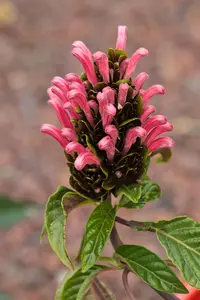
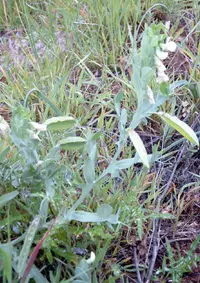
Ancistrorhynchus metteniae Care

Ancistrorhynchus metteniae

About Ancistrorhynchus metteniae

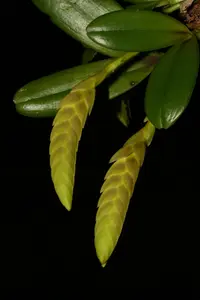
Ancistrorhynchus metteniae is a small epiphytic orchid, usually found growing on tree trunks and branches in humid lowland forests of tropical Africa. It forms compact clumps with narrow leaves and short, wiry roots that cling to bark rather than soil.

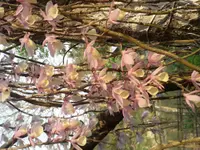
The flowers are typically small but produced in short clusters, giving the plant a delicate, understated look suited to specialist orchid collections. In cultivation it can be moderately challenging, mainly due to its need for stable warmth, high air humidity, and good air movement. Understanding how to care for Ancistrorhynchus metteniae starts with mimicking its forest habitat, using soft, filtered light and an airy, moisture-retentive orchid medium or mounted setup.

Main Plant Requirements

Care Difficulty

Hard Care

Light Preference

Partial Shade

Water Requirements

Keep Soil Moist

Temperature Preference

Tropical / Frost Sensitive

Hardiness Zone

12–13

Soil Texture

Loamy, Peaty, Organic-rich

Soil pH

Acidic (5.5–6.5)

Soil Drainage

Moist but well-drained

Fertilization

Light (every 4–6 weeks)

Get Personalized Care Plan

Scan your plant to receive care tips personalized for your specific plant

Available on iOS and Android

How to Care for the Ancistrorhynchus metteniae

This epiphytic orchid prefers bright, filtered conditions that mimic dappled forest light.

  • Provide 6–8 hours of bright, indirect light each day, such as under 30–50% shade cloth or beneath a high tree canopy.
  • Allow brief early-morning sun but avoid harsh midday and afternoon sun, which can scorch leaves and cause pale, yellowed patches.
  • In darker seasons or shaded sites, increase light by moving the plant closer to bright shade, watching that leaves stay firm, green, and not elongated.

This species prefers consistent moisture around its roots without remaining waterlogged.

  • Water when the outer roots or medium feel just starting to dry, avoiding a fully dry or constantly soggy substrate.
  • In warm growing periods, water more often, possibly several times per week, then reduce frequency in cooler months while still preventing complete drying.
  • Watch for overwatering signs such as blackened, mushy roots and leaf yellowing, and underwatering signs such as wrinkled pseudobulbs and dull, floppy leaves.

This orchid favors warm, stable conditions similar to a lowland tropical forest.

  • Aim for 70–80°F (21–27°C) by day and 60–68°F (16–20°C) at night for steady growth and flowering.
  • Protect the plant from temperatures below 50°F (10°C), as chilling can damage roots and leaves; it does not tolerate frost at all.
  • During hot spells above 86°F (30°C), increase shade and airflow and avoid dry air, since heat stress combined with low humidity can quickly dehydrate tissues and complicate Ancistrorhynchus metteniae care.

This orchid prefers consistently high humidity to mimic its native forest understory conditions.

  • Aim for 60–80% humidity, as sustained levels below 50% often slow growth and reduce flowering.
  • Dry indoor air causes leaf tip browning, accordion-like leaf pleats, and stalled new roots as signs of humidity stress.
  • Use a humidity tray, nearby cool-mist humidifier, and grouping of plants to raise local humidity around Ancistrorhynchus metteniae.

Ancistrorhynchus metteniae grows best in a very airy, fast-draining epiphytic mix rather than standard potting soil.

  • Use a medium-grade orchid bark base with 10–20% sphagnum moss and some perlite to hold light moisture while keeping many air gaps.
  • Ensure the mix drains completely within seconds after watering; water should not stand around the roots or collect in saucers.
  • Keep pH slightly acidic, roughly 5.5–6.5, which suits orchid bark and supports nutrient uptake in this species.
  • Avoid dense, peat-heavy or garden soil mixes that compact, reduce aeration, and encourage root rot in this orchid.

This species is suitable for container growing when mounted-style or basket-style setups are used.

  • Choose slatted wooden baskets or mesh orchid pots that let roots grip surfaces and dry quickly between waterings.
  • Line open baskets lightly with coarse bark or chunky charcoal so media stays in place without smothering aerial roots.
  • Secure the plant so the rhizome is stable; movement in a loose container often prevents new roots from attaching properly.

This species usually grows in low-nutrient forest habitats and needs only light feeding in cultivation.

  • Use a diluted balanced NPK orchid fertilizer at 1/4 strength during the warm growing season.
  • Feed every 4–6 weeks when new roots and leaves are forming, applying only to moist substrate.
  • Avoid slow-release granules; use liquid feeds suited to epiphytic orchids to prevent salt buildup.
  • Stop feeding in winter or cool, low‑light periods, resuming only when active growth restarts.

Ancistrorhynchus metteniae needs minimal pruning, focused mainly on hygiene and maintaining plant health.

  • Best time to prune is late winter to early spring, before strong new growth begins.
  • Remove dead, yellowed, or rotting leaves and spent flower spikes with clean, sharp scissors.
  • Cut back only to healthy green tissue to limit stress and reduce entry points for disease.
  • Avoid heavy thinning that removes many roots or pseudobulb bases, which can reduce flowering.

This epiphytic orchid is usually mounted or grown in very loose media, so disturbance should be infrequent.

  • Repot or remount every 2–3 years, or when roots circle tightly, medium breaks down, or growth slows.
  • Choose late spring, just as new roots start, to help the plant establish quickly after disturbance.
  • Use a small pot or mount with coarse bark and sphagnum, spreading roots gently without forcing them.
  • Water thoroughly after repotting, then keep slightly drier for 7–10 days to limit rot while wounds heal.

Propagation of this orchid is possible but slower and best attempted on well-established plants.

  • Division is the most practical method, done in late spring when new roots emerge.
  • Separate clumps so each division has several healthy growths and a strong root system.
  • Plant divisions on fresh bark or mounts, securing rhizomes firmly so they do not wobble.
  • Provide high humidity, gentle air movement, and bright filtered light to support new root growth.

This tropical orchid is not frost hardy and needs warm, stable conditions in winter.

  • Maintain indoor temperatures near 60–70°F and avoid exposure below 55°F.
  • Grow Ancistrorhynchus metteniae in bright, filtered light away from cold drafts and window glass.
  • Let the medium dry slightly more between waterings in winter, but do not allow complete desiccation.
  • Use a light, dilute fertilizer at most once during winter, or pause feeding entirely.

Care Tips

Mounted culture choice

Mount plants on cork or hardwood bark with a thin layer of long-fiber sphagnum around the roots, which lets them dry quickly while still staying evenly moist in a warm, humid orchid setup.

Fine-mist hydration

Use a fine-mist sprayer aimed at the root zone and mount, not the flowers, 1–2 times daily in warm weather to keep the plant hydrated without leaving heavy water droplets that encourage rot.

Airflow without draft

Position a small fan to create gentle, constant air movement across the mount so roots dry within a few hours after watering, but avoid direct strong drafts that can desiccate fine roots.

Shade-layer placement

Hang the mount below or behind larger orchids or ferns to create a dappled, forest-floor light pattern similar to its natural habitat when growing Ancistrorhynchus metteniae in a collection.

Quarantine and cleaning

Quarantine new orchids for 3–4 weeks and periodically inspect leaf undersides and root bases with a hand lens, wiping mounts and nearby surfaces with 70% isopropyl alcohol to prevent scale and mite infestations from spreading.

Common Pests and Diseases

Scale insects

This pest is occasionally found on the undersides of leaves and sheaths of Ancistrorhynchus metteniae in warm, shaded orchid houses. Symptoms include small brown or tan bumps, sticky honeydew, and sooty mold growth on leaves and pseudobulbs.

Solution

Remove heavily infested leaves or sheaths, then wipe remaining surfaces with cotton pads dipped in diluted alcohol or insecticidal soap, taking care not to soak the roots. Increase air movement, avoid overfertilizing with nitrogen, and repeat targeted cleaning every 7–10 days until new growth develops clean and scale-free.

Mealybugs

These insects hide in tight leaf axils and around root bases, where they feed on sap and weaken the plant. Symptoms include white cottony masses, distorted new growth, and slow decline despite adequate humidity and shade.

Solution

Unpot the plant if necessary and manually remove visible mealybugs with cotton swabs dipped in alcohol, paying special attention to leaf bases and root junctions. Rinse the plant with tepid water, allow it to dry in good airflow, then use a labeled systemic insect control suitable for orchids if the infestation returns, keeping the plant under observation for several weeks.

Spider mites

This pest can appear when Ancistrorhynchus metteniae is kept too dry or under warm, stagnant conditions. Symptoms include fine stippling on leaves, a dry, rough texture, and very fine webbing on the undersides of leaves.

Solution

Increase humidity to around 60–80% while maintaining strong but gentle air movement, and thoroughly rinse both sides of the leaves with lukewarm water to dislodge mites. Follow with several applications of miticidal soap or a horticultural oil labeled for orchids at 5–7 day intervals, making sure to coat the leaf undersides each time.

Leaf spot fungus

This disease shows as small, water-soaked or translucent patches on the relatively thin leaves, which then turn brown or black with a defined margin. Symptoms include slow expansion of spots under cool, damp, low-airflow conditions typical of poorly ventilated shaded orchid benches.

Solution

Remove and discard affected leaves or cut out localized spots with a sterile blade, then keep the plant drier on the foliage by watering early in the day so leaves dry quickly. Improve airflow around the plant, avoid overhead misting that keeps leaves wet, and, if spread continues, use a copper-free fungicide labeled for orchids at the recommended interval.

Bacterial soft rot

This disease causes rapidly spreading, soft, water-soaked lesions at leaf bases or on young shoots, often with a foul odor in the humid, shaded conditions preferred by this species. Symptoms include collapse of affected tissue and sudden wilting of the entire plant section.

Solution

Isolate the plant immediately, cut away all affected tissue well into healthy, firm tissue using sterilized tools, and discard contaminated material. Allow cut surfaces to dry with strong airflow, reduce overhead wetting, keep water off the leaf bases, and consider a targeted antibacterial or bactericide for orchids if other plants in the same environment show similar symptoms; this approach is central to effective Ancistrorhynchus metteniae care instructions.

Interesting Facts

West African forest specialist

This orchid is known from lowland and submontane rainforests of West and Central Africa, including countries such as Nigeria, Cameroon, and Gabon, where it typically grows as an epiphyte on tree trunks and branches in shaded, humid habitats.

Tiny clustered flowers

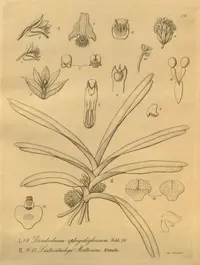
The plant produces small, pale yellow to greenish flowers carried in short, clustered inflorescences along the stem, a feature that helps separate it from some closely related Ancistrorhynchus species with more elongated flower spikes.

Distinctive lip and spur

Its flowers have a characteristic three-lobed lip and a short nectar-containing spur, floral structures that help taxonomists recognize the species and likely guide specific pollinators to the reproductive organs.

FAQs about Ancistrorhynchus metteniae

This epiphytic orchid usually blooms in the warmer, wetter part of the year, often late spring to summer, depending on climate. Good humidity, stable warmth, and consistent moisture encourage reliable flowering from mature, well‑established plants.

Grow Healthy Plants with Botan Care

Keep your plants happy and healthy with plant identification, disease detection, and easy care guidance.

Botan plant care app — identify plants on mobile

Explore More Plants