firebush Care (Hamelia patens)

Also known as: Firebush
firebush

About firebush

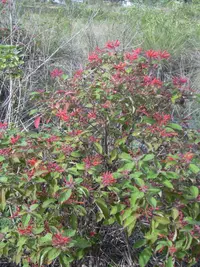
Firebush (Hamelia patens) is a fast-growing tropical shrub known for its bright red-orange tubular flowers and dense, leafy branches. It often forms a rounded, bushy shape in gardens or landscapes.

This species is native to Florida, the Caribbean, and Central and South America, where it grows in warm, sunny habitats. Its nectar-rich flowers are highly attractive to hummingbirds and butterflies.

Firebush is generally easy to grow, adapting well to heat, pruning, and a range of soil types if drainage is good. In mild climates, it can be semi-evergreen, while in cooler regions it may die back and resprout. A basic understanding of how to care for firebush helps maintain compact growth and continuous flowering.

Main Plant Requirements

Care Difficulty

Easy Care

Light Preference

Full Sun

Water Requirements

Moderate Water

Temperature Preference

Tropical / Frost Sensitive

Hardiness Zone

9–11

Soil Texture

Sandy, Loamy, Organic-rich

Soil pH

Acidic (5.5–6.5), Slightly acidic (6.5–7.0)

Soil Drainage

Well-drained

Fertilization

Minimal (feed rarely)

Get Personalized Care Plan

Scan your plant to receive care tips personalized for your specific plant

Available on iOS and Android

How to Care for the firebush

This shrub thrives in strong light but benefits from some protection during the hottest hours.

  • Provide 6–8 hours of direct sun daily; morning and late-afternoon sun are ideal for abundant blooms on firebush.
  • Allow light afternoon shade in hot climates to reduce leaf scorch, especially on young or newly planted shrubs.
  • In cooler seasons or coastal areas, place Hamelia patens in as much full sun as possible to prevent lanky, low-flowering growth.

This species prefers consistent moisture with brief drying periods between waterings.

  • Outdoors in the ground, water when the top 3–5 cm of soil feel dry, then soak deeply so moisture reaches the full root zone.
  • Use well-drained soil; soggy conditions cause yellowing leaves, leaf drop, and possible root rot, especially on compacted or clay sites.
  • In hot, dry weather increase frequency; in cool or rainy periods reduce watering and watch for wilting, crisp leaf edges, or drooping stems as signs of underwatering.

This tropical shrub grows best in warm, frost-free conditions.

  • Aim for 70–90°F (21–32°C) for active growth and flowering; short spikes to 95°F (35°C) are usually tolerated if soil moisture is adequate.
  • Hamelia patens is damaged around 30°F (-1°C) and top growth often dies back below 28°F (-2°C), though roots may resprout in mild regions.
  • In USDA zones 9–11 it can stay outdoors year-round; in cooler climates protect from frost, cold winds, and rapid temperature swings.

This shrub handles a wide humidity range but grows best with moderately moist air.

  • Aim for 40–60% humidity, as extremely dry air can slow growth and reduce flowering in firebush.
  • Watch for crispy leaf edges, curling, and leaf drop as signs of low-humidity stress, especially during heated indoor winters.
  • Increase humidity by grouping plants, placing containers near but not in water features, or using a pebble tray under potted specimens.

Hamelia patens prefers loose, well-drained, slightly acidic to neutral soil that does not stay waterlogged.

  • Use a loamy or sandy soil structure with 30–40% organic matter such as compost to support steady growth and flowering.
  • Ensure rapid drainage by blending native soil with sharp sand and a mineral component such as perlite to prevent root rot.
  • Target pH around 6.0–7.0; amend alkaline soil with composted pine bark or leaf mold to gently acidify over time.
  • Avoid heavy, compacted clay or constantly wet spots; improve aeration by raising beds or planting on a slight mound if drainage is marginal.

This species adapts well to container growing when moisture control and stability are managed carefully.

  • Choose a broad, heavy container that resists tipping as the shrub becomes bushy and top-heavy in windy conditions.
  • Select a pot depth that allows a wide, fibrous root system to spread rather than a tall, narrow pot that concentrates water at the bottom.
  • Use containers with multiple drainage holes so excess water exits quickly and the lower root zone does not remain saturated after deep watering.

Nutrient inputs support dense growth and flowering in firebush, especially in containers or poor soils.

  • Use a balanced slow-release fertilizer (for example 10-10-10) or compost at the start of spring growth.
  • Feed in-ground plants 1–2 times during the warm growing season; containers may need 2–3 light applications.
  • Apply at half the label rate for young or stressed plants to reduce root and leaf burn risk.
  • Stop feeding 6–8 weeks before expected frost so new growth can harden before winter.

Thoughtful pruning keeps Hamelia patens compact, floriferous, and manageable in garden beds or hedges.

  • Do main shaping and size reduction in late winter or very early spring before strong new growth.
  • Remove dead, diseased, storm-damaged, or crossing stems first, cutting back to healthy wood.
  • Shorten overly long or lanky shoots to encourage bushier branching and more flowering tips.
  • Use clean, sharp bypass pruners and make angled cuts just above outward-facing buds.

This shrub is most often grown in the ground, but container or young Hamelia patens plants may need timely transplanting.

  • Transplant or up-pot in spring after frost, when active growth helps roots reestablish quickly.
  • Look for circling roots at drainage holes, soil drying very fast, or slowed growth as signs to shift up 1 pot size.
  • When transplanting, keep the original soil ball intact, loosen only lightly, and set at the same soil depth.
  • Water thoroughly after planting, then shade from harsh sun and keep evenly moist for 1–2 weeks to limit transplant shock.

New Hamelia patens plants are commonly produced from both semi-hardwood cuttings and seeds.

  • Take 8–12 cm semi-hardwood cuttings in late spring to summer, removing lower leaves and using rooting hormone.
  • Place cuttings in a well-drained, slightly moist medium under bright, indirect light and high humidity until rooted.
  • Sow ripe seeds in warm (70–80°F), free-draining mix; lightly cover and keep evenly moist, not waterlogged.
  • Transplant seedlings or rooted cuttings gently once roots fill the starter cell or pot, avoiding root disturbance.

Cold sensitivity means this species needs planning in regions with freezing winters.

  • In USDA zones 9–11, established plants usually survive light frosts, though top growth may die back.
  • Apply 5–8 cm of organic mulch around the root zone in late fall, keeping it slightly away from stems.
  • In colder zones or containers, move plants indoors to a bright, cool room before night temperatures drop below 40°F.

Care Tips

Encourage Bushy Shape

Pinch or lightly tip-prune new stems when they reach 15–20 cm to encourage dense branching and more flower-bearing shoots instead of tall, sparse growth.

Manage Root Spread

In the ground, edge a shallow spade trench around the plant’s drip line once a year to cut wandering roots and limit spread, especially in warm climates where it can become expansive.

Seasonal Renewal Cut

Every 2–3 years, remove 1–3 of the oldest, thickest stems at the base in late winter to stimulate vigorous new canes and maintain a balanced framework.

Targeted Mulch Strategy

Apply a 5–8 cm ring of organic mulch starting a few cm away from the stems and extending just beyond the canopy to keep surface roots cool, reduce weed competition, and stabilize moisture without inviting stem rot.

Support Pollinator Activity

When growing firebush near patios or paths, group 2–3 plants within 60–100 cm of each other to create a dense nectar zone that attracts hummingbirds and beneficial insects, improving pollination and seed set.

Common Pests and Diseases

Aphids

These insects feed on new growth and flower buds, causing distorted leaves, sticky honeydew, and sometimes sooty mold on firebush. This pest is most common on soft, tender shoots during warm, active growth periods.

Solution

Prune off heavily infested shoot tips, then wash remaining stems and leaves with a strong but gentle stream of water every few days. For persistent colonies, apply a ready-to-use insecticidal soap or neem oil, coating the undersides of leaves and repeating as needed according to label directions.

Spider mites

These pests pierce leaf cells and suck out contents, leading to stippled, dull foliage, fine webbing, and leaf drop, especially in hot, dry weather. This pest becomes more severe on plants grown in very low humidity or under drought stress.

Solution

Increase humidity around the plant and rinse foliage thoroughly, focusing on the undersides of leaves, to physically remove mites. If populations remain, use horticultural oil or insecticidal soap, applied in the evening to well-hydrated plants, and repeat at 5–7 day intervals until new growth appears clean; this is a core part of Hamelia patens plant care in dry climates.

Whiteflies

These insects congregate on the undersides of leaves and fly up in clouds when disturbed, leaving honeydew and promoting sooty mold on foliage. This pest weakens plants over time by removing sap, reducing flowering and vigor.

Solution

Vacuum or shake adults off plants in the early morning, then target nymphs by spraying the leaf undersides with insecticidal soap or neem oil. Yellow sticky traps help monitor and reduce adult numbers, while removing heavily infested leaves limits population buildup.

Leaf spot

This disease causes small brown, tan, or purple spots on leaves that may expand, merge, and lead to premature leaf drop in wet or humid conditions. Symptoms include heavier damage on lower, densely shaded foliage where moisture lingers longest.

Solution

Remove and discard spotted, fallen leaves and thin nearby vegetation to improve airflow and faster drying. Water at soil level instead of overhead and, in persistent or severe cases, use a copper-based or other broad-spectrum fungicide labeled for ornamental shrubs, applied before extended rainy periods.

Powdery mildew

This disease produces white, powdery fungal growth on the surfaces of leaves and young stems, sometimes causing leaf curling and reduced flowering. Symptoms include more severe infection in shaded locations with poor air circulation, especially during warm days and cool nights.

Solution

Prune to open the plant canopy, avoid crowding, and remove badly affected leaves to reduce spore load. If conditions favor ongoing infection, apply a labeled fungicide such as potassium bicarbonate, sulfur, or horticultural oil, ensuring thorough leaf coverage and repeating at the interval specified on the product label.

Interesting Facts

Year‑round nectar source

In frost‑free climates, this species can flower almost continuously, providing a reliable nectar source for hummingbirds and butterflies when many other shrubs are not in bloom.

Heat and drought adapted

The small, slightly hairy leaves reduce water loss, and the plant maintains photosynthesis and flowering under high heat and seasonal drought in its native tropical and subtropical range.

Bird‑dispersed berries

Its small black berries are eaten by many bird species, which then disperse the seeds over distance, helping the shrub colonize open, disturbed, or edge habitats.

Botan icon

Did you know?

In parts of Florida and the Caribbean, this shrub is used intentionally in restoration and wildlife plantings because it can rapidly establish in poor, rocky, or sandy soils while significantly increasing local use of the area by hummingbirds and small frugivorous birds.

FAQs about firebush

Poor flowering usually comes from insufficient light, heavy pruning at the wrong time, or excess nitrogen fertilizer. Allow older wood to remain, avoid frequent shearing, and use a balanced or low-nitrogen fertilizer to support bud formation.

Grow Healthy Plants with Botan Care

Keep your plants happy and healthy with plant identification, disease detection, and easy care guidance.

Botan plant care app — identify plants on mobile

Explore More Plants