Wind-firm training
In the first 2–3 years, lightly prune only the tips of competing leaders and leave a single strong central stem to form a wind-firm framework that resists storm damage later.

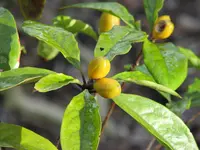
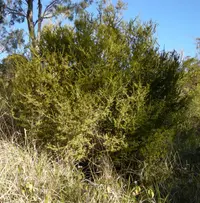
Rough-fruited pittosporum (Pittosporum revolutum) is an evergreen shrub or small tree with dense, glossy foliage and clusters of fragrant yellow flowers. It often forms a rounded, bushy shape that suits hedges, screens, or informal shrub borders.
This species is native to eastern Australia, where it grows in open forests and woodland edges. It is generally hardy and adaptable, which makes it easier to care for Rough-fruited Pittosporum in mild climates.
It tolerates a range of soils as long as drainage is good and usually prefers moderate moisture. The plant performs best in full sun to light shade, with some protection from harsh, drying winds.

Care Difficulty
Easy Care

Light Preference
Full Sun

Water Requirements
Moderate Water

Temperature Preference
Warm Climate

Hardiness Zone
8–11

Soil Texture
Sandy, Loamy, Organic-rich

Soil pH
Acidic (5.5–6.5), Slightly acidic (6.5–7.0)

Soil Drainage
Well-drained

Fertilization
Minimal (feed rarely)
Scan your plant to receive care tips personalized for your specific plant
Available on iOS and Android
This shrub prefers bright outdoor light with some protection from harsh midday sun.
This species prefers evenly moist but not saturated soil once established.
This shrub prefers mild, temperate conditions and tolerates only light frost.
This shrub handles a wide humidity range and rarely needs special humidity management indoors or outdoors.
Pittosporum revolutum prefers freely draining, moderately fertile soil that does not stay wet after watering or rain.
This species adapts well to container growing for patios, courtyards, or small gardens.
This shrub grows steadily with modest feeding, so focus on light, balanced nutrition for Rough-fruited Pittosporum in containers or poor soils.
Pruning Pittosporum revolutum is mainly used to maintain a compact, healthy shrub and remove problem growth.
This species is most often grown in the ground, so focus on careful transplanting or occasional pot up-sizing for container plants.
New plants of Pittosporum revolutum are commonly raised from semi-hardwood cuttings or seeds under controlled conditions.
In mild climates this shrub is fairly cold tolerant, but young or container-grown plants benefit from some winter care.

Plant Health Check
Not sure what's wrong with your plant? Check your plant's health inside the app.
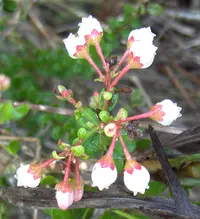
This species produces cream to yellow, strongly scented flowers that open mainly in the evening, attracting night-active moths and other pollinators in its native Australian habitats.
Its woody capsules split to reveal bright orange, very sticky seeds that adhere to birds, helping the plant disperse across the landscape without relying only on wind or gravity.
In eastern Australia it often grows as an understorey shrub in open forests and woodlands, tolerating partial shade while still flowering and fruiting reliably in those filtered light conditions.

The species is naturally associated with koala habitat in parts of eastern Australia, where it forms part of the shrub layer beneath eucalyptus trees that support koala populations, contributing to the structural diversity of these ecosystems.
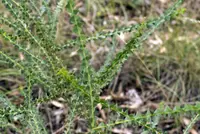
This species is evergreen, keeping its foliage year-round in suitable climates. Leaves are typically narrow, leathery, and slightly rough, providing continuous structure, screening, and habitat value even when many surrounding shrubs have dropped their leaves.
Keep your plants happy and healthy with plant identification, disease detection, and easy care guidance.