Wind-hardening young plants
Expose young plants to increasing levels of wind over 2–3 weeks before planting in a permanently exposed site, which encourages sturdier stems and reduces breakage once the canopy becomes top-heavy in flower.

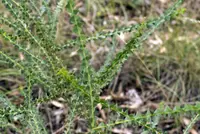
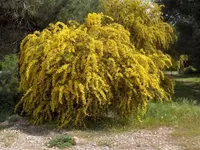
Ovens wattle (Acacia pravissima) is a small to medium evergreen tree or large shrub known for its dense, triangular foliage and profuse yellow spring flowers. It forms a rounded, bushy crown that can be used as a feature plant, screen, or informal hedge in mild climates.
This species is native to southeastern Australia, especially Victoria and New South Wales, where it grows on well-drained hillsides and open woodland edges. Its tolerance of light frost, poor soils, and short dry periods makes it relatively easy to establish once settled.
Gardeners who care for Ovens wattle usually provide full sun, good drainage, and protection from extreme cold or prolonged waterlogging to keep it healthy and long-lived.

Care Difficulty
Moderate Care

Light Preference
Full Sun

Water Requirements
Low Water

Temperature Preference
Warm Climate

Hardiness Zone
8–10

Soil Texture
Sandy, Loamy, Rocky

Soil pH
Acidic (5.5–6.5), Slightly acidic (6.5–7.0)

Soil Drainage
Well-drained

Fertilization
Minimal (feed rarely)
Scan your plant to receive care tips personalized for your specific plant
Available on iOS and Android
This Australian shrub thrives in full sun but accepts light shade in hotter regions.
This species prefers deep, infrequent watering once established, with time to dry between soakings.
This wattle tolerates a range of outdoor temperatures but performs best in mild, low-frost climates.
This species handles typical indoor humidity well and rarely needs special humidity management.
Acacia pravissima prefers lean, fast-draining soil that mimics its naturally sandy, low-fertility habitat.
This species can be grown in containers if the pot and substrate are chosen to support its fast, woody root system.
This Australian wattle grows well in lean soil but benefits from light, targeted feeding in containers or very poor ground.
Thoughtful pruning keeps Acacia pravissima compact, safe, and flowering well.
This species is usually grown in the ground, so focus on careful transplanting rather than frequent repotting.
New plants are most commonly raised from seed, with cuttings used less often for this species.
This wattle has moderate frost tolerance but benefits from some winter protection in colder regions.

Plant Health Check
Not sure what's wrong with your plant? Check your plant's health inside the app.
Instead of true leaves, this species has small triangular phyllodes (leaf-like structures) set along sharply zigzagging stems, giving the plant a characteristic layered, textural silhouette unlike many other wattles.
In its native southeastern Australia, this species flowers in late winter to early spring, producing dense masses of small, bright yellow, globular flower heads when many other plants are still dormant.
Compared with many Australian acacias, this species shows relatively good frost tolerance and can survive short drops below freezing, which has helped it become a popular ornamental shrub in mild temperate regions.

In some parts of southern Australia and overseas, this species has naturalized outside its original range and can form dense thickets, which has led to local monitoring and, in a few regions, classification as a potential environmental weed due to its ability to outcompete native understory plants.
Lack of flowers often relates to insufficient light, heavy pruning at the wrong time, excessive nitrogen fertilizer, or drought stress. Allow full sun, avoid cutting young flower wood, and keep soil evenly moist but free-draining.
Keep your plants happy and healthy with plant identification, disease detection, and easy care guidance.