


Timing for control
Mow or cut plants just as the first seed heads emerge to greatly reduce reseeding, since most seeds mature within days once the panicles are visible.

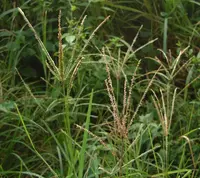
Indian goosegrass, Eleusine indica, is a fast-growing annual grass commonly found in lawns, gardens, fields, and disturbed soil. It forms low, tufted clumps with flat leaf blades and distinctive seed heads that spread like fingers from the top of each stem.
This species is native to tropical and subtropical regions but now occurs widely in warm and temperate climates worldwide. It is tough, adaptable, and thrives in compacted or nutrient-poor soil, which makes it persistent and sometimes invasive.
Because it tolerates heat, foot traffic, and irregular moisture, it is generally easy to maintain where it is intentionally grown. Understanding how to care for Indian goosegrass mainly involves managing its spread and giving it full sun and well-drained soil.

Care Difficulty
Easy Care

Light Preference
Full Sun

Water Requirements
Moderate Water

Temperature Preference
Warm Climate

Hardiness Zone
8–11

Soil Texture
Sandy, Loamy, Clay

Soil pH
Acidic (5.5–6.5), Slightly acidic (6.5–7.0)

Soil Drainage
Well-drained

Fertilization
Minimal (feed rarely)
Scan your plant to receive care tips personalized for your specific plant
Available on iOS and Android
Eleusine indica prefers warm, open sites with strong sun but tolerates some shade during the day.
Eleusine indica is drought-tolerant once established but grows best with moderate, well-timed moisture.
This warm-season grass thrives in heat and declines when exposed to cold or frost.
Humidity is rarely a limiting factor for Eleusine indica in typical outdoor conditions.
Eleusine indica grows best in loose, well-drained mineral soils but tolerates poor sites.
This species can be grown in containers, mainly for study, forage trials, or controlled management.
Eleusine indica is a tough grass that usually grows well in poor soils and often needs no fertilizer in the ground.
Pruning Eleusine indica is mainly done to limit spread and remove unsightly growth in managed areas.
Transplanting Eleusine indica is more relevant than repotting because this grass is usually grown outdoors rather than in containers.
Propagation of Eleusine indica is straightforward and most often done from seed in open soil.
Eleusine indica is a warm-season annual in most climates and generally needs no special winter care.

Plant Health Check
Not sure what's wrong with your plant? Check your plant's health inside the app.
This grass uses C4 photosynthesis, a pathway that allows very efficient carbon fixation and water use under high light and heat, which helps explain its success in hot, compacted, and nutrient-poor sites such as roadsides and athletic fields.
Its small, light seeds can remain dormant yet viable in soil for several years, enabling dense reinfestation when conditions again favor germination after control efforts or soil disturbance.
The plant forms a low basal rosette with flattened stems that often bend outward, allowing it to survive repeated mowing that removes flower heads but not the photosynthetic base.

Genetic studies show that Eleusine indica has developed resistance to several commonly used herbicides in multiple regions worldwide, making it an important model species for researching the evolution and management of herbicide resistance in weeds.
This species is widely recognized as invasive in many warm and temperate regions. It colonizes disturbed ground, lawns, farms, and roadsides, competes aggressively with crops and turf, and produces many seeds that spread easily by machinery, animals, and contaminated soil.
Keep your plants happy and healthy with plant identification, disease detection, and easy care guidance.

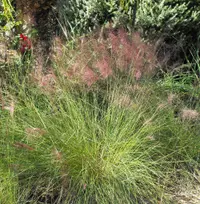
Pink muhly grass
Muhlenbergia capillaris
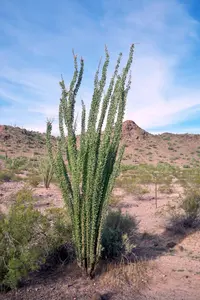
ocotillo
Fouquieria splendens
Field Mustard
Brassica rapa subsp. narinosa
 POPULAR
Sensitive Plant
Mimosa pudica
Calamagrostis arundinacea
Calamagrostis arundinacea

American beachgrass
Calamagrostis breviligulata
stinking chamomile
Anthemis cotula
Prickly Heath
Gaultheria mucronata