


Use sand mounding
Build a low mound of clean sand 10–20 cm high around young plants to mimic dune conditions and encourage deeper, more anchoring root growth when growing American beachgrass.


American beachgrass, Calamagrostis breviligulata, is a hardy, clump-forming grass native to Atlantic and Great Lakes coastal dunes in North America. It spreads mainly by strong, creeping rhizomes that knit sand together.
Plants form upright, narrow leaves with tall, feathery flower spikes that turn tan and remain attractive through much of the year. This species is prized for erosion control and stabilizing sandy sites.
It tolerates wind, salt spray, drought, and very poor, sandy soils, which makes it relatively easy in harsh coastal landscapes but less suited to rich, wet gardens. A basic understanding of how to care for American beachgrass helps keep plantings dense and long-lived.

Care Difficulty
Easy Care

Light Preference
Full Sun

Water Requirements
Low Water

Temperature Preference
Cold Hardy

Hardiness Zone
3–8

Soil Texture
Sandy, Loamy

Soil pH
Acidic (5.5–6.5), Slightly acidic (6.5–7.0)

Soil Drainage
Well-drained

Fertilization
Minimal (feed rarely)
Scan your plant to receive care tips personalized for your specific plant
Available on iOS and Android
This dune grass thrives in bright, open conditions and depends on strong sun to stay dense and upright.
This coastal grass is adapted to dry, sandy sites and prefers infrequent, deep moisture rather than constant dampness.
This species is highly cold-hardy and also tolerates coastal summer heat when planted in open, airy conditions.
This dune grass tolerates a wide humidity range and rarely needs special humidity management.
This species prefers very lean, sandy, fast-draining soil that mimics coastal dunes.
This grass can be grown in containers, but the setup must account for its deep, spreading root system and wind exposure.
This dune grass thrives in lean soils, so American beachgrass needs only minimal fertilization in most garden settings.
Pruning Calamagrostis breviligulata is simple and mainly involves removing old growth once a year.
This species is usually grown in the ground, so care focuses on transplanting clumps rather than frequent repotting.
Propagation is most reliable by division, with seed used mainly for larger restoration or naturalistic plantings.
This grass is cold hardy in much of North America and needs little winter care once established in the ground.

Plant Health Check
Not sure what's wrong with your plant? Check your plant's health inside the app.
This grass is one of the dominant pioneer species on Atlantic and Great Lakes sand dunes, trapping wind-blown sand with its dense stems and leaves to initiate dune formation and growth.
It spreads through long underground rhizomes that can extend well over 1 m deep in loose sand, allowing the plant to stabilize shifting substrates and survive frequent burial by new sand layers.
Unlike many plants, it responds to being buried by sand with increased stem elongation and new shoot production, which helps it keep leaves above the sand surface and maintain photosynthesis in active dune systems.

This species is so effective at stabilizing coastal dunes that it is widely used in dune restoration projects across the Great Lakes and Atlantic coasts, and management guidelines carefully control planting density to avoid altering natural dune shape and sand movement patterns.
This species spreads strongly by rhizomes, forming dense clumps and wide colonies over time. In sandy, open sites it can seem aggressive, which is useful for dune stabilization but may overwhelm small, mixed planting beds.
Keep your plants happy and healthy with plant identification, disease detection, and easy care guidance.

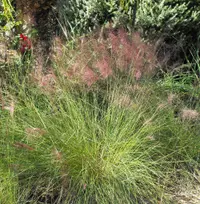
Pink muhly grass
Muhlenbergia capillaris
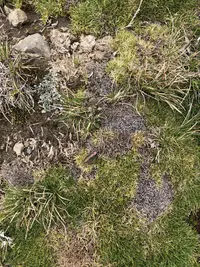
Aciachne pulvinata
Aciachne pulvinata
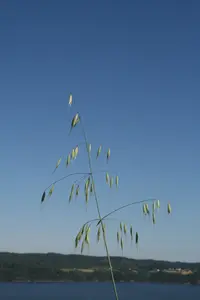
wild oat
Avena fatua
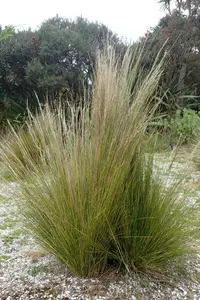
coastal immorality grass
Austrostipa stipoides
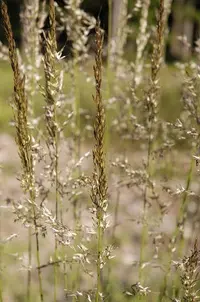
Calamagrostis arundinacea
Calamagrostis arundinacea
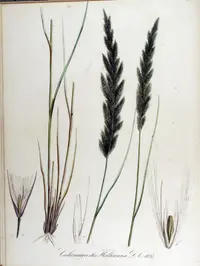
coastal small-reed
Calamagrostis pseudophragmites
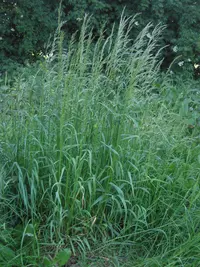
tall oatgrass
Arrhenatherum elatius
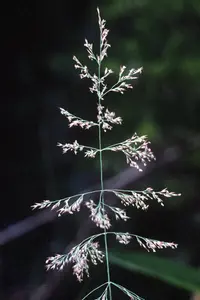
Bluejoint Reed Grass
Calamagrostis canadensis