BotaN logo

Indianpipe Care (Monotropa uniflora)

Also known as: Ghost Pipe, ghost plant, corpse plant, Waxplant
Indianpipe

About Indianpipe

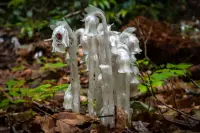
Indianpipe, Monotropa uniflora, is a small, ghostly white woodland plant that lacks chlorophyll and does not photosynthesize. It is often called ghost plant or corpse plant.

It usually appears as single, waxy, pipe-shaped stems with nodding bell-like flowers, emerging from rich leaf litter in dense, shady forests. The plant is mycoheterotrophic, meaning it gets nutrients through fungi connected to nearby tree roots.

Indianpipe is native to cool, moist forests across much of North America and parts of Asia, and it often appears in undisturbed, mature woodland. Because it depends on specific fungal partners and forest conditions, it is difficult to cultivate, and attempts to care for Indianpipe at home are rarely successful.

Main Plant Requirements

Care Difficulty

Hard Care

Light Preference

Shade

Water Requirements

Keep Soil Moist

Temperature Preference

Cool Climate

Hardiness Zone

3–8

Soil Texture

Loamy, Peaty, Organic-rich

Soil pH

Strongly acidic (4.5–5.5)

Soil Drainage

Moist but well-drained

Fertilization

Minimal (feed rarely)

Get Personalized Care Plan

Scan your plant to receive care tips personalized for your specific plant

Available on iOS and Android

How to Care for the Indianpipe

This forest understory species needs very low, filtered light that mimics deep woodland shade.

  • Site Indianpipe under dense tree canopy with dappled or heavily filtered light, avoiding direct sun at midday and afternoon.
  • Aim for no more than 1–2 hours of weak early-morning sun; stronger or longer exposure quickly scorches translucent stems and flowers.
  • Ensure surrounding vegetation and leaf litter provide shifting shade across seasons, as leafless canopies in early spring can briefly increase light intensity.

This mycoheterotrophic forest plant relies on consistently moist, cool soil rather than direct watering on its stems.

  • Maintain evenly moist, humus-rich soil; allow only the top 1–2 cm to start drying before surrounding soil is rehydrated by rain or gentle watering.
  • During dry spells, add water to the soil around Monotropa uniflora, not onto the shoots, to avoid lodging or decay of the fragile tissue.
  • Watch for signs of stress: wilting or collapse suggests dryness, while persistent soggy ground, algae, or mold indicate poor drainage and excess moisture.

This species favors cool, stable woodland temperatures and declines in strong heat or exposed frost.

  • Optimal growth occurs around 55–70°F (13–21°C), typical of shaded forest floors with thick leaf litter and limited temperature swings.
  • Plants tolerate brief drops near 32°F (0°C) when dormant under snow or litter, but exposed flowering shoots are damaged by hard frost.
  • Sustained heat above 80°F (27°C), especially with dry air and soil, shortens bloom longevity, so deep shade and mulch help buffer summer extremes.

This forest understory species requires consistently moist, cool air similar to shaded woodland conditions.

  • Aim for 60–90% humidity by growing Indianpipe in sheltered, shaded outdoor spots or humid woodland-style beds.
  • Low humidity leads to rapid wilting, translucent stems, and tissue collapse even if the soil is moist.
  • Increase humidity by using dense leaf litter, positioning near naturally damp ground, and shielding from drying wind.

This fully mycoheterotrophic species depends on intact forest soil rather than conventional potting mixes.

  • Use deep, loose leaf litter over naturally humus-rich, fungi-active forest soil rather than mixing standard components.
  • Soil must be consistently moist, cool, and well aerated, with water draining freely yet never drying out completely.
  • Monotropa uniflora typically occurs in acidic soil around pH 4.0–5.5, often under conifers or mixed hardwoods.
  • Avoid compaction, fertilizer, lime, and sterile or heavily disturbed substrates, which disrupt the necessary mycorrhizal fungi.

This species is not suitable for container growing, as it relies on complex underground relationships in undisturbed forest soil.

Monotropa uniflora is a mycoheterotrophic forest plant that does not use traditional fertilizers and relies entirely on its fungal host for nutrients.

Pruning Monotropa uniflora is generally unnecessary because each stem is short-lived and naturally decomposes after seed set.

Transplanting Indianpipe is rarely successful because it depends on a specific mycorrhizal fungus and intact forest soil networks.

  • Avoid container culture; this species is best left in undisturbed woodland soil where it emerges naturally.
  • Do not attempt routine transplanting, even if growth seems sparse or irregular, as this usually reflects underground fungal conditions.
  • If relocation is unavoidable for conservation, move an intact soil block with minimal disturbance and keep it shaded and moist.
  • Plan any move for cool, damp weather to reduce desiccation stress on roots, fungi, and surrounding leaf litter.

Propagation of Monotropa uniflora is not practical in home or garden settings because it requires a very specific fungal partner and host tree roots.

Winter care is not needed for this hardy woodland species, which survives as underground structures associated with fungi while stems die back.

Care Tips

Site selection

Plant only in established, shady woodland beds dominated by ectomycorrhizal trees such as beech, oak, or pine, as this species relies on existing fungal networks rather than conventional soil fertility.

Minimal disturbance zone

Mark the patch and avoid raking, mulching, or stepping in a 30–60 cm radius around emerging shoots so the delicate underground connections with fungi and tree roots are not damaged.

Leaf litter management

Maintain a thin, natural leaf-litter layer instead of bare soil or decorative mulch, gently relocating only heavy, matted debris so emerging stems can push through without being crushed.

Ethical sourcing

Use only nursery-propagated or research-approved material and never dig plants or fungal hosts from wild populations, as wild collection almost always leads to transplant failure and habitat damage when growing Indianpipe.

Short-term observation

Treat plants as seasonal woodland subjects rather than permanent garden features, documenting their location, emergence time, and decline each year so you can monitor long-term site suitability and avoid accidental disturbance.

Common Pests and Diseases

Slugs and snails

This pest often feeds on the soft, translucent stems and flowers at ground level, leaving irregular chew marks or missing tissue. Symptoms include slime trails on leaf litter and damaged or collapsed shoots.

Solution

Hand-pick slugs and snails in the evening or early morning and relocate them away from the colony. In sensitive woodland sites avoid baits; instead, reduce nearby boards, pots, or debris that provide shelter, and use simple physical barriers like rough sand or crushed eggshells around small patches, taking care not to disturb the leaf litter that supports the host fungi.

Fungal stem blight

This disease causes localized brown to black lesions on stems and flowers that may soften and collapse, especially during prolonged wet weather. Symptoms include rapid wilting and dark, water-soaked areas at or near the soil line.

Solution

Remove and dispose of affected shoots without disturbing adjacent plants or the surrounding mycorrhizal soil. Improve air movement slightly by clearing only excessive surface debris nearby, avoid trampling, and do not water the area directly, since this species relies on naturally moist but not waterlogged forest conditions.

Leaf litter molds

This disease involves saprophytic molds growing on surrounding decaying leaves, which can sometimes spread onto the plant surface and weaken young shoots. Symptoms include fuzzy white, gray, or dark mold on nearby litter and occasionally on the lower parts of stems.

Solution

Gently lift and remove only the moldiest pieces of surface litter immediately around the visible shoots, leaving most of the forest floor intact to preserve the host fungi. Avoid overhead watering, maintain natural shade and moderate moisture, and do not apply fungicides, since these can disrupt the essential mycorrhizal fungi that are critical for Monotropa uniflora plant care.

Interesting Facts

Leafless and non-photosynthetic

This species has no chlorophyll or true leaves and cannot photosynthesize, so it relies entirely on other organisms for its carbon and nutrients.

Mycoheterotrophic lifestyle

It taps into mycorrhizal fungi that are connected to nearby trees, indirectly drawing its nutrition from the forest’s tree–fungus network rather than from soil or sunlight.

Ephemeral ghostly flowers

The waxy white stems and nodding single flowers emerge briefly in cool, moist, shaded forests, often after rain, and quickly darken to black as the tissues age and decay.

Botan icon

Did you know?

This plant’s dependence on highly specific mycorrhizal fungi and host tree partners makes growing Indianpipe in typical garden conditions extremely difficult, so it is rarely if ever cultivated successfully.

FAQs about Indianpipe

This species grows best outdoors in undisturbed, shady woodland with intact leaf litter and native trees. It depends on a specific mycorrhizal fungus and is not suitable for containers, typical gardens, or standard Indianpipe indoor care setups.

Grow Healthy Plants with Botan Care

Keep your plants happy and healthy with plant identification, disease detection, and easy care guidance.

Botan plant care app — identify plants on mobile

Explore More Plants