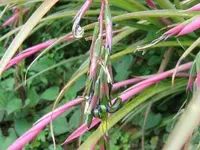
New Zealand Bamboo Orchid Care (Earina mucronata)

Also known as: Peka A Waka
New Zealand Bamboo Orchid

About New Zealand Bamboo Orchid

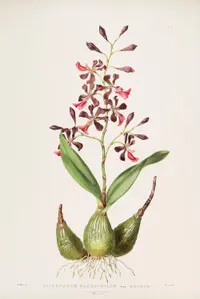
The New Zealand bamboo orchid, Earina mucronata, is an epiphytic orchid that often grows on tree trunks and branches rather than in soil. It forms slender, cane-like stems with narrow leaves and produces clusters of small, usually white to cream flowers with a delicate fragrance.

This species is native to forests across New Zealand, where it enjoys cool to mild temperatures and consistent moisture in the air. Its need for good airflow, high humidity, and careful watering makes it moderately challenging for beginners. Those who want to care for New Zealand Bamboo Orchid should be ready to provide bright, filtered light and a very free-draining orchid substrate.

Main Plant Requirements

Care Difficulty

Hard Care

Light Preference

Partial Shade

Water Requirements

Keep Soil Moist

Temperature Preference

Tropical / Frost Sensitive

Hardiness Zone

11–12

Soil Texture

Sandy, Rocky, Organic-rich

Soil pH

Acidic (5.5–6.5)

Soil Drainage

Moist but well-drained

Fertilization

Light (every 4–6 weeks)

Get Personalized Care Plan

Scan your plant to receive care tips personalized for your specific plant

Available on iOS and Android

How to Care for the New Zealand Bamboo Orchid

This epiphytic orchid prefers bright, filtered light that mimics a forest canopy environment.

  • Provide 4–6 hours of bright, indirect light daily, such as dappled shade under trees or 30–50% shade cloth.
  • Tolerates gentle morning sun but avoid strong midday and afternoon sun, which can scorch leaves and cause yellowing or dry leaf tips.
  • In darker seasons or shaded sites, move New Zealand Bamboo Orchid to a brighter position; spindly, dark green growth indicates insufficient light.

Moist but freely draining conditions suit this orchid best throughout the active growing season.

  • Water when the surface and top 2–3 cm of the mix or moss feel just barely dry, then soak thoroughly so excess drains away.
  • Reduce watering in cooler months, allowing the top layer to dry more, but do not let the root zone stay bone dry for long periods.
  • Wilting, wrinkled pseudobulbs, and crisp roots suggest underwatering, while blackened roots, sour smell, or constantly soggy mix indicate overwatering; use airy, fast-draining orchid substrate.

This species prefers cool to mild conditions similar to sheltered forest habitats.

  • Aim for 55–75°F (13–24°C) for steady growth, with a slight drop at night to mimic natural conditions.
  • Protect from frost; short dips to 40°F (4°C) are usually survivable if dry, but repeated exposure or freezing below 32°F (0°C) can damage foliage and roots.
  • In hot spells above 80–85°F (27–29°C), increase shade and airflow and avoid placing the plant near heat-reflecting walls or paving to prevent stress.

This orchid prefers moderately humid air and reacts quickly to very dry conditions.

  • Aim for 50–70% humidity, as New Zealand Bamboo Orchid naturally grows in moist, sheltered habitats.
  • Tolerates brief dips to 40%, but prolonged dry indoor air causes leaf tip browning and wrinkled pseudobulbs.
  • Increase humidity with a pebble tray under the pot, grouping plants, or a small humidifier rather than frequent misting.

Earina mucronata grows best in a loose, airy, bark‑based medium rather than dense potting soil.

  • Use a fine to medium orchid mix of pine bark, perlite, and a little sphagnum moss to hold moderate moisture.
  • Ensure rapid drainage so water runs through in seconds, preventing roots from sitting in saturation and rotting.
  • Keep pH slightly acidic to neutral, around 5.5–7.0, by avoiding heavy lime additions or garden soil.
  • Improve aeration by adding extra perlite or coarse bark if the mix compacts or stays wet for longer than 2–3 days.

This species is suitable for container cultivation when mounted or potted in a shallow, very free‑draining setup.

  • Choose a shallow, wide pot or basket to spread roots horizontally and allow fast air exchange through the medium.
  • Use slatted or net-style orchid containers so excess water drains instantly and surfaces dry between waterings.
  • Select a heavier pot material or add weight at the base to prevent tipping if foliage becomes uneven or top‑heavy.

This orchid benefits from modest, dilute feeding during active growth but does not need heavy fertilization.

  • Use a balanced orchid fertilizer (such as 20-20-20) diluted to 1/4–1/2 strength for caring for New Zealand Bamboo Orchid.
  • Feed every 3–4 weeks in spring and summer when new growth and roots are developing.
  • Reduce or stop feeding in autumn and winter, especially in cooler or low-light conditions.
  • Flush the pot with plain water monthly to prevent fertilizer salt buildup around the fine roots.

Pruning Earina mucronata focuses on hygiene and maintaining a compact, floriferous clump.

  • Best time is after main flowering finishes in late spring or early summer.
  • Remove dead or shriveled canes, yellow leaves, and any obviously damaged or diseased tissue with clean, sharp scissors.
  • Thin very crowded stems lightly to improve air flow and light penetration without exposing roots abruptly.
  • Avoid cutting healthy green canes hard, since these store reserves for future growth and flowering.

This species prefers stable conditions, so repotting should be infrequent and done with care.

  • Repot every 2–3 years or when roots circle the pot, medium breaks down, or growth slows despite good care.
  • Aim for late winter to early spring, just before vigorous growth resumes, to support quick recovery.
  • Use a fine to medium orchid mix (bark with some sphagnum) and gently tease roots free, trimming only dead, mushy sections.
  • Keep the plant slightly more shaded and evenly moist for 1–2 weeks after repotting to reduce transplant stress.

Propagation of this orchid is usually done by careful division rather than seed at home scale.

  • Divide mature clumps in late winter or early spring when new shoots are just emerging.
  • Ensure each division has several healthy canes and an active root system for stable establishment.
  • Plant divisions into fresh, fine to medium orchid mix and secure them so pseudobulbs do not wobble.
  • Maintain high humidity, bright filtered light, and slightly warmer temperatures to encourage new root growth after division.

Winter care depends on climate, as this orchid dislikes hard frost and prolonged freezing.

  • In mild, frost-free areas, normal bright, sheltered conditions are usually adequate in winter.
  • Where light frosts occur, keep plants under cover, such as a cold greenhouse or bright porch, to avoid tissue damage.
  • Move container plants indoors before temperatures drop near 32°F, maintaining cool to intermediate conditions and good air flow.
  • Water less in winter, allowing the mix to dry slightly between waterings while never staying bone dry for long periods.

Care Tips

Mounting selection

Use a hardwood slab or fern root with some texture rather than smooth cork, so the roots can grip firmly and dry evenly, which greatly stabilizes the plant over time.

Layered moss use

Apply sphagnum moss in a very thin, patchy layer over the roots instead of a thick pad, so moisture is retained just long enough to hydrate the plant without staying wet around the rhizomes.

Cool-night emphasis

During late fall and winter, allow noticeably cooler nights and slightly drier conditions to encourage flower spike formation rather than pushing constant warm, moist growth.

Airflow management

Position a small fan on low setting to move air gently across the foliage and roots, which helps prevent fungal spotting and keeps mounted plants from staying damp for too long after misting.

Inspection during repot

When remounting or dividing, carefully inspect the root mass and rhizomes for scale or rot, removing any soft or discolored tissue before securing the plant to reduce problems later when caring for New Zealand Bamboo Orchid.

Common Pests and Diseases

Scale insects

This pest attaches tightly to stems and leaf bases, sucking sap and causing yellowing, stunted growth, and sticky honeydew on nearby surfaces. Symptoms include rough, crusty brown or tan bumps clustered along canes and under leaves.

Solution

Remove infested canes or pseudobulbs if heavily covered, and gently scrape or wipe remaining insects from smooth surfaces with a cotton swab dipped in isopropyl alcohol. Improve air movement, avoid overfertilizing with high nitrogen, and repeat alcohol swabbing every 7–10 days until no new scale appears, which is essential for consistent Earina mucronata care instructions in indoor or greenhouse culture.

Mealybugs

This pest hides in leaf axils and among aerial roots, forming white, cottony clusters and feeding on plant sap. Symptoms include distorted new growth, sticky honeydew, and a general decline in vigor.

Solution

Isolate the plant, then carefully dab visible mealybugs with cotton swabs dipped in isopropyl alcohol, paying special attention to crevices along the canes and root attachments. Rinse the plant with a gentle shower of lukewarm water, reduce excess nitrogen, and repeat inspection and spot treatment weekly until no new insects appear.

Bacterial leaf spot

This disease causes water-soaked, translucent patches on narrow leaves that may enlarge, turn brown, and develop a yellow halo. Symptoms include irregular spots that can merge and cause leaf drop, especially in warm, stagnant, high-humidity conditions.

Solution

Remove and discard all affected leaves and any fallen plant material, using sterilized tools and avoiding splashing water. Improve air circulation around the plant, water in the morning at the roots rather than over the foliage, and keep leaves dry; in severe or recurring cases, apply a labeled copper-based bactericide according to orchid-safe instructions.

Soft scale sooty mold complex

This disease–pest complex develops when heavy honeydew from sap-feeding insects allows black, sooty fungi to grow on leaves and canes. Symptoms include a dark, soot-like coating that reduces photosynthesis and gives the plant a dull, dirty appearance.

Solution

First manage the underlying scale or mealybug infestation, then gently wash the foliage with lukewarm water and a few drops of mild, unscented soap using a soft cloth or sponge. Rinse thoroughly, increase airflow and light within the plant’s tolerance, and keep the plant cleaner by avoiding sticky honeydew buildup through regular inspection.

Interesting Facts

Endemic New Zealand epiphyte

This orchid is naturally found only in New Zealand, where it typically grows as an epiphyte on tree trunks and branches in moist forests, especially on beech and podocarp trees.

Fragrant spring flowers

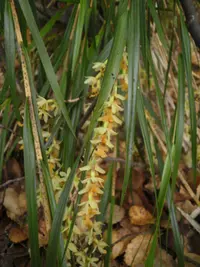
It produces many small, white to creamy flowers in late winter to spring that can form dense, showy sprays and often have a light, sweet fragrance attractive to insects.

Variable leaf habit

Plants can show both evergreen and semi-deciduous behavior depending on local climate, with narrow, grass-like leaves that may be shed in colder or drier conditions while the pseudobulbs remain alive.

Botan icon

Did you know?

This species has been recorded growing not only on trees but also on mossy rocks and even on the ground in very humid, sheltered sites, showing an unusual flexibility in substrate use for an orchid that is primarily epiphytic.

FAQs about New Zealand Bamboo Orchid

Lack of flowering usually comes from insufficient light, too-warm winter rest, or nutrient imbalance. Provide bright filtered light, a slight temperature drop in winter, steady moisture without waterlogging, and a balanced orchid fertilizer at low strength during active growth.

Grow Healthy Plants with Botan Care

Keep your plants happy and healthy with plant identification, disease detection, and easy care guidance.

Botan plant care app — identify plants on mobile

Explore More Plants