Early support training
Install a sturdy moss pole, trellis, or wall wires while the plant is still young, then loosely tie new vines with soft ties so stems lignify in the desired direction without kinking or snapping.

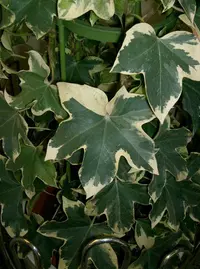
Tree ivy, also known as × Fatshedera, is a hybrid between fatsia and English ivy. It combines a shrub-like base with long, semi-climbing stems. Glossy, lobed leaves give it a lush, architectural look that suits containers, trellises, and bright indoor corners. It does not cling strongly by itself and often benefits from support as it matures. This plant does not occur in the wild and is grown only in cultivation, mainly as an ornamental foliage plant. Its steady growth, tolerance of average home conditions, and moderate light needs make it fairly straightforward for many owners who want to learn how to care for tree ivy.

Care Difficulty
Easy Care

Light Preference
Partial Shade

Water Requirements
Moderate Water

Temperature Preference
Cool Climate

Hardiness Zone
8–10

Soil Texture
Loamy, Sandy, Organic-rich

Soil pH
Acidic (5.5–6.5), Slightly acidic (6.5–7.0)

Soil Drainage
Moist but well-drained

Fertilization
Light (every 4–6 weeks)
Scan your plant to receive care tips personalized for your specific plant
Available on iOS and Android
This hybrid shrub-vine prefers bright, gentle light that avoids harsh midday sun.
This plant prefers evenly moist but not saturated soil, with light drying between waterings.
This hybrid tolerates a moderate range of temperatures but is not fully frost-hardy.
This hybrid prefers moderate home humidity but stays healthy across a fairly wide range.
This species grows best in a loose, well‑aerated, moisture‑retentive yet free‑draining substrate.
This hybrid is well suited to container culture, including patios and sheltered outdoor spots.
This hybrid benefits from modest feeding during active growth but does not need heavy fertilization.
Thoughtful pruning keeps × Fatshedera compact, bushy, and healthy.
Container-grown plants appreciate occasional repotting to prevent root congestion and maintain steady growth.
New plants are most often produced from stem cuttings rather than seed.
Cold tolerance is moderate, so winter care depends on climate and whether plants grow in containers or in-ground.

Plant Health Check
Not sure what's wrong with your plant? Check your plant's health inside the app.
This plant is an artificial hybrid between English ivy (Hedera helix) and Japanese aralia (Fatsia japonica), created in France in the early 20th century rather than found in the wild.
The hybrid is functionally sterile and almost never produces viable seed, so it is propagated vegetatively by cuttings despite having a strong, shrubby growth habit.
Unlike true ivy, it rarely produces clinging aerial roots on indoor supports and instead tends to form semi-woody, upright or lax stems that can be trained as a small shrub, climber, or even a loose standard.

In mild coastal climates, mature plants grown outdoors can develop surprisingly thick, shrub-like trunks and reach around 2–3 m in height, creating a small evergreen architectural feature despite their origin as a greenhouse novelty hybrid.
This hybrid rarely flowers indoors and in cooler climates. Blooming is more likely on older, well-established plants grown outdoors in mild regions. Lack of age, light, and consistent conditions usually explains the absence of flowers.
Keep your plants happy and healthy with plant identification, disease detection, and easy care guidance.