Costus spiralis Care

Costus spiralis

About Costus spiralis

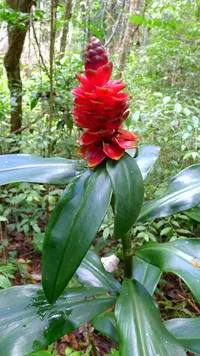
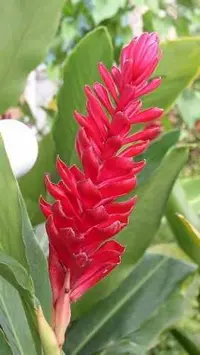
Costus spiralis is a tropical rhizomatous perennial from South America, often called spiral ginger for its tightly twisting stems and leaves. It forms upright canes with lush, glossy foliage arranged in a spiral pattern, topped by showy red or pink cone-like flower heads. In nature it grows in warm, humid forest edges and clearings, where light is bright but usually filtered by taller vegetation. The plant tends to be moderately easy to grow when given stable warmth, consistent moisture, and a free-draining, organic-rich soil mix. Understanding how to care for Costus spiralis starts with recreating its naturally warm, sheltered, and evenly moist conditions indoors or in sheltered outdoor spots.

Main Plant Requirements

Care Difficulty

Moderate Care

Light Preference

Partial Shade

Water Requirements

Keep Soil Moist

Temperature Preference

Tropical / Frost Sensitive

Hardiness Zone

10–12

Soil Texture

Loamy, Peaty, Organic-rich

Soil pH

Acidic (5.5–6.5), Slightly acidic (6.5–7.0)

Soil Drainage

Moist but well-drained

Fertilization

Moderate (every 2–4 weeks)

Get Personalized Care Plan

Scan your plant to receive care tips personalized for your specific plant

Available on iOS and Android

How to Care for the Costus spiralis

This tropical spiral ginger prefers bright, gentle light that mimics a forest understory.

  • Provide 3–5 hours of soft morning sun with bright, filtered light the rest of the day; avoid harsh midday and late-afternoon sun in summer.
  • Costus spiralis tolerates light partial shade, but stems may stretch and flowering may decline if grown in deep shade.
  • Watch leaf color and texture: bleached, crispy patches signal too much direct sun, while very dark, weak growth points to insufficient light, especially in winter.

This rhizomatous plant prefers consistently moist but not waterlogged soil.

  • Water when the top 2–4 cm of soil feels dry, aiming for evenly moist soil from spring through early fall rather than alternating between very wet and very dry.
  • Use rich, well-drained soil so excess water runs freely; yellowing, limp stems and sour-smelling soil indicate overwatering and poor drainage.
  • Slightly reduce watering in cooler months when growth slows, but do not let the root zone fully dry; curling or drooping leaves signal underwatering.

This species thrives in warm, frost-free conditions typical of tropical and subtropical climates.

  • Aim for 68–85°F (20–29°C) for active growth; short periods up to 90°F (32°C) are tolerated if soil moisture and humidity remain stable.
  • Protect from cold; growth stalls below about 60°F (16°C), and foliage can be damaged if exposed to temperatures near 40°F (4°C).
  • Never allow frost exposure; in regions where winter drops below 50°F (10°C), mulching or seasonal indoor relocation helps maintain stable Costus spiralis care.

This species prefers consistently humid air and reacts quickly to very dry conditions.

  • Aim for 60–80% humidity to keep foliage lush and prevent leaf-edge browning.
  • Tolerates short dips to 40–50%, but prolonged dry air causes crisp tips, rolling leaves, and slower growth.
  • Increase humidity with a nearby humidifier, grouped plants, or a pebble tray, rather than misting foliage heavily.

Costus spiralis grows best in loose, moisture-retentive but well-drained soil rich in organic matter.

  • Use a mix of 50–60% peat or coco coir with compost plus 30–40% perlite or pine bark for structure and drainage.
  • Aim for slightly acidic to neutral pH around 6.0–7.0, which supports nutrient availability and healthy root function.
  • Ensure the mix feels springy, not compacted; add extra bark or perlite if water lingers on the surface after watering.
  • Avoid heavy clay, unamended garden soil, or constantly waterlogged mixes that promote root rot and oxygen-poor conditions.

This species is well suited to container growing when the pot supports its tall, spiral stems.

  • Choose a wide, squat pot to counteract top-heavy stems and reduce the risk of tipping in wind or accidental bumps.
  • Select a slightly porous material, such as unglazed clay, if extra evaporation is needed in very wet climates.
  • Leave 3–5 cm between root ball and pot wall to balance moisture retention with adequate air space around the roots.

Nutrient-rich but well-drained soil supports healthy growth and flowering in Costus spiralis.

  • Use a balanced liquid fertilizer (around 10-10-10 or 20-20-20) diluted to 1/4–1/2 strength for container plants.
  • Feed every 4–6 weeks during the warm growing season when stems are actively elongating.
  • Reduce or stop feeding in winter or dormancy when growth slows markedly.
  • Incorporate a small amount of compost or a gentle slow-release fertilizer at the start of the growing season.

Thoughtful pruning keeps Costus spiralis tidy, encourages fresh canes, and maintains good airflow.

  • Carry out most pruning in late winter or early spring, before strong new growth begins.
  • Cut dead, yellowing, or damaged stems back to the base with clean, sharp pruners.
  • Thin out the oldest, most crowded canes to shape the clump and stimulate new shoots.
  • Remove spent flower spikes once they fade to direct energy into rhizome and foliage growth.

Container-grown plants benefit from periodic repotting to maintain vigorous Costus spiralis care.

  • Check for circling roots, roots emerging from drainage holes, or slowed growth as signs it needs a larger pot.
  • Plan to repot every 2–3 years in spring, using a slightly larger container with free-draining, rich mix.
  • Gently loosen the root ball, trim broken roots, and keep the rhizome at the same depth to limit stress.
  • Water thoroughly after shifting to the new pot, then keep in bright shade for 3–7 days while it recovers.

This spiral ginger is commonly propagated by division and stem cuttings for consistent results.

  • Divide rhizomes in warm spring, ensuring each section has at least 1–2 healthy shoots or buds.
  • Plant divisions in moist, well-drained mix, keeping the rhizome just below the surface and soil evenly damp.
  • Take 8–12 in semi-ripe stem cuttings, remove lower leaves, and insert nodes into a light propagation mix.
  • Maintain high humidity, bottom warmth around 70–80°F, and bright indirect light until strong new roots form.

This tropical species is frost-tender and needs protection in regions with cold winters.

  • In USDA zones colder than 10, grow in containers and move plants indoors before temperatures drop below 50°F.
  • Provide bright, indirect light indoors and reduce watering so the soil stays only slightly moist.
  • In mild climates, add a 5–8 cm mulch layer over the root zone to buffer brief cool spells.

Care Tips

Rotate Container Regularly

Turn the pot 90° every 1–2 weeks so the spiral stems develop evenly and do not lean strongly toward one light source.

Use Stake Guides

Insert thin bamboo stakes or plastic rods inside the spiral and tie stems loosely with soft ties to keep them upright and prevent kinking at the base as they elongate.

Refresh Top Layer

Once or twice a year, scrape off the top 2–3 cm of exhausted potting mix and replace it with fresh mix to maintain aeration and reduce salt buildup around the rhizomes.

Divide Overgrown Clumps

Every 2–3 years, lift and divide the rhizomes into sections with at least 2–3 healthy shoots, then replant to rejuvenate growth and control plant size.

Check Leaf Sheaths

Gently open or inspect old leaf sheaths when removing spent stems to spot early mealybug or scale infestations, which often hide in these protected areas when growing Costus spiralis.

Common Pests and Diseases

Spiral gingerscale

This pest is a soft scale insect frequently reported on spiral gingers, feeding on sap and producing sticky honeydew that attracts sooty mold. Symptoms include yellowing leaves, sticky residue, and small dome-shaped bumps along stems and leaf bases.

Solution

Wipe stems and leaves with a cloth dampened in lukewarm soapy water to remove scales and honeydew, then rinse gently. For persistent infestations, apply a horticultural oil or neem oil spray labeled for indoor ornamentals, repeating every 7–10 days until new growth appears clean, and improve air movement and light to reduce stress while caring for Costus spiralis.

Spider mites

These insects are tiny sap-feeding arachnids that thrive on Costus foliage in warm, dry indoor air. Symptoms include fine webbing, stippled or silvery leaves, and general leaf decline, especially on older foliage.

Solution

Shower the plant thoroughly with lukewarm water, focusing on the undersides of leaves, then follow with insecticidal soap or neem oil, applied according to label directions. Increase humidity to 50–60%, avoid placing the plant near heating vents, and inspect regularly so early colonies are washed off before they spread.

Leaf spot

This disease causes circular to irregular brown or dark purple spots on the leaves, sometimes with a yellow halo, and is favored by overhead watering and poor air circulation. Symptoms include spotting that may merge into larger dead patches, leading to premature leaf drop on lower stems.

Solution

Remove and discard affected leaves, avoid wetting the foliage, and water at the soil level in the morning so surfaces dry quickly. Improve spacing and airflow around the plant, and if spotting continues to spread, use a copper-based or other ornamental leaf-spot fungicide according to label instructions.

Bacterial spiral ginger blight

This disease, reported on Costus and related gingers, starts as water-soaked lesions at leaf tips or margins that turn brown and can extend down the midrib. Symptoms include rapid blighting of young leaves and occasional stem dieback from infected nodes.

Solution

Promptly prune out and discard infected leaves and any soft or discolored stem sections, sterilizing pruning tools between cuts with 70% alcohol. Keep foliage dry, avoid overhead misting onto leaves, improve ventilation, and isolate the plant from others; in severe cases, discard heavily affected plants to protect nearby specimens.

Mealybugs

This pest appears as white, cottony clusters in leaf axils and along stems, feeding on sap and weakening new shoots. Symptoms include distorted new growth, sticky honeydew, and slow overall growth in warm indoor conditions.

Solution

Dab visible mealybugs with cotton swabs dipped in 70% isopropyl alcohol, then rinse the plant after 10–15 minutes to remove residues. For larger populations, follow up with repeated applications of insecticidal soap or neem oil every 7–10 days, and inspect hidden areas such as leaf sheaths regularly to prevent reinfestation.

Interesting Facts

Spiral stem architecture

The leaves of Costus spiralis are arranged in a clear spiral around the stem, a pattern called phyllotaxis, which helps maximize light capture in its native understory habitats.

Red bracted flower spikes

This species produces dense, cone-like spikes with showy red bracts that persist for a long time, while the actual flowers are short-lived, tubular, and usually yellowish to pinkish inside the cone.

Neotropical understory origin

Costus spiralis is native to humid lowland forests of tropical South America, especially Brazil, where it grows as an understory herb along forest edges, clearings, and stream banks in filtered light.

Botan icon

Did you know?

In some parts of its native range, Costus spiralis is planted around homesteads and small farms as an ornamental boundary marker, taking advantage of its upright spiral stems and long-lasting red inflorescences to create informal living borders.

FAQs about Costus spiralis

Lack of flowering often comes from insufficient maturity, low light, or nutrient imbalance. This species usually needs a warm growing season, stable moisture, and a light, regular feed. Overpotting or frequent repotting can also delay blooming.

Grow Healthy Plants with Botan Care

Keep your plants happy and healthy with plant identification, disease detection, and easy care guidance.

Botan plant care app — identify plants on mobile

Explore More Plants