common yellow oxalis Care (Oxalis stricta)

Also known as: common yellow woodsorrel, upright yellow woodsorrel, yellow woodsorrel, sourgrass, slender yellow woodsorrel, Upright Yellow-sorrel
common yellow oxalis

About common yellow oxalis

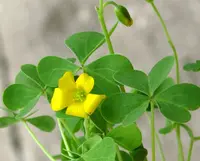
Common yellow oxalis (Oxalis stricta) is a small herbaceous plant often seen in lawns, garden beds, and sidewalk cracks. It forms low clumps with trifoliate, clover-like leaves and bright yellow, five-petaled flowers.

This species is native to North America and has spread to many temperate regions, where it behaves as a persistent volunteer or weed. It reproduces readily by seed and underground stems, which makes it resilient and sometimes hard to remove.

Oxalis stricta prefers moderate light, slightly moist but well-drained soil, and tends to thrive in disturbed ground. These traits make it easy to grow intentionally but also mean careful management is needed if you want to care for common yellow oxalis without it spreading too much.

Main Plant Requirements

Care Difficulty

Easy Care

Light Preference

Partial Sun

Water Requirements

Moderate Water

Temperature Preference

Cold Hardy

Hardiness Zone

3–8

Soil Texture

Sandy, Loamy, Organic-rich

Soil pH

Acidic (5.5–6.5), Slightly acidic (6.5–7.0)

Soil Drainage

Well-drained

Fertilization

Minimal (feed rarely)

Get Personalized Care Plan

Scan your plant to receive care tips personalized for your specific plant

Available on iOS and Android

How to Care for the common yellow oxalis

This plant prefers bright conditions but adapts to varying light in gardens and lawns.

  • Provide 4–6 hours of direct morning sun with light or dappled shade in the afternoon to reduce leaf scorch, especially in hotter climates.
  • Tolerates partial shade (2–4 hours sun) but foliage may grow thinner and flowering can decrease, which is useful when caring for common yellow oxalis in mixed plantings.
  • In full-sun sites, ensure soil does not dry out completely; in deep shade, monitor for leggy, pale stems that indicate insufficient light.

Water needs are moderate and change with soil type, weather, and site exposure.

  • Allow the top 2–3 cm of soil to dry before watering again, then moisten the root zone thoroughly without saturating the ground.
  • In cool spring and fall, natural rainfall often suffices; in hot, dry spells, check soil every 2–3 days and water when leaves begin to droop slightly.
  • Watch for yellowing, mushy stems as a sign of overwatering and poor drainage, and crisp, browning leaf edges as a sign of underwatering.

This species is a hardy temperate plant that copes with a wide range of outdoor temperatures.

  • Ideal active growth occurs around 60–80°F (16–27°C), with strongest leaf production and flowering in mild spring and early summer conditions.
  • Plants tolerate brief drops to about 20°F (-7°C), often dying back above ground in frost but re-sprouting from roots when temperatures warm.
  • During hot periods above 90°F (32°C), foliage may wilt or partially go dormant; consistent soil moisture and some afternoon shade reduce heat stress.

Oxalis stricta handles a wide humidity range but shows best growth around 40–60% in homes and shaded outdoor spots.

  • Tolerates typical dry indoor air but prolonged humidity below 30% may cause leaf edges to brown and leaflets to curl slightly.
  • Watch for slow growth, dull foliage, and crispy leaflet tips as signs of humidity-related stress rather than watering issues.
  • If air is very dry, group pots, place containers on a pebble tray with water below the pot base, or run a nearby humidifier.

Oxalis stricta prefers loose, well-aerated soil that drains quickly yet holds light, even moisture.

  • Use a mix such as 2 parts all-purpose potting mix, 1 part compost, and 1 part perlite or coarse sand for structure and drainage.
  • Aim for slightly acidic to neutral pH around 6.0–7.0, which supports balanced nutrient uptake and root activity.
  • Improve aeration by avoiding compaction; gently crumble soil before planting and avoid pressing it down hard around the roots.
  • Avoid heavy clay, waterlogged spots, or mixes high in fine peat that stay soggy, as these conditions encourage root and bulb-like crown rot.

This species is suitable for container growing, especially for controlled patches on patios, balconies, or small gardens.

  • Choose a shallow to medium-depth pot, as the fibrous roots spread laterally and do not require deep soil columns.
  • Select a container material that matches your climate; porous terracotta dries faster, while plastic retains moisture longer for hot, windy sites.
  • Ensure rapid runoff by using large drainage holes and, if needed, raising the pot slightly on feet to prevent the base from sitting in collected water.

Oxalis stricta growing in ordinary garden soil usually needs minimal fertilizer.

  • If growth is weak in poor soil, apply a light top-dressing of compost in spring to refresh nutrients.
  • For container plants, use a balanced liquid fertilizer (e.g., 10-10-10) at 1/4–1/2 strength every 4–6 weeks in the growing season.
  • Pause feeding during winter or dormancy, resuming only when new leaves appear and active growth restarts.

Pruning Oxalis stricta is mainly a light grooming task to keep plants tidy and flowering well.

  • In spring and through the growing season, pinch or snip off faded flowers and yellowing leaves to encourage fresh growth.
  • Remove damaged, diseased, or crowded stems at the base using clean scissors or small snips.
  • Cut back leggy or sprawling patches to shape groundcover and promote denser foliage and flowering.

This species is more often transplanted outdoors than grown as a long-term potted plant.

  • Transplant when clumps spread beyond their space, growth becomes sparse, or soil is exhausted.
  • Aim for early spring or early fall, moving plants during cool, moist weather for lower stress.
  • Lift clumps gently, keeping as many fibrous roots and rhizomes intact as possible.
  • Replant at the same depth into loose, well-drained soil, then water thoroughly to settle roots.

Oxalis stricta is commonly propagated by division and self-sown seed in garden settings.

  • Divide established clumps in early spring or early fall, separating rhizomes and small bulbs with attached roots.
  • Replant divisions into moist, loose soil, spacing lightly to allow spreading over time.
  • Sow collected seeds on the soil surface in spring and keep evenly moist until seedlings establish.
  • Maintain moderate light and avoid waterlogging so young plants root strongly and resist rot.

This species is cold hardy in much of the US and usually needs little special winter care.

  • In colder regions, a light 2–5 cm mulch layer helps insulate the root zone without smothering crowns.
  • Container plants benefit from moving to a sheltered, frost-free but cool spot once hard freezes begin.
  • Allow top growth to die back naturally; new shoots typically emerge from surviving roots in spring.

Care Tips

Contain Spreading Habit

Grow this species in pots, raised beds, or with root barriers if planted in the ground, since its creeping stems and prolific seed capsules can quickly spread beyond the intended area.

Time Deadheading Correctly

Remove flowers and seed capsules before they fully mature to reduce self‑seeding, using small scissors to clip stems close to the base without disturbing nearby desirable plants.

Leverage Natural Dormancy

If foliage declines in summer heat or after drought, allow the plant to go dormant, then resume light watering and normal care when new shoots emerge rather than discarding it as dead.

Use as Living Mulch

In outdoor beds, maintain this plant as a low, patchy groundcover around taller ornamentals, then thin or edge it every few weeks to prevent it from competing directly at the base of main plants.

Inspect for Seed Splash

Periodically check nearby pots, cracks, and bed edges for new seedlings formed by the plant’s explosive seed pods, and lift them while still small to keep caring for common yellow oxalis manageable in tight spaces.

Common Pests and Diseases

Powdery mildew

This disease causes white, powdery fungal growth on leaves, especially in crowded, humid conditions. Symptoms include distorted leaflets and reduced vigor in dense clumps.

Solution

Thin crowded patches to improve airflow, avoid overhead watering, and remove heavily infected leaves. For persistent cases, apply a sulfur or potassium bicarbonate-based fungicide labeled for ornamental plants, following label directions carefully.

Leaf spot

This disease produces small brown to dark purplish spots on leaves that can merge, causing yellowing and early leaf drop. Symptoms include a patchy, weakened canopy in affected colonies.

Solution

Remove and dispose of spotted leaves to reduce spore spread, and water at soil level to keep foliage dry. In recurring cases, use a copper-based or chlorothalonil fungicide labeled for leaf spots on ornamentals, and reduce dense groundcover growth where possible.

Aphids

These insects cluster on young stems and undersides of leaves, sucking sap and causing curling or yellowing foliage. This pest also excretes sticky honeydew that can encourage sooty mold growth on nearby surfaces.

Solution

Rinse colonies off with a strong but controlled stream of water and pinch back heavily infested tips. For repeated infestations, use insecticidal soap or a ready-to-use neem oil spray, applying in the early morning or evening to avoid leaf burn and to support Oxalis stricta plant care outdoors or in pots.

Spider mites

These pests are tiny sap feeders that thrive in hot, dry conditions, causing fine stippling on leaves and, in heavy infestations, fine webbing between stems and leaflets. Symptoms include dull, bronzed foliage and slowed growth.

Solution

Increase humidity around potted plants, hose off foliage thoroughly, and remove the most affected stems. Apply insecticidal soap or horticultural oil, ensuring good coverage on leaf undersides, and repeat at 5–7 day intervals until new growth appears clean.

Leaf miners

These insects are the larvae of small flies that tunnel inside leaf tissue, creating winding, pale trails on the leaflets. Symptoms include cosmetic damage that can reduce photosynthesis when trails are numerous.

Solution

Hand-remove and discard mined leaves as soon as trails appear to interrupt the life cycle. For persistent issues in garden beds, use floating row covers over nearby susceptible crops to reduce adult fly activity and avoid using broad-spectrum insecticides that harm beneficial insects that help control leaf miners naturally.

Interesting Facts

North American native range

This species is native to much of North America, unlike several ornamental Oxalis relatives that are introduced, and it commonly appears in disturbed soils such as lawns, gardens, and field edges.

Explosive seed dispersal

Its seed capsules use a mechanical process called ballistic dispersal, where tissue tension builds up and suddenly ejects the tiny seeds several decimeters away when the capsule dries and splits.

Sensitive folding leaves

The trifoliate leaves fold along the midrib under low light, at night, or during water stress due to movements driven by specialized hinge-like cells at the leaf base known as pulvini.

Botan icon

Did you know?

Genetic and morphological studies show that plants commonly called yellow wood sorrel in North America, historically all grouped as Oxalis stricta, actually represent a complex of closely related species with subtle but consistent differences in traits such as hairiness, capsule shape, and seed surface pattern.

FAQs about common yellow oxalis

This species spreads quickly through seed, creeping stems, and small root pieces. In garden beds it can become a persistent weed. Regular hand weeding, mulching, and preventing seed set help keep it contained and manageable.

Grow Healthy Plants with Botan Care

Keep your plants happy and healthy with plant identification, disease detection, and easy care guidance.

Botan plant care app — identify plants on mobile

Explore More Plants