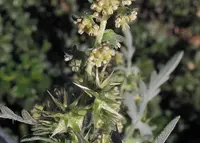
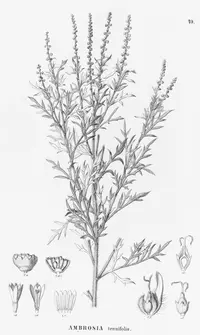
prostrate pigweed Care (Amaranthus albus)

Also known as: white amaranth, white pigweed, Tumbleweed, white pigweed, tumbleweed amaranth
prostrate pigweed

About prostrate pigweed

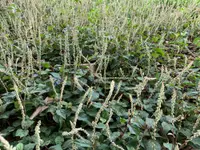
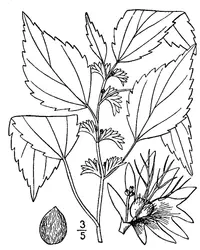
Prostrate pigweed (Amaranthus albus) is a low, spreading annual herb in the amaranth family, often seen as a summer weed in open, disturbed ground. It forms dense, mat-like patches with many branching stems and small, pale green leaves, usually hugging the soil surface.

This species is native to North America but now occurs widely in fields, gardens, roadsides, and waste areas in many regions. It grows quickly, produces many seeds, and tolerates heat, compaction, and poor soils, which makes it persistent once established.

It generally prefers full sun, dry to moderately moist conditions, and well-drained, even gravelly or sandy soils. Many gardeners focus on how to care for prostrate pigweed only when managing or removing it, due to its vigorous, weedy nature.

Main Plant Requirements

Care Difficulty

Easy Care

Light Preference

Full Sun

Water Requirements

Moderate Water

Temperature Preference

Tropical / Frost Sensitive

Hardiness Zone

2–11

Soil Texture

Sandy, Loamy, Clay

Soil pH

Slightly acidic (6.5–7.0), Slightly alkaline (7.0–7.5)

Soil Drainage

Well-drained

Fertilization

Minimal (feed rarely)

Get Personalized Care Plan

Scan your plant to receive care tips personalized for your specific plant

Available on iOS and Android

How to Care for the prostrate pigweed

Amaranthus albus thrives in open, sunny sites typical of disturbed ground and field edges.

  • Provide 6–8 hours of direct sun daily; full sun promotes compact growth and abundant flowering in prostrate pigweed.
  • Plant where it receives morning sun and can tolerate strong midday and afternoon sun, as long as soil does not dry to dust-like conditions.
  • It tolerates light partial shade (3–4 hours direct sun), but stems may elongate and seed production decline if light stays below this for much of the season.

Watering needs are modest, as this annual weed is adapted to dry, disturbed soils.

  • Allow the top 3–5 cm of soil to dry between rainfall or irrigation; the plant remains healthy in slightly dry, well-drained ground.
  • Signs of underwatering include limp, dull leaves and slowed growth, while yellowing, soft stems or standing water suggest overwatering.
  • In hot, dry periods increase watering frequency slightly, but in cool or rainy weather rely mostly on natural rainfall, avoiding heavy supplemental irrigation.

This warm-season annual grows best in typical summer conditions and does not tolerate frost.

  • Optimal growth occurs around 70–90°F (21–32°C), when seed germination and vegetative growth are most rapid.
  • Plants are damaged or killed by frost; avoid sowing until nights stay reliably above 45–50°F (7–10°C).
  • In heat above 95°F (35°C), growth may slow, but established plants usually persist if soil moisture is not extremely low and roots are not waterlogged.

Humidity is rarely a limiting factor for Amaranthus albus, which thrives in typical outdoor air conditions.

Amaranthus albus tolerates poor substrates but performs best in well-aerated, fast-draining mineral soil.

  • Use a sandy or sandy-loam soil with at least 40–60% mineral content to keep the root zone open and dry between waterings.
  • Aim for a slightly acidic to slightly alkaline pH of about 6.0–7.8, which covers most garden and disturbed urban soils.
  • In heavier soils, mix in coarse sand or fine gravel plus a small amount of compost to improve drainage and root aeration.
  • Avoid consistently wet, compacted, or high-clay sites, which promote root rot and reduce the plant’s natural drought tolerance.

This species can be grown in containers, mainly for controlled spread and easy removal.

  • Choose a wide, relatively shallow pot (at least 20–25 cm diameter) to accommodate its prostrate spread and shallow root system.
  • Use a gritty, fast-draining mix and water thoroughly but infrequently so the entire profile dries between irrigations.
  • Select a heavier pot material, such as thick plastic or clay, to prevent wind tipping as the plant sprawls over the rim.

This adaptable annual, often known as prostrate pigweed, needs only modest nutrition for healthy growth.

  • Use a balanced liquid fertilizer (for example 10-10-10) at 1/4–1/2 strength for container-grown plants in poor soil.
  • Feed every 3–4 weeks during the active growing season if foliage looks pale or growth is weak.
  • Apply a thin layer of compost instead of synthetic fertilizer when growing in the ground with reasonably fertile soil.
  • Stop feeding in late fall or when growth slows, as Amaranthus albus naturally completes its life cycle and does not need winter nutrition.

Amaranthus albus responds well to light, targeted pruning to manage spread and seed production.

  • In late spring to midsummer, use clean scissors or hand pruners to remove damaged or weak stems at the base.
  • Shear or pinch back sprawling tips to keep a lower, denser shape and limit unwanted spread.
  • Deadhead or cut plants before seed sets if self-seeding is not desired.
  • Remove dead plants completely at season’s end to reduce volunteer seedlings the following year.

This annual species is more often transplanted outdoors from seedling stage than repotted long term.

  • Transplant seedlings once they have 2–3 true leaves and roots lightly fill starter cells, before they become root-bound.
  • Aim to transplant in late spring after frost, on a cloudy day or in the evening to limit stress.
  • Prepare loose, well-drained soil and move seedlings with the root ball intact, disturbing roots as little as possible.
  • Water thoroughly after planting and shade for 1–2 days if sun is intense, helping roots re-establish quickly.

Amaranthus albus is most commonly propagated by seed, which germinates readily in warm conditions.

  • Sow seeds in spring after frost, either directly outdoors or in trays kept at 68–75°F.
  • Press tiny seeds onto the soil surface or barely cover them, since light helps trigger germination.
  • Keep the substrate evenly moist but not waterlogged until seedlings emerge, usually in 5–14 days.
  • Thin or transplant seedlings to avoid crowding, which improves airflow and overall plant vigor.

This warm-season annual does not overwinter; plants normally die with hard frost and need minimal winter care.

  • Expect foliage to blacken and die after the first hard frost, even in sheltered sites.
  • Pull and dispose of dead plants in fall to reduce excessive self-seeding in the following season.
  • Mulch bare soil lightly if erosion is a concern, but this is for soil protection rather than plant survival.

Care Tips

Staggered Succession Sowing

Sow small patches every 10–14 days rather than all at once to maintain a continuous stand with uniform, tender growth for harvest or observation and to reduce the impact of any single weather event on the entire planting.

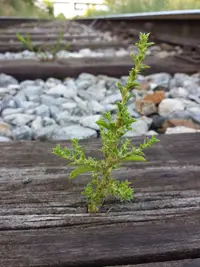
Targeted Thinning Strategy

Thin seedlings early to 10–15 cm spacing with scissors rather than pulling, which limits root disturbance, reduces transplant shock in remaining plants, and produces small thinnings that can be composted or used as microgreens where regulations allow.

Wind and Foot-Traffic Management

Site plantings away from high-traffic edges and prevailing strong winds, or use a low windbreak such as a short fence or border crop, because this shallow-rooted species can sprawl excessively or break when repeatedly stepped on or buffeted.

Seed Bank Control

Before seed heads fully mature and dry, cut and bag the top growth, then dispose of it off-site to prevent a long-lived soil seed bank that can make caring for prostrate pigweed or nearby crops more labor-intensive in future seasons.

Sanitation Between Beds

After working in an area with mature plants, brush soil and seeds off tools, shoes, and equipment at the bed edge so seeds are not accidentally moved into clean beds, lawns, or pathways where the species can rapidly colonize bare soil.

Common Pests and Diseases

Pigweed weevils

This pest commonly feeds on pigweed species, with adults chewing foliage and larvae boring into stems and leaf petioles. Symptoms include notched leaves, weak stems, and reduced vigor in dense stands.

Solution

Hand-remove and destroy heavily infested plants, and thin dense patches to reduce shelter for adults. Where allowed, apply a targeted pyrethroid or spinosad product to foliage in the early season, following label directions, and encourage natural predators by avoiding broad-spectrum soil insecticides.

Pigweed curculio

This pest is a specialized snout beetle whose larvae develop inside pigweed stems and seedheads. Symptoms include hollowed stems, stunted growth, and poor seed set.

Solution

Rogue out and dispose of infested plants before seedheads mature to break the life cycle. For larger stands, mow or cut plants before flowering and maintain field sanitation around edges where host plants persist.

Flea beetles

These insects create many small round holes in young leaves, giving a shot-hole appearance and slowing early growth. Seedlings and small plants are most vulnerable and may become stunted under high pressure.

Solution

Use floating row covers over young plants until they are well established, and remove nearby crucifer and pigweed volunteers that host beetles. If needed, spot-treat foliage with a neem-based or spinosad spray in the early morning, and avoid overhead irrigation that splashes beetles deeper into dense canopies.

Cercospora leaf spot

This disease causes small, circular, tan to gray spots with darker borders on leaves, which can merge into larger dead patches under humid conditions. Symptoms include premature yellowing and leaf drop, especially in crowded plants.

Solution

Remove and discard infected leaves and thin plants to improve airflow and reduce leaf wetness. Avoid overhead watering, and where disease is persistent, rotate out of Amaranthus and related hosts and use a copper-based fungicide labeled for leaf spots as a preventative on new growth.

Powdery mildew

This disease appears as white, powdery patches on upper leaf surfaces and stems, often developing late in the season on dense or shaded stands. Symptoms include distorted leaves and reduced vigor but usually limited plant death.

Solution

Increase spacing and sunlight exposure, and remove heavily infected foliage to lower spore levels. If conditions stay humid, apply a sulfur or potassium bicarbonate fungicide labeled for powdery mildew at the first sign of infection, and avoid high-nitrogen fertilization that promotes very soft, dense growth when growing prostrate pigweed.

Interesting Facts

Low-growing weed strategy

This species grows as a prostrate mat, often less than 30 cm tall, allowing it to escape mowing and many mechanical weed controls while still producing large numbers of seeds close to the soil surface.

Extreme seed production

A single mature plant can produce many thousands of small, long-lived seeds that form a persistent soil seed bank, making it a difficult agricultural and garden weed once established.

Soil disturbance specialist

Prostrate pigweed is strongly associated with disturbed, compacted, or nutrient-rich soils such as field edges, livestock areas, and urban lots, and often appears quickly after tillage or construction activities.

Botan icon

Did you know?

Amaranthus albus is native to central and western North America but has become a widely naturalized species on multiple continents, spreading mainly as a contaminant in crop seed, animal feed, and transported soil.

FAQs about prostrate pigweed

This species spreads quickly by seed and low, branching stems, often forming dense mats that crowd nearby seedlings. Regular hand-pulling before seed set and strict disposal of seed-bearing plants help limit its spread in managed spaces.

Grow Healthy Plants with Botan Care

Keep your plants happy and healthy with plant identification, disease detection, and easy care guidance.

Botan plant care app — identify plants on mobile

Explore More Plants