Provide sturdy trellis
Install a 1.5–2 m tall, sturdy trellis or wire mesh before planting so vines can climb freely and stems are not damaged later by forcing them onto support.

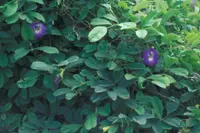
Butterfly pea (Clitoria ternatea) is a fast-growing tropical vine known for its vivid blue, pea-shaped flowers and soft green foliage. It often climbs on supports or trails if left untrained.
In nature it occurs across South and Southeast Asia, thriving in warm, sunny, and relatively open habitats. The plant is usually grown as an ornamental, and in some regions its flowers are used to color drinks and food.
This species is generally considered easy to grow where temperatures stay warm, as it tolerates poor soils and moderate dry spells once established. To care for Butterfly pea, provide bright light, a well-drained soil, and regular moisture during active growth.

Care Difficulty
Moderate Care

Light Preference
Full Sun

Water Requirements
Regular Water

Temperature Preference
Tropical / Frost Sensitive

Hardiness Zone
10–12

Soil Texture
Sandy, Loamy, Organic-rich

Soil pH
Slightly acidic (6.5–7.0), Neutral (7.0)

Soil Drainage
Moist but well-drained

Fertilization
Light (every 4–6 weeks)
Scan your plant to receive care tips personalized for your specific plant
Available on iOS and Android
Clitoria ternatea is a sun-loving vine that flowers best with strong, consistent light.
Clitoria ternatea prefers evenly moist, well-drained soil and does not tolerate waterlogged conditions.
This species thrives in warm conditions and reacts quickly to cold stress.
Clitoria ternatea grows well in typical indoor humidity but benefits from slightly elevated moisture in very dry homes.
Clitoria ternatea prefers loose, well-aerated soil that drains quickly yet retains moderate moisture.
This species is well suited to container growing outdoors on patios, balconies, or near supports.
Clitoria ternatea responds well to modest feeding during its active growing season.
Pruning helps Clitoria ternatea stay compact, vigorous, and floriferous.
This vine adapts well to both ground planting and containers when repotted or transplanted with care.
Clitoria ternatea is commonly propagated from both seeds and softwood cuttings.
This tropical vine is frost-sensitive and needs protection in regions with cold winters.

Plant Health Check
Not sure what's wrong with your plant? Check your plant's health inside the app.
The flowers produce intense blue anthocyanin pigments, mainly ternatins, which are unusually stable and used as natural food colorants and pH indicators that shift color in acidic or alkaline solutions.
As a member of the Fabaceae family, its roots form symbioses with Rhizobium bacteria that fix atmospheric nitrogen, improving soil fertility and supporting use as a cover crop and forage plant in tropical agriculture.
The flowers are adapted to rainy tropical climates; their keel-shaped petal structure helps protect pollen from being washed away while still allowing access to pollinators such as bees.

The genome of Clitoria ternatea has been sequenced in detail, and researchers are using it as a model for studying the biosynthesis of rare polyacylated anthocyanins, which may help breeders develop new naturally blue or purple food crops.
Flowers are widely used fresh or dried for herbal teas, food coloring, and garnish. They are generally regarded as safe when pesticide-free and used in moderate amounts. Some people may experience mild stomach discomfort if consuming large quantities.
Keep your plants happy and healthy with plant identification, disease detection, and easy care guidance.