Salt-wind placement
Use this shrub as a front-line windbreak in coastal gardens, placing it where it receives prevailing sea winds to take advantage of its natural salt tolerance while sheltering more sensitive plants behind it.

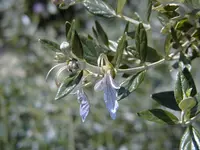
Tree germander (Teucrium fruticans) is an evergreen shrub from the Mediterranean region, valued for its silvery foliage and compact, bushy growth. It typically forms a rounded mound with small gray-green leaves and pale blue flowers that attract bees. This shrub is often used in coastal gardens, low hedges, and sunny mixed borders due to its tolerance of wind, heat, and poor, dry soils. It prefers full sun, good drainage, and relatively low to moderate moisture. These traits make it a practical choice for gardeners who want to care for Tree germander with minimal intervention once it is established.

Care Difficulty
Easy Care

Light Preference
Full Sun

Water Requirements
Low Water

Temperature Preference
Warm Climate

Hardiness Zone
8–10

Soil Texture
Sandy, Loamy, Rocky

Soil pH
Slightly alkaline (7.0–7.5), Alkaline (7.5–8.5)

Soil Drainage
Well-drained

Fertilization
Minimal (feed rarely)
Scan your plant to receive care tips personalized for your specific plant
Available on iOS and Android
This Mediterranean shrub thrives in bright conditions and rewards consistent sun exposure with dense, silvery growth.
This drought-tolerant shrub prefers infrequent, deeper watering once established rather than frequent light applications.
This shrub favors mild, Mediterranean-type climates with warm summers and only light winter cold.
Humidity is rarely critical for this drought-tolerant shrub if air is not extremely dry.
This shrub prefers lean, fast-draining soil that mimics its Mediterranean origin.
This species adapts well to container growing outdoors when given adequate root space and drainage.
Teucrium fruticans benefits from modest feeding in containers or poor soils but rarely needs heavy fertilizer in the ground.
Pruning maintains structure, encourages dense growth, and keeps Teucrium fruticans flowering well.
This shrub is most often grown in the ground, but container plants and young shrubs may need occasional transplanting.
Teucrium fruticans is commonly propagated from semi-ripe cuttings for consistent, true-to-type plants.
This Mediterranean shrub is moderately frost tolerant but benefits from some winter attention in colder regions.

Plant Health Check
Not sure what's wrong with your plant? Check your plant's health inside the app.
The leaves have a dense layer of tiny hairs that gives them a silvery appearance and helps reduce water loss and leaf temperature in intense Mediterranean sun.
This shrub is naturally adapted to coastal habitats and tolerates salt-laden winds and alkaline, stony soils better than many other ornamental shrubs.
In mild climates it flowers from late autumn into spring, providing an important nectar source for bees and other pollinators when few other shrubs are in bloom.

In traditional Mediterranean gardens, this species has long been clipped into low hedges and geometric forms because its fine branching structure and small opposite leaves respond well to repeated pruning without losing vigor.
Lack of flowers usually comes from too much shade, heavy feeding with high-nitrogen fertilizer, or pruning at the wrong time that removes flower buds. Ensure strong light, avoid overfertilizing, and prune lightly right after the main flowering flush.
Keep your plants happy and healthy with plant identification, disease detection, and easy care guidance.