Edge stabilization
Plant near stones, path edges, or low retaining walls so the creeping stems can drape and root lightly into cracks, which helps stabilize soil on small slopes and reduces erosion when growing Alchemilla procumbens.

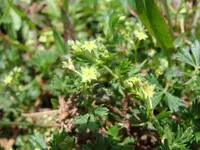
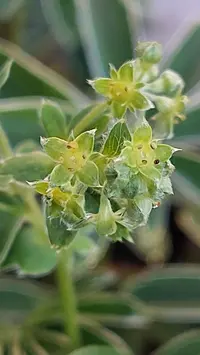
Alchemilla procumbens is a low-growing perennial herb in the rose family, forming loose mats or small clumps close to the ground. Its rounded, softly lobed leaves can hold dew or rain in small droplets, giving the foliage a distinctive beaded look.
This species is native to parts of Europe and western Asia, where it occurs in open grassland, rocky slopes, and light woodland edges. It tends to be a modest, unobtrusive plant, with small yellow-green flowers held above the leaves.
Alchemilla procumbens is generally considered undemanding if given reasonably moist, well-drained soil and at least moderate light. Gardeners usually find it easy to care for Alchemilla procumbens when conditions are not extremely hot or dry.

Care Difficulty
Easy Care

Light Preference
Partial Shade

Water Requirements
Moderate Water

Temperature Preference
Cool Climate

Hardiness Zone
5–8

Soil Texture
Loamy, Silty, Organic-rich

Soil pH
Acidic (5.5–6.5), Slightly acidic (6.5–7.0)

Soil Drainage
Moist but well-drained

Fertilization
Minimal (feed rarely)
Scan your plant to receive care tips personalized for your specific plant
Available on iOS and Android
This low, spreading perennial thrives in cool, mild light rather than harsh sun.
This plant prefers consistently moist but not saturated soil.
This hardy groundcover tolerates a wide range of outdoor temperatures in temperate climates.
This species handles typical outdoor humidity and does not need special humidity management.
Alchemilla procumbens prefers loose, moderately moist, well-drained soil that does not stay waterlogged.
This species suits container growing when the pot supports its mat-forming, slightly spreading habit.
This plant grows well in average garden soil and usually needs only modest feeding.
Pruning is simple and helps keep this low perennial dense and tidy.
This species is most often grown in the ground, where it rarely needs moving once established.
Multiplication is straightforward and usually done by division or seed.
This hardy perennial tolerates typical temperate winters and usually needs minimal intervention.

Plant Health Check
Not sure what's wrong with your plant? Check your plant's health inside the app.
This species forms a very low, creeping rosette that hugs the ground more tightly than many other Alchemilla species, which helps it tolerate exposed, open habitats with wind and occasional disturbance.
Alchemilla procumbens is typically associated with calcareous (lime-rich) substrates, and in the wild it is often recorded from base-rich grasslands and rocky slopes influenced by limestone or other alkaline parent rock.
The species has a mainly central and western European distribution, occurring in scattered, often localized populations that reflect its relatively specific habitat requirements rather than broad, continuous ranges.
This species forms low, slowly spreading mats rather than running aggressively. It can edge outward over time, especially in moist, fertile sites, but is usually easy to keep within bounds by lifting or edging clumps.
Keep your plants happy and healthy with plant identification, disease detection, and easy care guidance.