


Mounting strategy
Mount plants on cork or hardwood with a thin pad of long-fiber sphagnum just around the roots, leaving the crown exposed so new growths and roots can attach and dry quickly after each watering.

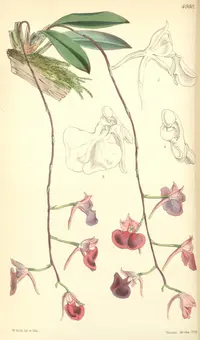
Comparettia falcata, commonly called the snail orchid, is a miniature epiphytic orchid that typically grows on tree branches in tropical forests. It forms small clumps with narrow, arching leaves and produces bright, showy flowers that often appear in clusters along thin stems.
This species is native to higher-elevation regions of South America, where it experiences cool to intermediate temperatures and good air movement. Its compact size and free-flowering habit make it appealing, but its need for consistent moisture, humidity, and bright filtered light can be challenging for beginners learning how to care for Snail orchid.

Care Difficulty
Hard Care

Light Preference
Bright Indirect Light

Water Requirements
Keep Soil Moist

Temperature Preference
Tropical / Frost Sensitive

Hardiness Zone
11–12

Soil Texture
Peaty, Organic-rich, Sandy

Soil pH
Acidic (5.5–6.5)

Soil Drainage
Well-drained

Fertilization
Heavy (weekly, diluted)
Scan your plant to receive care tips personalized for your specific plant
Available on iOS and Android
This compact epiphytic orchid prefers bright, gentle light that mimics filtered forest conditions.
Comparettia falcata prefers evenly moist conditions with excellent drainage around its roots.
This orchid grows best in intermediate to warm conditions with stable, frost-free temperatures.
This miniature epiphytic orchid needs consistently high humidity to thrive.
This orchid grows best mounted or in a very open, airy orchid mix rather than conventional potting soil.
This species is suitable for container growing, though many growers also mount it for extra airflow.
Comparettia falcata is a compact epiphytic orchid that benefits from light, steady feeding during active growth.
Comparettia falcata needs only light pruning to keep plants tidy and flowering well.
This small orchid prefers snug conditions and infrequent repotting or remounting.
Propagation of Comparettia falcata is usually done by careful division of mature clumps.
This warmth-loving orchid is frost sensitive and needs sheltered winter conditions.

Plant Health Check
Not sure what's wrong with your plant? Check your plant's health inside the app.
This small orchid typically grows on twigs and slender branches in humid cloud forests, where it relies on frequent mists rather than heavy rain for its water supply.
It produces many tiny, bright orange to reddish flowers packed along thin arching stems, creating a brush or bottlebrush effect that is very attractive to small pollinating insects.
The plant forms small, flattened pseudobulbs with just one narrow leaf each, an efficient growth form that helps reduce water loss while anchoring it securely on exposed host branches.

This species naturally occurs at relatively high elevations in parts of Colombia and Ecuador, where it can experience strong daily temperature shifts yet still bloom reliably under cool, moist, and breezy montane conditions.
Lack of blooms usually comes from insufficient light, too-warm nights, or skipped fertilizer during active growth. This species also needs a slight day–night temperature drop and a short, drier rest after flowering to set new spikes.
Keep your plants happy and healthy with plant identification, disease detection, and easy care guidance.


swamp rosemallow
Hibiscus grandiflorus
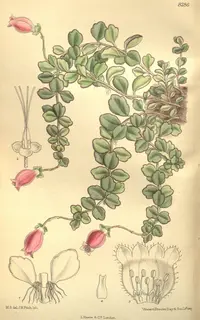
Kalanchoe uniflora
Kalanchoe uniflora
 POPULAR
Bolivian begonia
Begonia boliviensis
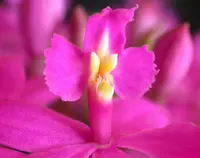
Epidendrum denticulatum
Epidendrum denticulatum

Crystal Stonecrop
Crassula pellucida
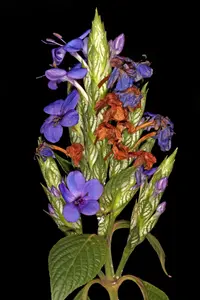
blue-sage
Eranthemum pulchellum
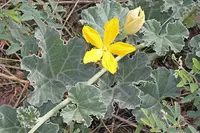
melon loco
Apodanthera undulata
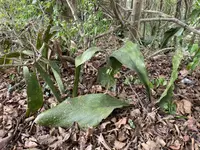
Dracaena hyacinthoides
Dracaena hyacinthoides