Timed pinching
Pinch out the growing tips when plants are 20–25 cm tall and again 2–3 weeks later to promote a bushier structure and more calyx-bearing branches.

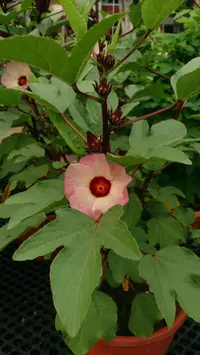
Roselle, Hibiscus sabdariffa, is a fast-growing shrubby hibiscus grown for its fleshy red calyces and attractive, lobed green leaves. It usually has upright stems and pale yellow flowers with dark centers.
This species is native to tropical Africa and is now widely grown in warm regions worldwide, especially in Asia and the Caribbean. It behaves as a tender perennial in frost-free climates but is often grown as an annual in cooler areas.
Roselle prefers warm temperatures, plenty of sun, and evenly moist, well-drained soil. Once its basic needs are understood, it is relatively straightforward to care for Roselle in home gardens or large containers.

Care Difficulty
Moderate Care

Light Preference
Full Sun

Water Requirements
Regular Water

Temperature Preference
Tropical / Frost Sensitive

Hardiness Zone
9–12

Soil Texture
Sandy, Loamy, Organic-rich

Soil pH
Acidic (5.5–6.5), Slightly acidic (6.5–7.0)

Soil Drainage
Moist but well-drained

Fertilization
Moderate (every 2–4 weeks)
Scan your plant to receive care tips personalized for your specific plant
Available on iOS and Android
This warm-season shrub needs strong sun to flower and develop fleshy calyces for harvest.
This species prefers evenly moist, well-drained soil and reacts quickly to both drought and waterlogging.
This plant behaves as a heat-loving annual in most climates and stops growing when conditions are too cool.
Hibiscus sabdariffa prefers moderately humid air and shows stress if kept very dry for long periods.
Hibiscus sabdariffa grows best in deep, loose, well-drained soil that still holds steady moisture.
This species is suitable for container growing when the pot is chosen to match its vigorous root system.
Hibiscus sabdariffa responds well to moderate, consistent feeding during its warm growing season.
Pruning Hibiscus sabdariffa helps maintain a compact shape and encourages more flowering shoots.
Hibiscus sabdariffa is usually grown as an annual and benefits most from careful transplanting rather than frequent repotting.
Hibiscus sabdariffa is commonly propagated from seeds, which germinate reliably in warm conditions.
Hibiscus sabdariffa is frost-tender and usually grown as a warm-season annual, so winter care focuses on protection from freezing.

Plant Health Check
Not sure what's wrong with your plant? Check your plant's health inside the app.
The fleshy red calyces that form after flowering are harvested and used globally to make sour, cranberry-like beverages, jams, and food colorants due to their high content of organic acids and anthocyanin pigments.
This species is a short-day plant, meaning it initiates flowering when nights become longer than a critical length, so in many regions it naturally blooms and sets calyces in late summer to fall.
Beyond its culinary use, the stems contain strong bast fibers that have been traditionally processed into rope, twine, and coarse textiles as a local substitute for jute in parts of Africa and Asia.

Roselle has been independently adopted into distinct traditional beverages in multiple cultures, including Caribbean sorrel drink and West African bissap, making it one of the most widely consumed floral-based drinks across tropical regions despite being a single plant species.
Lack of flowers often comes from insufficient light, cool temperatures, or excess nitrogen fertilizer. Crowding, drought stress, and skipping regular harvesting of calyces also reduce buds. Improve those conditions and flowering usually resumes within a few weeks.
Keep your plants happy and healthy with plant identification, disease detection, and easy care guidance.