Encourage Deep Roots
During the first growing season, water less often but deeply so the root system is trained to grow down rather than stay near the surface, which improves long-term drought resilience when growing white prairie clover.

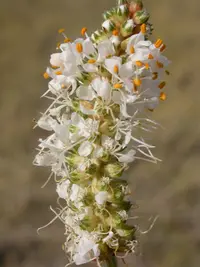
White prairie clover, Dalea candida, is a perennial wildflower in the legume family, native to North American prairies and open grasslands. It forms clumps of fine, narrow leaves and slender stems topped with white, bottlebrush-like flower spikes in summer.
This species typically grows in full sun and well-drained, often dry or rocky soils, where it develops a deep taproot. It is valued for its drought tolerance, ability to fix nitrogen in the soil, and strong appeal to bees and other pollinators.
Because it prefers lean, low-fertility conditions and resents waterlogged soil, it is generally easy to manage once established. Gardeners who learn how to care for white prairie clover usually find it a resilient choice for meadow or xeric plantings.

Care Difficulty
Easy Care

Light Preference
Full Sun

Water Requirements
Low Water

Temperature Preference
Cold Hardy

Hardiness Zone
3–8

Soil Texture
Sandy, Loamy, Rocky

Soil pH
Slightly acidic (6.5–7.0), Slightly alkaline (7.0–7.5)

Soil Drainage
Well-drained

Fertilization
Minimal (feed rarely)
Scan your plant to receive care tips personalized for your specific plant
Available on iOS and Android
Dalea candida thrives in strong, open sun typical of prairie habitats.
This deep-rooted prairie perennial prefers dry to moderately moist conditions once established.
This species is adapted to continental climates with cold winters and hot summers.
Humidity is not a significant factor for Dalea candida, which is adapted to dry prairie air.
Dalea candida prefers lean, dry, well-drained soil that prevents prolonged moisture around the roots.
This species can be grown in containers if the pot is set up to drain and dry quickly.
Dalea candida is a tough native legume that usually needs only light feeding in poor soils.
Dalea candida benefits from light, well-timed pruning to maintain a compact, floriferous shape.
This deep-rooted prairie perennial is better transplanted young, as mature clumps dislike disturbance.
Propagation of Dalea candida is most reliable from seed, with some success from careful division of young plants.
This cold-hardy prairie species usually needs minimal winter care in the ground across most temperate regions.

Plant Health Check
Not sure what's wrong with your plant? Check your plant's health inside the app.
White prairie clover is a key nectar and pollen source for several specialist native bees in North American prairies, including species that preferentially visit Dalea flowers over other legumes.
Mature plants develop a long taproot that can reach well over 1 m deep in undisturbed prairie soils, helping them access deep moisture and stabilize fragile grassland slopes.
As a legume, it forms nodules on its roots with Rhizobium bacteria that convert atmospheric nitrogen into forms usable by plants, enriching prairie soils and supporting neighboring grasses and forbs.

White prairie clover often helps anchor early and mid-stage tallgrass prairie restorations, because its combination of deep roots, nitrogen-fixing ability, and dense fibrous side roots improves soil structure and speeds the return of a diverse native plant community.
Poor flowering usually comes from too much shade, overly rich or wet soil, or plants that are still immature. Ensure full sun, lean well-drained soil, and avoid high-nitrogen fertilizer to support bud formation and normal summer blooming.
Keep your plants happy and healthy with plant identification, disease detection, and easy care guidance.