scarletcreeper Care (Ipomoea hederifolia)

Also known as: Ivy-Leaf Morning-Glory
scarletcreeper

About scarletcreeper

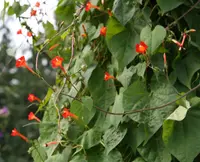
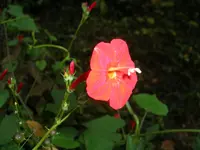
Scarletcreeper (Ipomoea hederifolia) is a fast-growing annual vine in the morning glory family, valued for its bright red, tubular flowers. It typically climbs by twining, with slender stems and delicate, often lobed leaves that create a light, airy screen on fences or trellises.

In nature, it occurs in warm regions of the Americas and has naturalized in many subtropical and tropical areas. It can self-seed and spread where conditions suit it.

This species is generally easy to grow if given sun, warmth, and well-drained soil. Once established, it tolerates short dry periods, which makes it relatively simple to care for scarletcreeper in typical garden settings.

Main Plant Requirements

Care Difficulty

Easy Care

Light Preference

Full Sun

Water Requirements

Moderate Water

Temperature Preference

Tropical / Frost Sensitive

Hardiness Zone

9–11

Soil Texture

Sandy, Loamy, Organic-rich

Soil pH

Acidic (5.5–6.5), Slightly acidic (6.5–7.0)

Soil Drainage

Well-drained

Fertilization

Light (every 4–6 weeks)

Get Personalized Care Plan

Scan your plant to receive care tips personalized for your specific plant

Available on iOS and Android

How to Care for the scarletcreeper

Ipomoea hederifolia thrives in strong sun for vigorous flowering and dense growth.

  • Provide 6–8 hours of direct sun daily; morning to early afternoon sun is ideal for scarletcreeper in most US climates.
  • Plant in a site with full sun but allow light afternoon shade in very hot regions to reduce leaf scorch and wilting.
  • In partial shade (3–4 hours sun), expect fewer flowers and longer, sparser vines; avoid deep shade, which leads to weak, pale growth.

Ipomoea hederifolia prefers evenly moist, well-drained soil rather than constant wetness or drought.

  • Water when the top 3–5 cm of soil feels dry, allowing deeper soil to stay slightly moist, especially during active summer growth.
  • Use soil that drains freely; standing water or heavy clay encourages root rot, yellowing leaves, and soft, collapsing stems.
  • In hot weather, look for limp, dull leaves as a cue to water; in cooler seasons, reduce frequency so soil partly dries between waterings.

This warm-season vine grows best in consistently warm conditions without frost exposure.

  • Aim for 70–85°F (21–29°C) during the growing season for fast growth and abundant flowering.
  • Protect from temperatures below 50°F (10°C); light frost around 32°F (0°C) can kill foliage and often the entire plant.
  • Ipomoea hederifolia tolerates brief heat up to about 95°F (35°C) if soil moisture is maintained, but flowering may slow in extreme heat.

This species grows well in typical outdoor humidity and rarely needs special humidity management.

  • Target 40–60% humidity, which is common in most outdoor summer conditions in areas where scarletcreeper is grown.
  • Dry air is usually tolerated, but very hot, arid conditions can cause leaf edges to crisp and flower buds to dry up.
  • In very dry climates, group plants close together and mulch the soil surface to reduce evaporation around the root zone.

Ipomoea hederifolia prefers light, well-drained soil that does not stay waterlogged after rain or irrigation.

  • Use a loose sandy or loamy mix with moderate organic matter, such as garden soil blended with compost and coarse sand.
  • Ensure rapid drainage by adding 20–30% perlite to heavy or clay-based soil to increase aeration and reduce compaction.
  • Aim for slightly acidic to neutral pH around 6.0–7.0, avoiding strongly alkaline soils that can limit nutrient availability.
  • Avoid dense, poorly drained, or constantly wet ground, which greatly increases the risk of root rot and weak, spindly growth.

This vine is suitable for container growing when provided with enough root space and support.

  • Choose a deep, heavy container that resists tipping, as the climbing vines create a top-heavy load on trellises or supports.
  • Select a pot 30–40 cm wide to allow vigorous root run, which supports dense foliage and abundant flowering on limited soil volume.
  • Use a fast-draining potting mix and elevate the container slightly on feet or bricks so drainage holes never sit in standing water.

Ipomoea hederifolia grows vigorously in average soil and benefits from light, balanced feeding in the main growing season.

  • Use a balanced NPK fertilizer (such as 10-10-10) at 1/2 strength every 4–6 weeks during spring and summer.
  • Alternatively, mix in a thin layer of well-rotted compost around the root zone once in spring.
  • Avoid high-nitrogen products that push foliage at the expense of flowers on scarletcreeper vines.
  • Stop feeding in late summer to early fall so growth can slow naturally before winter.

Pruning Ipomoea hederifolia helps manage vigorous growth and maintain strong flowering.

  • Carry out main pruning in late winter or early spring before new growth begins.
  • Remove dead, damaged, or weak stems with clean, sharp hand pruners to reduce disease risk.
  • Thin congested or crossing vines to improve light and air movement through the plant structure.
  • Lightly shorten excessively long shoots during the season to guide shape and keep the vine within its support.

This annual vine is more often transplanted outdoors than repotted long term in containers.

  • Transplant seedlings after frost when roots lightly fill starter cells but are not root-bound or circling.
  • Move plants on a cool, overcast day in spring, disturbing the root ball as little as possible.
  • Set into well-drained soil at the same depth, water thoroughly, then keep evenly moist for 1–2 weeks.
  • Container plants only need shifting to a slightly larger pot if roots emerge heavily from drainage holes.

Ipomoea hederifolia is most commonly propagated from seed, which germinates readily in warm conditions.

  • Sow fresh seeds in spring after frost or indoors 4–6 weeks earlier under bright light.
  • Nick or soak seeds for several hours before sowing to speed water uptake and germination.
  • Use a light, well-drained seed mix and keep at 70–80°F with consistently moist, not waterlogged, media.
  • Softwood stem cuttings can root in warm, humid conditions but are less common than seed propagation.

This species is typically grown as a warm-season annual and does not tolerate hard frost.

  • In frost-prone climates, allow top growth to die back after freezing temperatures, then remove spent vines.
  • Mulch the soil where volunteers are welcome so dropped seeds have some insulation over winter.
  • In mild regions, self-sown seedlings often appear in spring; thin them to prevent overcrowding.
  • Container-grown plants in cooler areas are usually discarded after frost rather than overwintered indoors.

Care Tips

Early vine training

Install trellis or netting at planting time and gently wind young shoots onto the support every few days to encourage strong vertical growth and prevent tangling on nearby plants.

Controlled self-seeding

If you want repeat displays without spreading aggressively, allow only a few pods to mature on selected vines, collect the dry seeds, and sow them in marked spots next season instead of letting all pods shatter on the ground.

Bloom extension pinch

Pinch back the soft tips of overly vigorous young vines once they reach 20–30 cm to promote more side shoots, which produce a higher number of flowers over a longer period.

Targeted pest scouting

Inspect the undersides of leaves and tender shoot tips weekly for spider mites and caterpillars, and remove localized infestations by hand or with a strong water spray before resorting to insecticidal soap.

Seasonal cleanup strategy

At the end of the season, cut vines at the base and remove them from supports before they become brittle, which keeps structures clear, limits disease carryover, and makes caring for scarletcreeper easier the following year.

Common Pests and Diseases

Sweetpotato whitefly

This pest feeds on the undersides of leaves, causing yellowing, leaf drop, and sticky honeydew that encourages sooty mold growth.

Solution

Monitor leaf undersides frequently and hose plants with a strong water spray to dislodge adults and nymphs, then use insecticidal soap or horticultural oil on all leaf surfaces every 5–7 days until populations drop; remove heavily infested leaves and avoid excess nitrogen fertilizer that promotes soft, attractive growth.

Leaf beetles

These insects chew round holes or windows in the foliage and can skeletonize leaves on young vines, reducing vigor and flowering.

Solution

Hand-pick adults and larvae in the early morning, shake vines over a tray to collect beetles, and use floating row covers on young plants; if damage remains high, apply a neem-based product or spinosad in the evening, targeting leaf surfaces where beetles feed.

Fungal leaf spots

This disease causes small brown to dark lesions on leaves that may merge into larger blotches, leading to premature yellowing and leaf drop in warm, humid conditions.

Solution

Remove and discard affected leaves, water at soil level to keep foliage dry, and space plants to improve airflow; during extended wet periods, a copper-based fungicide applied according to label directions can help protect healthy foliage and is a key part of Ipomoea hederifolia care in humid climates.

Rust

This disease produces small orange to brown powdery pustules on leaf undersides, often with pale or yellow spots visible on the upper surface.

Solution

Promptly prune and dispose of infected leaves and any fallen plant debris, avoid overhead irrigation, and ensure good spacing; in recurrent cases, protect new growth with a sulfur or copper fungicide applied preventively in warm, moist weather.

Southern blight

This disease leads to sudden wilting and collapse of stems near the soil line, with white fungal growth and small tan sclerotia on the soil surface or stem base in hot conditions.

Solution

Remove and destroy affected plants including nearby soil, avoid burying plant debris, and improve drainage and crop rotation; in beds with a history of southern blight, raise planting areas, avoid overmulching the stem base, and consider solarizing soil during the hottest part of summer to reduce inoculum.

Interesting Facts

Distinctive ivy-like foliage

This species has shallowly to deeply lobed leaves that resemble those of ivy, which is unusual among most morning glories that tend to have heart-shaped leaves.

Specialized hummingbird partner

The long, narrow red flowers are adapted for pollination primarily by hummingbirds, whose beaks and feeding behavior match the tubular corolla and high-nectar rewards.

Short-lived climbing annual

In most of its range this vine completes its entire life cycle within a single warm season, rapidly climbing and flowering before dying back after setting seed.

Botan icon

Did you know?

In several regions outside its native range, this attractive ornamental climber has escaped cultivation and naturalized along roadsides, fences, and disturbed habitats, where it can form dense tangles that compete with local vegetation.

FAQs about scarletcreeper

This vine grows rapidly in warm weather, often reaching several meters in a single season if given support and adequate moisture. Regular monitoring is important so it does not overwhelm nearby plants or structures.

Grow Healthy Plants with Botan Care

Keep your plants happy and healthy with plant identification, disease detection, and easy care guidance.

Botan plant care app — identify plants on mobile

Explore More Plants