Grit-only top layer
After planting, add a 0.5–1 in layer of fine gravel around the crowns to keep leaf bases dry, reduce rot, and discourage moss and algae in tightly planted rock gardens.

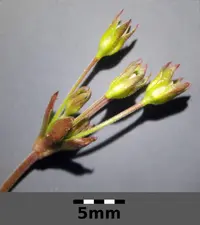
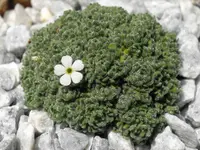
California rockjasmine (Androsace elongata) is a small annual alpine-style plant that forms loose rosettes with delicate stems topped by tiny white to pale pink flowers. It has a fine, airy look, with narrow leaves and flower clusters that sit just above the foliage, giving a light, cushion-like appearance.
This species is native to dry, rocky habitats in parts of Europe and western Asia but is grown in rock gardens and troughs in North America for its subtle charm. It prefers well-drained, gritty soil and open, sunny conditions, so care for California rockjasmine focuses mainly on drainage and avoiding excess moisture around the roots.

Care Difficulty
Moderate Care

Light Preference
Full Sun

Water Requirements
Low Water

Temperature Preference
Cold Hardy

Hardiness Zone
4–8

Soil Texture
Sandy, Loamy, Rocky

Soil pH
Acidic (5.5–6.5), Slightly acidic (6.5–7.0)

Soil Drainage
Well-drained

Fertilization
Minimal (feed rarely)
Scan your plant to receive care tips personalized for your specific plant
Available on iOS and Android
This alpine annual prefers bright, open conditions similar to its native rocky slopes.
This species prefers slightly dry, sharply drained conditions rather than constant moisture.
This small alpine annual handles cool conditions well but dislikes extreme heat and prolonged hard frost.
Humidity is usually not critical for Androsace elongata, which prefers dry, airy conditions similar to open rocky slopes.
Androsace elongata prefers lean, sharply drained, mineral-based soil that mimics rocky or sandy alpine sites.
This species can be grown in containers if the pot is configured to stay dry around the roots.
This alpine annual needs only light feeding, as many wild populations of California rockjasmine thrive on poor soils.
Androsace elongata needs only minimal pruning, mainly to keep the small rosettes tidy and flowering well.
This species is usually grown in rock gardens or alpine beds, so care focuses on gentle transplanting rather than frequent repotting.
Propagation of Androsace elongata is most reliable from seed, matching its natural annual life cycle.
This alpine annual is reasonably cold hardy and usually needs little specific winter care in the ground.

Plant Health Check
Not sure what's wrong with your plant? Check your plant's health inside the app.
This small primrose relative is an annual species that naturally completes its entire life cycle within one growing season in open, often rocky habitats across central and southern Europe and parts of western Asia.
It forms loose basal rosettes of very narrow, almost threadlike leaves, an adaptation that reduces water loss and allows the plant to thrive on dry, exposed soils with strong sun and wind.
Its tiny white to pale pink flowers are carried in small umbels on slender, wiry stems, which elevate the blooms just above surrounding mosses and low vegetation, improving access for pollinating insects.
This species usually flowers in spring, often from March to May, depending on climate. Individual blooms are short-lived, but plants produce many small flowers over several weeks, forming a low, airy display in rock gardens or gravel beds.
Keep your plants happy and healthy with plant identification, disease detection, and easy care guidance.