Rocky planting pockets
Tuck plants into small crevices between stones or rock chunks filled with gritty mix to mimic alpine screes, which stabilizes roots and reduces crown rot in wet spells.

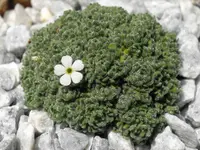
Swiss rockjasmine, Androsace helvetica, is a compact alpine perennial forming tight cushions of tiny rosettes. It produces small white to pale pink star-shaped flowers above the foliage. This species naturally occurs on rocky slopes and crevices in high mountain regions of the European Alps, where conditions are cool, bright, and well drained.
The plant is adapted to harsh climates, so it dislikes heat, humidity, and waterlogged soil in cultivation. It can be challenging for beginners, as it demands sharp drainage, good air movement, and careful watering. Gardeners who learn how to care for Swiss rockjasmine often grow it in rock gardens, troughs, or containers that mimic its natural habitat.

Care Difficulty
Hard Care

Light Preference
Full Sun

Water Requirements
Low Water

Temperature Preference
Cold Hardy

Hardiness Zone
4–7

Soil Texture
Sandy, Loamy, Rocky

Soil pH
Acidic (5.5–6.5), Slightly acidic (6.5–7.0)

Soil Drainage
Well-drained

Fertilization
Minimal (feed rarely)
Scan your plant to receive care tips personalized for your specific plant
Available on iOS and Android
This alpine species needs strong light with some protection from intense heat to flower and stay compact.
This plant prefers evenly moist but never saturated soil, especially during active growth.
This high-alpine cushion plant is very cold-hardy but resents prolonged heat and warm, wet conditions.
This alpine cushion plant prefers cool, relatively dry air with low to moderate humidity.
This species requires a sharply drained, gritty substrate that mimics alpine scree.
This plant can be grown in containers, especially alpine troughs, if drainage and root-zone aeration are tightly controlled.
This alpine cushion plant needs only light feeding in lean, sharply drained soil.
Pruning needs for Androsace helvetica are minimal and focus on tidiness and plant health.
This species is usually grown in rock gardens or troughs and dislikes frequent disturbance.
Androsace helvetica is most often propagated from seed, with division attempted only on well-established cushions.
This alpine species is cold hardy but benefits from good drainage and some winter protection from excess moisture.

Plant Health Check
Not sure what's wrong with your plant? Check your plant's health inside the app.
This species naturally grows among siliceous rocks in the central Alps, often at elevations above 2,000 m where few flowering plants can survive.
It forms dense, hemispherical cushion mats with very short stems and closely packed leaf rosettes, an adaptation that reduces heat loss and damage from strong alpine winds.
Its small, spatulate leaves are covered with fine hairs that reduce water loss, protect from intense UV radiation, and help the plant cope with rapid freeze–thaw cycles.

Androsace helvetica is considered a strict alpine specialist and has been used as a model species in studies examining how plants survived glacial periods and recolonized high mountain habitats after the ice retreated.
This species performs best outdoors in rock gardens, troughs, or crevices with cool summers and excellent drainage. Indoors, it usually struggles with heat and stagnant air, so Swiss rockjasmine indoor care is considered challenging and short‑lived.
Keep your plants happy and healthy with plant identification, disease detection, and easy care guidance.