Mountain sandwort Care (Arenaria montana)

Mountain sandwort

About Mountain sandwort

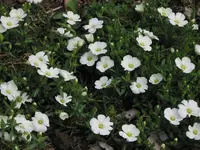
Mountain sandwort, Arenaria montana, is a low, mat-forming perennial often used as a groundcover or edging plant in rock and gravel gardens. It stays compact and dense, creating neat, cushion-like mounds.

Plants typically carry small, narrow, dark green leaves topped in spring with many white, star-shaped flowers. The clean, simple look fits well in minimalist or naturalistic designs.

Arenaria montana is native to mountainous regions of southwestern Europe, where it naturally grows in rocky, well-drained soils. In cultivation it prefers full sun to light shade and evenly moist but free-draining soil.

Its slow, tidy growth and modest care needs make it suitable for many gardeners, though good drainage is essential to care for Mountain sandwort successfully.

Main Plant Requirements

Care Difficulty

Moderate Care

Light Preference

Full Sun

Water Requirements

Moderate Water

Temperature Preference

Cold Hardy

Hardiness Zone

4–8

Soil Texture

Sandy, Loamy, Rocky

Soil pH

Slightly acidic (6.5–7.0), Neutral (7.0)

Soil Drainage

Well-drained

Fertilization

Minimal (feed rarely)

Get Personalized Care Plan

Scan your plant to receive care tips personalized for your specific plant

Available on iOS and Android

How to Care for the Mountain sandwort

This alpine perennial prefers bright conditions that mimic its native mountain habitats.

  • Provide 4–6 hours of direct morning sun with light afternoon shade, especially in hotter regions, to prevent leaf scorch.
  • Tolerates light or dappled shade, but dense shade leads to weak, open growth and fewer flowers in Mountain sandwort.
  • In cooler climates it can handle full sun all day, but monitor in summer; if foliage yellows or crisps, offer more shade or filtered light.

This plant prefers evenly moist but not soggy soil, especially during active growth and flowering.

  • Allow the top 2–3 cm of soil to dry before watering; use fingers to check rather than following a fixed schedule.
  • In spring and early summer, water more often during dry spells; in cool or wet seasons, reduce watering to avoid root rot in Arenaria montana.
  • Watch for wilting, dull foliage, or gap opening in the mat as signs of underwatering; yellowing, mushy stems or algae on soil indicate excess moisture or poor drainage.

This species is hardy and prefers cool to mild conditions rather than intense heat.

  • Optimal growth occurs at 55–70°F (13–21°C), especially in spring and early summer when flowering is strongest.
  • Established plants tolerate winter lows down to about 0°F (−18°C) with good drainage, but repeated freeze–thaw in heavy, wet soil can damage roots.
  • Heat above 80–85°F (27–29°C) can stress the plant; provide afternoon shade and avoid heat-reflecting surfaces to keep the root zone cooler in summer.

This alpine species tolerates typical indoor humidity and does not need special humidity management.

Soil for this alpine mat-former must be light, sharply drained, and never waterlogged.

  • Use a gritty mix such as 50–60% sandy or loamy soil blended with 40–50% mineral material like coarse sand, fine gravel, or grit.
  • Aim for slightly acidic to neutral pH, roughly 6.0–7.0, avoiding strongly acidic or chalky conditions unless you know your local water chemistry.
  • Improve aeration in heavy garden soil by incorporating coarse sand and small gravel throughout the top 15–20 cm before planting.
  • Avoid dense, peat-heavy, or clay-rich substrates that hold water around the crown, as this strongly increases the risk of root and crown rot in Arenaria montana.

This species can grow well in containers, especially troughs or shallow pots that mimic rocky slopes.

  • Choose a wide, shallow pot to match its mat-forming roots, which spread horizontally rather than deeply.
  • Use a heavy or stone-like container outdoors so the spreading foliage does not tip the pot in wind or rain.
  • Fill the pot with a very gritty, fast-draining mix and slightly mound the surface so water naturally sheds away from the plant’s crown.

Arenaria montana is light-feeding and needs only modest nutrition for good flowering and compact growth.

  • Use a balanced, slow-release fertilizer (for example 10-10-10) or a light topdressing of compost in early spring.
  • Apply once at the start of the main growing season; a second, light dose in midsummer is enough in poor soils.
  • Dilute liquid feeds to 1/2 strength and water onto moist soil, never onto dry roots.
  • Stop feeding in late summer so growth can harden before winter dormancy.

Arenaria montana responds well to light pruning that maintains a dense, tidy cushion of foliage and flowers.

  • Best time is right after the main flowering flush in late spring or early summer.
  • Shear back spent flower stems by 1/3–1/2 to encourage compact regrowth and possible rebloom.
  • Snip off dead, damaged, or yellowing shoots with clean scissors or hand pruners.
  • Avoid cutting into old, bare wood; leave some leafy growth on each stem to maintain vigor.

Most Mountain sandwort grows in rock gardens or borders, so focus on transplanting rather than frequent repotting.

  • Transplant in early spring or early fall when weather is cool and soil moisture is steady.
  • Move plants if growth declines, the clump becomes crowded, or roots circle inside a small pot.
  • Lift the clump gently, keep as much root ball intact as possible, and set at the same soil level.
  • Water thoroughly after transplanting, then keep soil slightly moist for 1–2 weeks to limit root stress.

Arenaria montana is commonly propagated by division and short stem cuttings to maintain desirable traits.

  • Divide mature clumps in early spring or early fall, replanting small, healthy sections with good roots.
  • Take 5–7 cm non-flowering tip cuttings in late spring, removing lower leaves.
  • Insert cuttings into a gritty, well-drained mix, keep lightly moist, and provide bright, indirect light.
  • Seeds can be sown in trays outdoors in fall or late winter, exposed to cool conditions that aid germination.

Arenaria montana is generally cold hardy in temperate climates and usually needs minimal winter care in the ground.

  • In colder regions, apply a thin mulch of gravel or coarse compost around, not over, the crown to moderate soil temperature.
  • Ensure soil drains well going into winter to reduce root rot risk in freeze-thaw cycles.
  • Container plants in very cold zones can be overwintered in a cold frame, unheated garage, or sheltered porch.

Care Tips

Rock-ledge Positioning

Plant slightly above the surrounding soil on a small rock ledge or raised edge so runoff drains away quickly and the crown stays dry in winter and wet spells.

Crown Protection Mulch

Use a very thin mulch layer of fine gravel around, but not on top of, the crown to keep foliage off wet soil while still allowing excellent air flow and drainage.

Snow And Ice Management

In colder climates, gently brush off heavy, wet snow and avoid repeated freeze–thaw cycles over soggy soil by improving drainage rather than covering the plant with plastic.

Controlled Spreading And Renewal

Every 2–3 years, lift and divide the outer, more vigorous sections of the mat in early spring, then replant only the healthiest pieces to keep the carpet dense and flowering well.

Alkalinity And Grit Top-Up

Once a year, lightly top-dress around the plants with a mix of horticultural grit and a small amount of garden lime to maintain sharp drainage and the slightly alkaline conditions preferred when growing Mountain sandwort.

Common Pests and Diseases

Crown rot

This disease develops in heavy or waterlogged soil and attacks the basal rosette where stems meet the roots. Symptoms include yellowing foliage, collapse of shoots, and brown, mushy tissue at the crown.

Solution

Improve drainage by amending soil with grit or sand, avoid overwatering, and never allow the plant to sit in standing water. Remove and discard affected plants, replant in a raised or sharply drained site, and avoid overhead watering around the crown to support long-term Arenaria montana care.

Botrytis blight

This disease appears in cool, damp conditions, especially in dense cushions of foliage. Symptoms include grey, fuzzy mold on leaves and flowers, water-soaked spots, and dieback of stems.

Solution

Increase air movement around the plant by thinning crowded mats and avoiding overhead irrigation, especially late in the day. Remove and discard all infected tissue, clean up spent flowers promptly, and if needed apply a labeled fungicide during prolonged wet weather to protect new growth.

Leaf spot

This disease causes small brown or dark purple spots on leaves, which may merge into larger patches and lead to premature leaf drop. Symptoms include thinning cushions and reduced flowering over time.

Solution

Trim and dispose of affected foliage, then water at soil level to keep leaves as dry as possible. Improve spacing and airflow, avoid high-nitrogen fertilization that encourages soft growth, and consider a targeted ornamental leaf-spot fungicide if the problem recurs yearly.

Aphids

These insects cluster on tender stems and flower stalks, sucking sap and causing distortion of new growth. Symptoms include sticky honeydew on foliage and increased risk of sooty mold on the compact mat of leaves.

Solution

Wash colonies off with a firm stream of water and pinch off heavily infested shoots. Encourage beneficial insects like lady beetles, use insecticidal soap or horticultural oil according to label directions, and avoid overfertilizing, which promotes soft growth that attracts aphids.

Spider mites

This pest thrives in hot, dry conditions on rock garden plants and forms fine webbing between the tiny leaves. Symptoms include stippled, dull foliage that may turn gray-green and dry at the tips of the cushion.

Solution

Increase humidity around the plant slightly by occasional hosing, and regularly spray the foliage with water to dislodge mites, focusing on the undersides of leaves. If populations remain high, use a miticidal soap or horticultural oil labeled for spider mites, taking care to treat during cooler parts of the day to avoid leaf scorch.

Interesting Facts

Alpine limestone specialist

This species is naturally restricted to mountainous regions of southwestern Europe, where it grows in crevices and shallow soils over limestone and other calcareous rock, which is why it prefers sharply drained, alkaline substrates in cultivation.

Evergreen cushion growth

The plant forms low, dense, evergreen cushions of small, opposite leaves that help it resist desiccation and cold in its native high-altitude habitats, allowing it to retain foliage through winter rather than dying back completely.

Short-lived but self-renewing

Although individual clumps can be relatively short-lived in garden conditions, it often persists by reseeding itself lightly around suitable rocky or gravelly spots, maintaining a stable presence in one area over time.

Botan icon

Did you know?

In its native Spanish and Pyrenean mountain habitats, this species can flower so profusely in late spring that entire rock ledges appear snow-covered from a distance, which is why it is widely used in rock gardens to create a similar sheet of white bloom when people grow Arenaria montana.

FAQs about Mountain sandwort

This species forms a low, spreading mat but is not generally aggressive. It enlarges slowly through short stems and natural self-seeding. It usually stays within its planted area if given well-drained soil and moderate space.

Grow Healthy Plants with Botan Care

Keep your plants happy and healthy with plant identification, disease detection, and easy care guidance.

Botan plant care app — identify plants on mobile

Explore More Plants