Sow In Situ
Start plants by direct seeding in the final site in late fall or very early spring, since this biennial resents root disturbance and often fails if repeatedly transplanted.

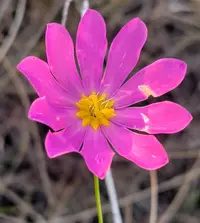
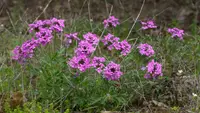
Bartram's rose gentian (Sabatia decandra) is a short-lived perennial wildflower in the gentian family, known for its star-shaped pink flowers with yellow centers. It usually grows upright in slender clumps and blooms in midsummer, creating a delicate but noticeable display in sunny, open habitats.
In nature it occurs mainly in the eastern United States, in moist meadows, wet prairies, and open edges of wetlands. It can be somewhat challenging for beginners because it prefers consistent moisture, lean or sandy soil, and does not compete well with aggressive plants. Those conditions guide how to care for Bartram's Rose Gentian in a garden setting.

Care Difficulty
Moderate Care

Light Preference
Full Sun

Water Requirements
Keep Soil Moist

Temperature Preference
Cool Climate

Hardiness Zone
5–8

Soil Texture
Sandy, Loamy, Silty

Soil pH
Acidic (5.5–6.5)

Soil Drainage
Moist but well-drained

Fertilization
Minimal (feed rarely)
Scan your plant to receive care tips personalized for your specific plant
Available on iOS and Android
This species prefers bright, open conditions similar to sunny meadows and moist prairies.
This plant naturally grows in moist, sometimes seasonally wet soils but still benefits from good drainage.
This species is a temperate wildflower adapted to outdoor seasonal changes.
Sabatia decandra prefers moderately moist air but usually adapts well to typical home or outdoor humidity.
Sabatia decandra grows best in moist, well-drained, slightly acidic mineral soils.
This species can be grown in containers, though it generally performs better in the ground for long-term plantings.
Sabatia decandra grows naturally in low-nutrient soils, so fertilizing should stay light and targeted.
Pruning Sabatia decandra is minimal and focuses on keeping plants tidy and encouraging flowering.
Sabatia decandra is usually grown as a meadow or wildflower plant, so transplanting is more common than container repotting.
Propagation of Sabatia decandra is most reliable from seed, with some growers also experimenting with softwood cuttings.
Sabatia decandra is generally cold hardy in much of its native range and needs limited winter attention outdoors.

Plant Health Check
Not sure what's wrong with your plant? Check your plant's health inside the app.
This species is naturally restricted to low, moist, often sandy habitats of the eastern North American coastal plain, where it favors seasonally wet meadows, pond margins, and open savannas with acidic soils.
The bright pink petals with a yellow, star-shaped center act as a nectar guide for bees and butterflies, helping pollinators efficiently locate the flower’s reproductive structures.
Sabatia decandra is typically annual or short-lived perennial, but maintains populations over time by producing abundant seed that germinates in open, disturbed, or seasonally bare patches of soil.

In several states within its native range, Sabatia decandra is considered regionally rare or of conservation concern because its specialized wetland habitats have been reduced or degraded by drainage, development, and succession to shrub or forest cover.
This species usually flowers in mid to late summer, often July–August. Individual blooms last several days, but the plant can keep producing new flowers for 3–6 weeks if growing conditions remain consistently moist and bright.
Keep your plants happy and healthy with plant identification, disease detection, and easy care guidance.