Dwarf crested iris Care (Iris cristata)

Also known as: crested iris
Dwarf crested iris

About Dwarf crested iris

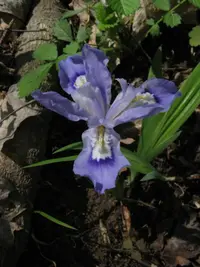
Dwarf crested iris, Iris cristata, is a low-growing, rhizomatous perennial valued as a spring-flowering groundcover. It forms dense clumps of narrow, sword-like leaves and short stems topped with soft lavender to blue flowers.

This species is native to the woodlands and rocky slopes of eastern North America, where it often spreads to form colonies. Its compact habit and spreading rhizomes make it useful for edging paths and filling shaded borders.

The plant is generally considered easy to grow if given the right site. It prefers dappled light, consistent moisture, and well-drained, humus-rich soil, and those conditions guide how to care for Dwarf crested iris.

Main Plant Requirements

Care Difficulty

Moderate Care

Light Preference

Partial Shade

Water Requirements

Moderate Water

Temperature Preference

Cold Hardy

Hardiness Zone

3–9

Soil Texture

Loamy, Sandy, Organic-rich

Soil pH

Acidic (5.5–6.5), Slightly acidic (6.5–7.0)

Soil Drainage

Moist but well-drained

Fertilization

Minimal (feed rarely)

Get Personalized Care Plan

Scan your plant to receive care tips personalized for your specific plant

Available on iOS and Android

How to Care for the Dwarf crested iris

Iris cristata prefers bright conditions with gentle sun rather than intense, all-day exposure.

  • Provide 3–5 hours of morning sun with afternoon shade, or dappled light under open trees, which suits Dwarf crested iris in woodland-style beds.
  • In hotter regions, protect from strong sun after 11 a.m. to prevent leaf scorch and faded flowers; use shade from buildings or taller plants.
  • In cooler climates, choose a spot with a bit more direct sun in spring, before trees leaf out, to support strong growth and flowering.

Iris cristata needs consistently moist but not waterlogged soil, especially during active growth.

  • Water when the top 2–3 cm of soil feels dry, aiming to keep the root zone evenly damp during spring and early summer growth.
  • Use loose, well-drained, humus-rich soil so water moves through quickly; avoid spots where puddles remain for more than 1–2 hours after rain.
  • Reduce watering once foliage starts to yellow or die back, but do not allow the rhizomes to sit in bone-dry soil for long periods.

This species is a cold-hardy woodland iris that tolerates a wide temperature range when established.

  • Optimal growing temperatures in spring are around 55–75°F (13–24°C), which support leaf expansion and flowering.
  • Dormant rhizomes tolerate winter lows near 0°F (-18°C) under mulch; brief dips slightly below this are usually safe in well-drained soil.
  • In summer, plants handle short heat waves up to about 90°F (32°C) if soil stays slightly moist and the site provides afternoon shade.

Iris cristata prefers moderately moist air but usually grows well in typical outdoor humidity levels.

  • Aim for 40–60% humidity, similar to many temperate woodland conditions where Dwarf crested iris naturally occurs.
  • Plant in sheltered, mulched spots to buffer drying winds, which can desiccate leaves in very dry air.
  • Watch for leaf tips browning or folding as signs of low-humidity stress and improve moisture by watering soil evenly, not misting foliage.

Iris cristata thrives in loose, humus-rich soil that stays evenly moist yet drains freely.

  • Use a loamy mix with 40–60% organic matter such as leaf mold or compost blended with garden soil and coarse sand or fine grit.
  • Ensure drainage is fast enough that water does not pool around the rhizomes, which are prone to rot in saturated conditions.
  • Target a slightly acidic to neutral pH of 6.0–7.0, avoiding highly alkaline or strongly acidic sites that limit nutrient uptake.
  • Improve aeration by incorporating shredded bark or pine fines into heavy clay and avoid compacted or waterlogged ground.

This species can be grown in containers if the pot is set up to mimic a shallow, cool, well-drained woodland soil profile.

  • Choose a wide, shallow container to accommodate spreading rhizomes and prevent deep, wet zones that can promote rot.
  • Use a heavier material such as clay if the container is exposed, as this stabilizes the shallow-rooted plant against wind.
  • Raise the pot slightly on feet or bricks so drainage holes stay clear and excess water escapes quickly after rain or irrigation.

Iris cristata benefits from light, thoughtful feeding but tolerates lean, woodland-type soils well.

  • Use a balanced, slow-release fertilizer (around 10-10-10) or a thin layer of compost in early spring as new growth appears.
  • Apply fertilizer once each spring for established clumps; heavy feeding encourages weak, lush foliage rather than more flowers.
  • Dilute any liquid feed to 1/2 strength and water the soil, not the leaves or rhizomes, to avoid burn.
  • Stop feeding by late summer and do not fertilize during winter dormancy to maintain a natural growth cycle for Dwarf crested iris.

Pruning needs for Iris cristata are light and focus on cleanliness and maintaining a compact mat.

  • Cut spent flower stalks at the base after blooming to keep the plant tidy and reduce seed set.
  • Remove dead, yellowed, or damaged leaves at any time using clean, sharp scissors or hand pruners.
  • In late fall, trim only badly tattered foliage, leaving healthy leaves to support the rhizomes.
  • Thin out crowded fans every few years to improve air flow, reduce disease pressure, and encourage better flowering.

This species is usually grown in the ground, so transplanting clumps is more common than true repotting.

  • Plan to lift and divide Iris cristata every 3–5 years when flowering declines or the clump becomes crowded.
  • Transplant in early fall or very early spring so roots can re-establish in cool, moist conditions.
  • If container-grown, repot when roots circle the pot or growth slows, stepping up only 1 pot size.
  • Reduce root stress by watering thoroughly before lifting, keeping rhizomes shaded and moist, and replanting at the same soil depth.

Iris cristata is most often propagated by division, which keeps named forms true and establishes new clumps quickly.

  • Divide mature clumps in early fall or very early spring when soil is cool and workable.
  • Lift the clump, then separate rhizomes by hand or with a clean knife, ensuring each piece has healthy roots and at least 1 fan.
  • Replant divisions shallowly in humus-rich, well-drained soil, spacing 20–30 cm apart and watering well.
  • Seed propagation is possible but slow; provide cold stratification and expect variable seedlings compared with the parent plant.

This eastern North American native is cold hardy and usually needs only minimal winter care in most temperate gardens.

  • Dormant rhizomes tolerate typical freezes in USDA zones roughly 4–8 without special covering.
  • Apply a light mulch layer (2–5 cm) of shredded leaves or bark after the ground cools to buffer temperature swings.
  • Avoid heavy, wet mulch over the crowns, which can trap moisture and increase rot risk during winter thaws.
  • Container-grown plants in colder regions are safer in an unheated but sheltered space, such as a cold frame or attached garage.

Care Tips

Rhizome Positioning

Set rhizomes just at or slightly below soil level when planting or resetting clumps, since planting them too deep greatly reduces flowering and slows spread.

Divide On Schedule

Lift and divide congested clumps every 3–4 years in late summer, replanting only the youngest, firm rhizomes to maintain dense groundcover and reliable bloom.

Leaf Litter Mulch

Use a light layer of shredded leaf litter rather than heavy bark mulch to keep roots cool and moist while still allowing the rhizomes to slowly creep and spread.

Slope And Drainage

Place plants on a gentle slope or raised section of a woodland bed so excess water runs off, which helps prevent rhizome rot in wet climates.

Edge And Contain

Install a shallow edging strip or dig a small spade trench around beds every few years to gently contain spreading rhizomes and keep paths and neighboring plantings clear while growing Dwarf crested iris.

Common Pests and Diseases

Iris borer

This pest is a caterpillar that tunnels into rhizomes, causing foliage streaking, collapse, and rot at the base of the fans. Symptoms include notched leaves in spring followed by browning, wilting, and foul-smelling rhizomes.

Solution

Inspect foliage in spring and remove leaves showing early streaking or notches, destroying any caterpillars found. In late fall, cut back and dispose of old leaves and debris to remove overwintering eggs, and in severe cases use a targeted caterpillar insecticide labeled for iris borers, applied according to local guidelines and timing for your region.

Rhizome soft rot

This disease is usually bacterial and causes soft, mushy, foul-smelling rhizomes, often starting where iris borers or mechanical injuries have opened tissue. Symptoms include yellowing or collapsing foliage and easily crushed rhizomes that exude a slimy, dark liquid.

Solution

Dig up affected clumps, cut away all soft or discolored tissue, and discard severely rotted pieces in the trash. Allow firm, healthy rhizome sections to dry for a day, dust cut surfaces with sulfur or another appropriate fungicide/bactericide, then replant in well-drained soil with better air circulation and avoid overwatering or burying rhizomes too deeply.

Leaf spot (Didymellina)

This disease causes small, water-soaked spots on leaves that enlarge into brown or tan lesions with darker borders, often starting on older foliage. Symptoms include premature leaf yellowing and a general decline in vigor, especially in dense or shaded plantings.

Solution

Remove and discard spotted or dead leaves during the growing season and cut back all foliage after it dies down to reduce overwintering spores. Improve spacing and airflow, avoid overhead watering, and in persistent cases use a labeled ornamental fungicide applied preventively in early spring when new foliage emerges.

Slugs and snails

These pests chew irregular holes and ragged edges in young leaves and flowers, often leaving silvery slime trails on foliage and surrounding soil. Damage is most noticeable on low, spreading clumps in moist, shaded sites where these mollusks hide during the day.

Solution

Hand-pick slugs and snails in the evening, reduce hiding places by removing dense mulch and debris, and keep the planting area slightly drier. Use barriers such as copper tape around small beds or place iron phosphate slug baits according to label directions, keeping them away from children and pets.

Interesting Facts

Native woodland specialist

This species is native to the eastern United States, where it naturally forms low, spreading colonies on shaded forest floors, rocky slopes, and stream banks over well-drained, often acidic soils.

Crested bearded flowers

Its small blue to lavender flowers have a raised, comb-like crest of whitish to yellow-tipped ridges on the falls (outer petals), which serves as a nectar guide to attract and orient pollinating insects.

Rhizomes as groundcover

Short, shallow rhizomes spread horizontally just below the soil surface, allowing dense mats that help stabilize leaf litter and thin soils in woodland habitats.

Botan icon

Did you know?

This dwarf iris is considered one of the smallest native irises in North America, with flowers often only 2–4 cm across and foliage rarely exceeding 10–15 cm in height, making it an unusually miniature species within the genus.

FAQs about Dwarf crested iris

Lack of flowers usually comes from too much shade, overcrowded rhizomes, or nutrient-poor soil. Divide clumps every 3–4 years, maintain partial shade with some spring sun, and apply a light, balanced fertilizer in early spring.

Grow Healthy Plants with Botan Care

Keep your plants happy and healthy with plant identification, disease detection, and easy care guidance.


Botan plant care app — identify plants on mobile

Explore More Plants