big cypress star orchid Care (Epidendrum strobiliferum)

Also known as: Cone-bearing Epidendrum
big cypress star orchid

About big cypress star orchid

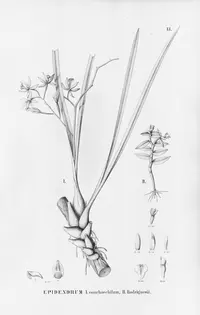
The big cypress star orchid, Epidendrum strobiliferum, is a small epiphytic orchid that naturally grows on trees in swampy forests and wetlands. It is native to parts of Central America and the Caribbean.

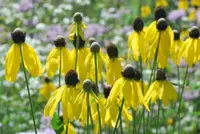
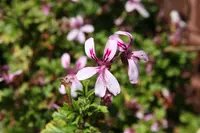
Plants form slender, upright canes with narrow leaves and star-shaped flowers that appear in loose clusters, often in soft greenish or yellowish tones. Its compact size and slow to moderate growth make it manageable for growers with limited space.

This species prefers bright, filtered light, consistent moisture with good air movement, and a loose, airy orchid mix. Understanding these natural conditions helps guide how to care for big cypress star orchid at home.


Main Plant Requirements

Care Difficulty

Moderate Care

Light Preference

Partial Shade

Water Requirements

Regular Water

Temperature Preference

Tropical / Frost Sensitive

Hardiness Zone

11–12

Soil Texture

Sandy, Rocky, Organic-rich

Soil pH

Acidic (5.5–6.5)

Soil Drainage

Moist but well-drained

Fertilization

Light (every 4–6 weeks)

Get Personalized Care Plan

Scan your plant to receive care tips personalized for your specific plant

Available on iOS and Android

How to Care for the big cypress star orchid

This epiphytic orchid needs bright, filtered light that mimics dappled forest conditions.

  • Provide 4–6 hours of bright, indirect light daily, such as morning sun with light afternoon shade, especially for big cypress star orchid in warm climates.
  • Grow under 30–50% shade cloth outdoors or behind sheer curtains; leaves should stay medium green, not deep dark (too little light) or yellowish and scorched (too much).
  • In summer, protect from harsh midday and late-afternoon sun; in winter, allow more direct morning light to compensate for lower intensity and shorter days.

This orchid prefers consistent moisture around its roots without staying waterlogged.

  • Water when the medium feels barely damp and the surface dries, typically once the top 1–2 cm are dry, rather than on a fixed calendar schedule.
  • Use a very free-draining orchid mix; after watering, excess water must drain away within a few seconds to prevent root rot and stale, sour odors.
  • In warmer months, watering may be needed several times per week; in cooler seasons, reduce frequency, watching for wrinkled pseudobulbs (too dry) or mushy roots (too wet) as key signals.

This species prefers intermediate to warm temperatures with good air movement.

  • Aim for 65–80°F (18–27°C) during the day and 60–70°F (16–21°C) at night for steady growth and flowering.
  • Short dips to 55°F (13°C) are usually tolerated, but prolonged exposure below 50°F (10°C) and any frost can damage foliage and roots.
  • In hot weather above 85°F (29°C), increase shading, humidity, and air circulation to prevent heat stress, leaf scorch, and stalled growth, especially during dry, windy periods.

This orchid prefers consistently moist air to support healthy foliage and root growth.

  • Aim for 60–80% humidity, using a hygrometer to avoid air that is too dry or excessively damp.
  • It tolerates brief dips to 40–50%, but prolonged dry air leads to wrinkled pseudobulbs and browning root tips.
  • For big cypress star orchid, increase humidity with pebble trays, grouped plants, or a fine-mist humidifier placed nearby.

Provide a loose, airy, fast-draining medium that anchors the roots but dries moderately between waterings.

  • Use a mix of medium orchid bark, chunky perlite or pumice, and a small amount of sphagnum moss or coco chips for moisture retention.
  • Ensure a structure with large air spaces so roots receive constant oxygen and never sit in compacted, soggy material.
  • Target a slightly acidic to neutral pH around 5.5–7.0, avoiding strongly alkaline components like large amounts of limestone chips.
  • Epidendrum strobiliferum reacts poorly to dense peat-heavy mixes, so avoid fine potting compost that clogs spaces between bark pieces.

This species adapts well to container growing when the pot supports aeration and stability.

  • Choose a relatively tall, narrow pot or basket that allows roots to run downward while staying well aerated.
  • Use a heavier or wide-based container if stems become top-heavy, so the plant does not tip when new growths elongate.
  • Select slotted or net-style orchid pots only if the growing environment is humid enough to prevent the medium from drying too quickly.

This orchid responds well to light, consistent feeding during active growth but is sensitive to excess salts.

  • Use a balanced orchid fertilizer (around 20-20-20) at 1/4–1/2 strength, formulated for epiphytes, to support healthy Epidendrum strobiliferum growth.
  • Feed every 2–3 weeks in spring–summer when new roots and shoots appear, skipping applications if the medium stays very dry.
  • In autumn and winter, reduce feeding to once a month or pause if growth slows noticeably.
  • Flush the pot thoroughly with plain water every 3–4 weeks to remove accumulated fertilizer salts and protect roots of the big cypress star orchid.

Pruning needs for Epidendrum strobiliferum are light and mainly focused on hygiene and managing plant shape.

  • Best time for pruning is after flowering cycles, when spent spikes have clearly finished blooming and browned.
  • Remove dead, damaged, or shriveled canes and flower spikes with clean, sharp scissors or pruning snips to reduce disease risk.
  • Keep healthy green canes, as they store energy and support new growth, helping maintain a balanced, upright clump.
  • Trim only dry stem tips or tangled aerial roots that interfere with support structures, avoiding cutting into firm, green tissue.

This orchid prefers slightly tight conditions and benefits from repotting only when the medium breaks down or roots are crowded.

  • Check for roots circling the container, pushing the plant up, or medium that has become mushy and sour; these are main repotting signs.
  • Plan to repot every 2–3 years in late winter to early spring, just before strong new root growth starts.
  • Gently loosen the root mass, remove dead or hollow roots, and shift into a slightly larger pot with fresh, airy orchid mix.
  • Water lightly after repotting, keep in bright but not harsh light, and maintain stable humidity to reduce root stress during recovery.

Propagation of Epidendrum strobiliferum is usually done vegetatively rather than from seed in home conditions.

  • Use division of mature clumps in late spring, separating sections with at least 3–4 healthy canes and active roots.
  • Plant each division in fresh orchid mix, keeping canes upright and the root zone just snug, not deeply buried.
  • Maintain warm temperatures, bright filtered light, and 60–80% humidity to encourage rapid establishment and new root growth.
  • Keikis or small plantlets forming on stems can be removed once they develop several roots and potted individually in fine orchid bark.

Cold sensitivity means this orchid needs considered winter care in most temperate regions.

  • Epidendrum strobiliferum should be kept above 50°F, with ideal winter temperatures around 55–65°F and no frost exposure.
  • Move container plants indoors or into a heated greenhouse before night temperatures drop near 50°F.
  • Provide bright, indirect light and slightly drier conditions, letting the medium almost dry between waterings in winter.
  • Avoid cold drafts and sudden temperature swings, which can damage roots and buds and complicate Epidendrum strobiliferum care instructions.

Care Tips

Mounting strategy

Use a hardwood slab or cork mount with a thin pad of long-fiber sphagnum around the roots, then secure the plant with soft plastic-coated wire or nylon fishing line so the base is stable but roots are not constricted as they thicken.

Airflow management

Position a small fan on a low setting to move air gently across the foliage and roots, which helps prevent fungal spots on the narrow leaves and keeps mounted roots from staying wet for too long.

Hydration routine check

During hot, dry spells, test mounted plants by weight and root appearance in late afternoon; if the mount feels very light and roots are silvery and shriveled, add a brief misting to the main watering schedule rather than increasing heavy soakings.

Fertilizer flushing

Every 3–4 weeks, run plain, lukewarm water over the mount or basket for several minutes to dissolve and wash away built-up fertilizer salts that can burn the fine roots over time.

Seasonal light adjustment

At the end of winter, gradually increase light over 2–3 weeks by shifting the plant closer to the window or removing one layer of shade cloth at a time, which reduces shock and supports more reliable blooming when growing big cypress star orchid.

Common Pests and Diseases

Scale insects

This pest attaches to pseudobulbs, stems, and leaf undersides as small, rounded bumps that suck sap and cause yellowing, shriveling, and poor flowering.

Solution

Isolate the plant, then physically remove scales with a cotton swab dipped in isopropyl alcohol and rinse the plant thoroughly; improve air movement and avoid excess fertilizer, and if needed use a systemic insecticide labeled for orchids according to directions.

Spider mites

These insects thrive in warm, dry indoor air, causing stippled, dull leaves, very fine webbing, and gradual leaf drop, especially on plants grown mounted or with high light.

Solution

Increase humidity to 50–70%, thoroughly hose or shower the foliage (including leaf undersides), and repeat every few days; for heavy infestations use an appropriate miticide or insecticidal soap, ensuring good coverage and better air circulation afterward.

Soft rot (bacterial)

This disease produces water-soaked, rapidly spreading soft patches on stems and pseudobulbs that become foul smelling and collapse, often after mechanical damage or prolonged wetness in warm conditions.

Solution

Immediately cut away all affected tissue with a sterile tool, dust cut surfaces with cinnamon or a bactericide labeled for orchids, keep water off the wounds, and improve air circulation and watering practices so the plant dries quickly after irrigation.

Leaf spot (fungal)

Symptoms include small yellow to brown spots on leaves that may enlarge and coalesce, sometimes with a darker margin, particularly when foliage stays moist overnight in low airflow.

Solution

Remove and discard badly spotted leaves, keep foliage dry especially in the evening, space plants for better airflow, and apply a broad-spectrum fungicide suitable for orchids if new spots continue to appear.

Slugs and snails

These pests chew irregular holes in tender roots, new growths, and flower spikes of this epiphytic orchid, often feeding at night and hiding in bark or mounting crevices during the day.

Solution

Hand-pick at night using a flashlight, set out iron phosphate slug bait away from direct contact with roots, and reduce hiding places by flushing and inspecting bark or mounts; in benches or outdoor setups use physical barriers such as copper tape where practical for Epidendrum strobiliferum care.

Interesting Facts

Cone-shaped flower clusters

This species forms tight, cone-like inflorescences where many small, starry flowers are packed together, giving rise to the name strobiliferum, which refers to a cone or strobilus structure. The clustered arrangement helps attract pollinators more efficiently than isolated blooms.

Epiphytic forest specialist

It usually grows as an epiphyte on trees in humid montane forests, anchoring to bark rather than rooting in soil. The roots are adapted to absorb water and nutrients from rain, mist, and decaying organic matter trapped in tree crevices.

Wide Neotropical range

This orchid occurs from southern Mexico through Central America into parts of South America, typically at mid to high elevations. Across this range it inhabits cool to mild, moist cloud forest conditions with frequent fog and filtered light.

FAQs about big cypress star orchid

Lack of flowering usually comes from insufficient light, too-warm nights, or no slight seasonal drop in temperature. Mild root congestion and a lean fertilizer regime also help. Strong, but not harsh, light is the main trigger for spikes.

Grow Healthy Plants with Botan Care

Keep your plants happy and healthy with plant identification, disease detection, and easy care guidance.

Botan plant care app — identify plants on mobile

Explore More Plants