southwestern pricklypoppy Care (Argemone pleiacantha)

southwestern pricklypoppy

About southwestern pricklypoppy

Southwestern pricklypoppy (Argemone pleiacantha) is a drought-tolerant perennial wildflower native to arid regions of the southwestern United States and northern Mexico. It thrives in open, sunny habitats such as desert grasslands, rocky slopes, and disturbed roadsides.

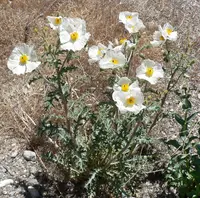
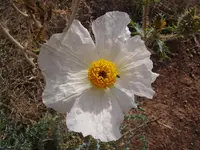
The plant forms a clumping, branching habit with bluish-green, spiny foliage and large, showy white flowers with bright yellow centers. Its sharp prickles and milky sap discourage browsing.

This species is adapted to poor, fast-draining soils and low rainfall, which makes it relatively easy to grow in dry, sunny landscapes if given minimal water and good drainage. Understanding how to care for southwestern pricklypoppy begins with respecting its desert origin and avoiding rich, wet soil conditions.

Main Plant Requirements

Care Difficulty

Easy Care

Light Preference

Full Sun

Water Requirements

Low Water

Temperature Preference

Warm Climate

Hardiness Zone

7–10

Soil Texture

Sandy, Loamy, Rocky

Soil pH

Neutral (7.0), Slightly alkaline (7.0–7.5)

Soil Drainage

Well-drained

Fertilization

Minimal (feed rarely)

Get Personalized Care Plan

Scan your plant to receive care tips personalized for your specific plant

Available on iOS and Android

How to Care for the southwestern pricklypoppy

Argemone pleiacantha thrives in strong, direct sun typical of arid regions.

  • Provide 6–10 hours of direct sunlight daily; full sun promotes compact growth and abundant flowering in southwestern pricklypoppy.
  • Plant in an open, unshaded spot; light morning and afternoon sun are both suitable, but avoid sites shaded by buildings or dense shrubs.
  • In very hot areas, slight afternoon shade can reduce leaf scorch, while too much shade leads to tall, weak stems and fewer blooms.

Argemone pleiacantha is highly drought-tolerant and prefers infrequent, deep watering.

  • Allow the top 5–8 cm of soil to dry completely before watering; in native dry climates, natural rainfall is often enough once plants are established.
  • Use very well-drained, sandy or gravelly soil; water should drain within a few minutes, and standing water indicates poor drainage and overwatering risk.
  • Watch foliage and stems: yellowing, soft tissue, or stem collapse suggests excess moisture, while dull, wilting leaves in dry soil signal underwatering.

This species is adapted to hot, dry climates but has defined limits for cold tolerance.

  • Optimal growth occurs around 70–90°F (21–32°C), with flowering best in warm, sunny periods of late spring and summer.
  • Mature plants usually tolerate brief drops to about 20°F (−6°C), but repeated hard frosts or colder conditions can damage or kill above-ground growth.
  • Heat tolerance is high, often 95–105°F (35–40°C), provided soil is dry to moderately dry; prolonged cold, wet conditions are more harmful than heat.

Humidity is rarely limiting for Argemone pleiacantha, which is adapted to very dry air.

This desert perennial prefers very fast-draining, mineral soils with low organic matter.

  • Use a sandy or gravelly mix, such as 60–70% coarse sand or grit blended with 30–40% native soil or low-organic potting soil.
  • Ensure sharp drainage; water must pass through the profile quickly without pooling around the roots.
  • Aim for slightly alkaline to neutral pH, roughly 7.0–8.0, avoiding acidic, peat-heavy mixes.
  • Avoid heavy clay, compacted ground, or spots where irrigation or rain tends to collect, since this promotes root rot.

This species can be grown in containers if the pot is set up to mimic very fast-draining desert soil.

  • Choose a deep, heavy container (such as thick terracotta or concrete) so the tall, spiny stems do not tip the pot in wind.
  • Fill the pot with a gritty, low-organic mix and a thick bottom layer of coarse gravel to prevent water from lingering around the root zone.
  • Raise the container on feet or bricks so drainage holes stay clear and excess water escapes rapidly after rain or irrigation.

This drought-adapted native, including southwestern pricklypoppy, needs little to no fertilizer in typical garden soil.

Pruning Argemone pleiacantha is mainly corrective, helping maintain plant health and safe structure.

  • Carry out light pruning in late winter or very early spring before strong new growth starts.
  • Remove dead, damaged, or crossing stems at the base using clean, sharp hand pruners.
  • Trim back spent flowering stems if seed production is not desired, slightly tidying the plant’s outline.
  • Avoid hard cutting into woody bases, which can stress the plant and reduce flowering.

Transplanting Argemone pleiacantha is done sparingly, as its taproot resents disturbance.

  • Transplant only young plants showing roots circling a small nursery pot or stalled growth in containers.
  • Schedule moves for late winter to early spring, or just after flowering in mild climates.
  • Handle the root ball very gently, keeping as much native soil around the taproot as possible.
  • Set into a sunny, sharply drained site and water once deeply, then allow soil to dry between waterings.

Propagation of Argemone pleiacantha is usually carried out by seed rather than vegetative methods.

  • Sow fresh seeds in late winter to early spring, using a very well-drained, gritty mix.
  • Lightly cover seeds and keep at 65–75°F with bright light to encourage even germination.
  • Maintain just-moist, not wet, conditions since excess water increases damping-off risk.
  • Transplant seedlings only when small, disturbing roots as little as possible and planting into full sun.

Mature Argemone pleiacantha plants are generally cold hardy in arid and semi-arid climates and need minimal winter care.

  • In regions colder than its normal range, use a light, dry mulch around the root zone, kept off the crown.
  • Avoid winter watering on heavy or poorly drained soils to reduce root rot risk.
  • Container-grown plants in marginal zones can be overwintered in a cold, bright, frost-free garage or porch.

Care Tips

Glove-first handling

Always handle this plant with thick gloves and long sleeves, and use tongs or a folded newspaper to move stems during maintenance to avoid injury from the stiff spines.

Encourage deep rooting

In the first growing season, water more deeply but less often and use a narrow soaker hose rather than overhead watering to promote a deep root system that improves drought resilience.

Gravel mulch band

Apply a 3–5 cm band of coarse gravel or crushed rock around the base instead of organic mulch to suppress weeds, keep the crown dry, and maintain the sharp, clean look of the planting.

Seed pod management

If you want to limit self-seeding, cut off drying seed pods before they split, leaving a few only where controlled naturalizing and growing southwestern pricklypoppy from seed is desired.

Low-input companioning

Combine it only with other very drought-tolerant, low-fertility species in hot, open sites so neighboring plants do not require irrigation or feeding that would make this species grow weak and floppy.

Common Pests and Diseases

Leaf-mining fly larvae

This pest tunnels inside the leaves, creating pale winding trails that can coalesce into larger blanched patches on older foliage. Symptoms include reduced photosynthesis and early yellowing or drop of affected leaves.

Solution

Remove and destroy mined leaves to break the life cycle and reduce larval numbers. In outdoor plantings, encourage natural predators by avoiding broad-spectrum insecticides and, if damage is severe, use a spinosad-based spray targeted to foliage in the evening when pollinators are less active.

Aphids

These insects cluster on tender stems, buds, and the undersides of leaves, sucking sap and excreting sticky honeydew that can attract sooty mold. Symptoms include curling or distorted new growth and a general decline in vigor on young plants or seedlings.

Solution

Dislodge colonies with a strong stream of water, then spot-treat remaining clusters with insecticidal soap or a light horticultural oil, covering leaf undersides. Limit nitrogen-rich fertilization that promotes lush, soft growth and check nearby weeds, which can act as aphid reservoirs, especially when growing southwestern pricklypoppy in informal native gardens.

Alternaria leaf spot

This disease causes small, dark, often circular spots on leaves that may develop light centers and yellow halos, leading to premature leaf drop under extended humid or wet conditions. Symptoms include a patchy, weathered appearance on older foliage.

Solution

Prune and discard affected leaves, avoiding overhead watering to keep foliage as dry as possible. Improve spacing and airflow around plants, and in recurrent cases use a copper or chlorothalonil fungicide labeled for ornamental plants, applied according to label directions during extended wet periods.

Powdery mildew

This disease appears as a white, powdery film on leaf surfaces, especially where air circulation is poor or nights are cool and humid. Symptoms include dull, grayish foliage and, in heavier infections, some leaf distortion or early senescence.

Solution

Increase sun exposure where possible and thin nearby vegetation to improve air movement. Remove heavily affected leaves and apply a sulfur-based or potassium bicarbonate fungicide early in the infection period, avoiding treatments during high heat to prevent leaf burn.

Interesting Facts

Desert fog harvester

The bluish, waxy coating on its leaves and stems helps reduce water loss and can condense tiny amounts of moisture from desert fog and dew, an advantage in its arid native range of the US Southwest and northern Mexico.

Specialist bee partner

Its pale to pure white flowers are an important pollen source for specialist bees in arid habitats, including native mining bees that time their life cycle to coincide with its spring flowering.

Defense with alkaloids

The plant produces spines and bitter, toxic isoquinoline alkaloids in its tissues, which strongly deter most herbivores and make its yellow sap irritating to skin and mucous membranes.

Botan icon

Did you know?

This species readily colonizes disturbed desert soils such as roadsides, overgrazed rangeland, and dry washes, where its deep taproot stabilizes the substrate and its persistent seed bank allows it to reappear quickly after infrequent desert rains.

FAQs about southwestern pricklypoppy

The large white flowers are rich in pollen and attract many native bees and some butterflies. It supports pollinators in dry, open landscapes, especially when other nectar and pollen sources are limited in late spring and early summer.

Grow Healthy Plants with Botan Care

Keep your plants happy and healthy with plant identification, disease detection, and easy care guidance.

Botan plant care app — identify plants on mobile

Explore More Plants