flatbud pricklypoppy Care (Argemone munita)

Also known as: chicalote, fried egg plant
flatbud pricklypoppy

About flatbud pricklypoppy

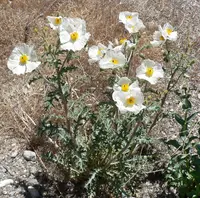
Flatbud pricklypoppy (Argemone munita) is a drought-tolerant, spiny perennial or short-lived subshrub native to dry slopes and desert regions of western North America. It forms clumps of bluish-green, prickly foliage and tall stems topped with showy, crepe-like white flowers and prominent yellow centers.

This species thrives in full sun, lean fast-draining soil, and low to moderate moisture, making it well suited to xeriscapes and low-maintenance gardens. Understanding how to care for flatbud pricklypoppy mainly involves respecting its need for strong light and dry conditions, which can actually make it easier to grow than many thirstier ornamentals.

Main Plant Requirements

Care Difficulty

Easy Care

Light Preference

Full Sun

Water Requirements

Low Water

Temperature Preference

Cold Hardy

Hardiness Zone

5–9

Soil Texture

Sandy, Loamy, Rocky

Soil pH

Slightly acidic (6.5–7.0), Neutral (7.0)

Soil Drainage

Well-drained

Fertilization

Minimal (feed rarely)

Get Personalized Care Plan

Scan your plant to receive care tips personalized for your specific plant

Available on iOS and Android

How to Care for the flatbud pricklypoppy

This sun-loving desert perennial needs strong direct light to flower and stay compact.

  • Provide 6–10 hours of full sun daily; flatbud pricklypoppy performs best in open, unshaded sites.
  • Accepts light afternoon shade in very hot climates, but too much shade causes lanky stems and fewer blooms.
  • Plant on a south- or west-facing slope or bed with no overhead competition; ensure winter sun access to keep rosettes dense and healthy.

This species is highly drought-tolerant and prefers dry, fast-draining soil.

  • In the ground, wait until the top 5–8 cm of soil are completely dry before deep watering, then allow soil to dry out again.
  • Argemone munita shows underwatering by dull, drooping leaves that recover after a thorough soak; persistent yellowing or soft stems usually indicates overwatering or poor drainage.
  • Reduce or stop supplemental water in cool or rainy seasons to avoid root rot, especially on heavy or compacted soils.

This hardy desert poppy tolerates a wide temperature range once established.

  • Optimal growth occurs around 65–85°F (18–29°C), especially during the main spring and early summer growing period.
  • Mature plants can survive down to about 15–20°F (-9 to -6°C) if soil drains well, but young seedlings are more easily damaged by hard frost.
  • Handles dry heat up to 100–105°F (38–41°C) if roots are deep and soil is not waterlogged; avoid siting in low, frost-prone pockets.

Humidity is rarely a concern for flatbud pricklypoppy, which thrives in dry air typical of arid regions and heated homes.

This species prefers very lean, mineral, sharply draining soil that mimics dry, rocky habitats.

  • Use a sandy or gravelly mix, such as 50–70% coarse sand or grit blended with low-organic potting soil.
  • Keep pH slightly alkaline to neutral (about 7.0–8.0) by avoiding peat-heavy mixes and using lime-amended or native calcareous soil if available.
  • Improve aeration and drainage by adding pumice or small gravel rather than compost or manure, which hold excess moisture.
  • Avoid clay, compacted, or water-retentive mixes that stay wet for more than 1 day after irrigation, as roots are prone to rot.

This species can be grown in containers outdoors if the pot mimics very dry, fast-draining ground conditions.

  • Choose a deep, heavy pot or one weighted with gravel to prevent tipping in wind, since stems can become tall and top-heavy.
  • Fill the lower third of the pot with coarse gravel or broken stone to speed water movement away from the root zone.
  • Position containers in full sun against a heat-reflective surface, which helps keep the medium dry between waterings.

This drought-adapted native needs little to no feeding in ordinary, well-drained soil, so caring for flatbud pricklypoppy is low input.

Pruning Argemone munita is minimal and mainly for safety and appearance.

  • Cut back spent flower stalks in late summer or early fall to tidy plants and limit unwanted self-seeding.
  • Remove dead, diseased, or storm-damaged stems as needed using clean, sharp hand pruners.
  • Thin out crowded stems lightly if access is needed, avoiding heavy cuts that stress the plant.

This species is usually grown in the ground, so focus on careful transplanting rather than frequent repotting.

  • Transplant young plants in late winter or early spring, when temperatures are mild and soil is workable.
  • Move only when necessary; mature plants have deep taproots that resent disturbance and recover slowly.
  • Handle the root ball gently, keeping soil intact to minimize shock, and water once to settle soil around roots.
  • Choose a sunny, sharply drained site and avoid rich, compacted soils that hold excess moisture.

Argemone munita is most often propagated from seed rather than from cuttings or division.

  • Collect ripe seed pods in late summer, then dry and store seeds cool and dry until sowing.
  • Sow seeds in fall or very early spring outdoors in gritty, well-drained soil for natural cold stratification.
  • Place seeds on or just beneath the surface, as light exposure supports germination, and keep barely moist.
  • Avoid disturbing seedlings; transplant only when small, preserving as much root as possible.

This species is cold hardy in much of its native range and usually needs little specific winter care.

  • In USDA zones where winter is severe, ensure soil drainage is excellent to avoid root rot in cold, wet periods.
  • Container-grown plants in colder climates can be moved to a cold, bright, frost-free spot to reduce freeze stress.
  • Avoid heavy mulching directly over the crown; a light, dry mulch around the root zone is sufficient in marginal areas.

Care Tips

Use deep containers

When growing flatbud pricklypoppy in pots, choose a container at least 25–30 cm deep with large drainage holes so the strong taproot can develop without circling or deforming.

Encourage self-seeding

If local regulations and site conditions allow, leave some spent flowers to mature and drop seed in late summer so the population can renew naturally without frequent replanting.

Limit root disturbance

Sow in final position or transplant only at a very young seedling stage, handling the root ball gently, since older plants react poorly to root disturbance and may stall or die back.

Mimic native spacing

Space plants 30–40 cm apart on open, exposed sites to improve air movement, reduce fungal issues, and help each plant form a strong, upright structure.

Handle spines safely

Wear thick gloves and long sleeves when planting, weeding around, or deadheading this species to avoid injury from the stiff spines on leaves and stems.

Common Pests and Diseases

Leaf-mining fly

This pest tunnels within the leaf tissues, creating pale, winding trails that can reduce photosynthesis and cause premature leaf yellowing in stressed plants.

Solution

Remove and destroy affected leaves to break the life cycle, and avoid overwatering or excess nitrogen that encourages soft, susceptible growth. In small plantings, floating row covers and yellow sticky traps can help monitor and limit adult flies; in severe cases, use a targeted neem or spinosad spray directed at the undersides of leaves, following label instructions.

Capsid bugs

These insects pierce and suck sap from young stems and flower buds, leading to distorted growth, stippling, and aborted or deformed flowers.

Solution

Inspect plants regularly during warm weather and hand-remove visible insects or shake them into a container of soapy water. Encourage natural predators, limit nearby lush weeds that shelter capsids, and if needed use a spot treatment with insecticidal soap on infested shoots, repeating after 5–7 days.

Fungal leaf spot

This disease produces small brown to gray lesions on leaves, sometimes with a darker edge, which can merge and cause sections of foliage to dry and drop, especially after unseasonal rain or overhead irrigation.

Solution

Remove and discard affected leaves to reduce spore spread, and water at soil level in the morning so foliage dries quickly. Improve air flow around plants by spacing and light pruning of nearby vegetation; if wet conditions persist, a copper- or sulfur-based fungicide labeled for ornamental wildflowers can be used preventively according to label directions.

Botrytis blight

This disease affects flowers and tender tissues during cool, damp periods, causing soft, water-soaked spots that turn brown and develop a gray fuzzy mold.

Solution

Promptly remove and dispose of infected flowers and stems, and avoid overhead watering or dense planting that keeps humidity high around the plant. In prolonged wet weather, a preventive application of a labeled biofungicide containing Bacillus species can help protect buds and flowers while maintaining low impact on beneficial organisms.

Aphids

These insects feed on new growth and flower stalks, causing curling or distortion and leaving sticky honeydew that can attract sooty mold on nearby surfaces.

Solution

Spray stems and flower stalks with a firm stream of water to dislodge colonies, repeating every few days during outbreaks. For persistent populations, use insecticidal soap or a light horticultural oil applied in the early morning or evening, taking care to fully coat the insects but not to oversaturate drought-adapted foliage; this approach aligns with practical Argemone munita plant care in low-water gardens.

Interesting Facts

Desert fog hydration

Flatbud pricklypoppy has a waxy, glaucous leaf surface that helps capture and condense moisture from fog and dew, an important water source in its arid desert mountain habitat.

Specialist bee visitor

The species is an important pollen source for native solitary bees in the Mojave and Great Basin regions, which are attracted to its large, pale yellow flowers despite the plant’s sharp spines.

Toxic latex defense

Its milky yellow latex contains toxic alkaloids that deter most herbivores, allowing this poppy to survive heavy grazing pressure in open, exposed sites.

Botan icon

Did you know?

Argemone munita often colonizes recently disturbed, nutrient-poor soils on rocky slopes and roadcuts, acting as an early pioneer species that stabilizes loose substrates in high desert and montane ecosystems.

FAQs about flatbud pricklypoppy

All parts are toxic if eaten, especially the sap and seeds, which contain alkaloids affecting the nervous system and liver. Contact with the milky sap may irritate skin or eyes. Keep children and animals away.

Grow Healthy Plants with Botan Care

Keep your plants happy and healthy with plant identification, disease detection, and easy care guidance.

Botan plant care app — identify plants on mobile

Explore More Plants