Purple-loosestrife Care (Lythrum salicaria)

Also known as: purple lythrum, spiked loostrife, salicaire, bouquet violet, rainbow weed
Purple-loosestrife

About Purple-loosestrife

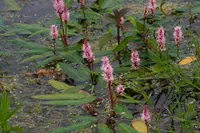
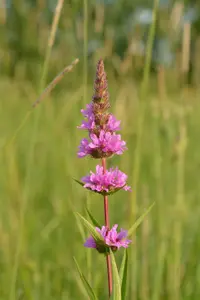
Purple-loosestrife, Lythrum salicaria, is a hardy perennial wetland plant known for its tall spikes of purple-pink flowers and upright, clumping habit. It typically grows along riverbanks, lakeshores, and marshes, especially in temperate regions of Europe, Asia, and North America.

The plant forms dense stands with narrow, lance-shaped leaves and a long summer flowering period that attracts bees and other pollinators. Its vigor and tolerance of poor, wet soils make it easy to establish but potentially aggressive outdoors.

Understanding how to care for Purple-loosestrife starts with knowing that it prefers full sun and consistently moist ground, often near water. In many areas it is considered invasive, so cultivation may be restricted or discouraged.

Main Plant Requirements

Care Difficulty

Moderate Care

Light Preference

Full Sun

Water Requirements

Aquatic

Temperature Preference

Cold Hardy

Hardiness Zone

3–9

Soil Texture

Loamy, Clay, Organic-rich

Soil pH

Acidic (5.5–6.5), Slightly acidic (6.5–7.0)

Soil Drainage

Waterlogged tolerant

Fertilization

Minimal (feed rarely)

Get Personalized Care Plan

Scan your plant to receive care tips personalized for your specific plant

Available on iOS and Android

How to Care for the Purple-loosestrife

This moisture-loving perennial thrives in full sun but tolerates some light shade.

  • Provide 6–8 hours of direct sun daily for best flowering, with at least 4 hours of unshaded midday or afternoon sun in cooler climates.
  • In hotter regions, give morning sun and light afternoon shade to reduce leaf scorch and slow moisture loss from soil.
  • In partial shade (3–4 hours sun), Purple-loosestrife will survive but may grow taller, lean toward the light, and produce fewer flower spikes.

This species naturally grows in wetlands and prefers consistently moist to saturated soil.

  • Aim for soil that stays damp to the touch at all times; do not allow the top 1–2 cm to dry out in garden beds near ponds or streams.
  • During hot, dry periods, increase watering so the root zone remains evenly moist, watching for wilted, drooping stems as a sign of insufficient water.
  • If Lythrum salicaria stands in still water with foul smell or black, mushy roots, reduce water depth or improve movement to prevent root decline.

This hardy perennial tolerates a wide range of outdoor temperatures in temperate climates.

  • Active growth and flowering are strongest around 65–80°F (18–27°C), with good performance through typical spring and summer conditions.
  • Established plants survive winter cold down to about -20°F (-29°C) in frozen ground, dying back above ground and resprouting from the crown in spring.
  • Summer heat up to about 90°F (32°C) is tolerated if soil stays saturated; sudden extreme heat with drying soil can cause stress and reduced flowering.

This wetland perennial handles typical outdoor humidity but prefers moderately moist air.

  • Aim for 50–70% humidity in exposed garden pots, especially during hot, dry spells.
  • Plants in very dry air may show crisp leaf edges and slower growth despite adequate watering.
  • Increase humidity around Purple-loosestrife in containers by grouping plants and using a wide surface mulch to slow evaporation.

This species thrives in consistently moist, even waterlogged, soil with high organic content.

  • Use heavy loam or clay-rich soil blended with 30–50% compost to mimic natural marsh conditions.
  • Choose soil that holds water yet is not compacted, so roots can penetrate while remaining saturated.
  • A slightly acidic to neutral pH of 6.0–7.0 suits Lythrum salicaria, avoiding highly alkaline or salty sites.
  • Improve structure in dense clay by working in well-rotted manure rather than sand, which can create concrete-like clods.

This species can be grown in containers if the pot is managed to stay consistently wet without stagnation.

  • Select a deep, wide container to accommodate its extensive root system and tall, upright growth without tipping.
  • Use a sturdy, heavy material such as ceramic or concrete to stabilize the plant against wind when the soil is saturated.
  • Place the pot inside a shallow, water-filled outer tray to maintain a bog-like environment while preventing overflow on surrounding surfaces.

This wetland perennial usually grows well in average soil, so only light fertilization is needed for garden Purple-loosestrife.

  • Apply a thin layer of compost around the clump in early spring to refresh nutrients.
  • If growth is weak, use a balanced liquid NPK fertilizer at 1/2 strength every 4–6 weeks in the growing season.
  • Avoid feeding in late fall and winter when the plant is dormant.
  • Do not overfertilize, as excessive nutrients can encourage overly vigorous, weedy growth.

Pruning Lythrum salicaria helps maintain a tidy shape and support dense flowering.

  • In late winter or very early spring, cut back old stems to just above ground level with clean pruners.
  • During summer, deadhead spent flower spikes to reduce self-seeding and may extend blooming.
  • Remove dead, damaged, or crossing stems to keep the clump open and reduce disease risk.
  • Disinfect blades when working around diseased tissue to avoid spreading problems.

This species is usually grown in the ground, so care focuses on dividing and transplanting mature clumps.

  • Plan transplanting or division in early spring or early fall when temperatures are mild.
  • Lift overcrowded clumps showing reduced flowering, then divide into smaller sections with healthy roots.
  • Replant divisions at the same depth in moist soil, watering thoroughly to settle roots and limit stress.
  • If container-grown, shift to a slightly larger pot every 2–3 years when roots circle the container.

Lythrum salicaria is commonly propagated by division, stem cuttings, or seed where legally permitted.

  • Divide established clumps in early spring, replanting vigorous sections into consistently moist soil.
  • Take softwood cuttings in late spring, root them in a moist, free-draining mix under bright, indirect light.
  • Sow fresh seed on the surface of moist substrate; light aids germination, so do not bury deeply.
  • Maintain steady moisture and moderate warmth (60–70°F) until new plants are well rooted.

This hardy perennial tolerates freezing conditions in most temperate climates and usually needs minimal winter care.

  • After frost blackens the foliage, cut stems down to a few cm above soil level to keep beds neat.
  • Apply a light mulch layer in colder regions to buffer freeze–thaw cycles around the root zone.
  • Container-grown plants benefit from moving pots to a sheltered, unheated but frost-free or minimally exposed location.

Care Tips

Rhizome Containment

In garden beds near natural waterways, plant in large bottomless containers sunk into the soil to restrict root spread and make division or removal easier if it starts to colonize too aggressively.

Seed Head Management

Deadhead spent flower spikes before seeds mature if there is any risk of escape into nearby wetlands or ditches, leaving only a few marked stems if you specifically need seed for controlled propagation.

Strategic Clump Renewal

Every 3–4 years, lift and divide overgrown clumps in early spring, replanting only the youngest outer sections to maintain vigorous flowering and reduce the chance of the stand becoming woody and congested.

Water Edge Positioning

When planting at pond or stream margins, site clumps a little above the usual high-water mark so roots can access constant moisture while stems are not submerged for long periods during floods.

Monitoring Local Regulations

Before growing Purple-loosestrife, check local invasive species regulations and, if planting is allowed, keep a simple log of flowering, deadheading, and any volunteer seedlings so the population stays under strict control.

Common Pests and Diseases

Leaf beetles

These insects chew irregular holes in leaves and young shoots, sometimes skeletonizing foliage on young plants. Symptoms include ragged leaf edges and visible metallic or brightly colored beetles on stems and leaves.

Solution

Hand-pick beetles into soapy water where feasible and remove heavily damaged leaves to reduce feeding pressure. For larger infestations, use a targeted insecticide containing spinosad or pyrethrins applied in the evening, and limit nearby broadleaf weeds that can host beetle populations.

Aphids

These insects cluster on tender stems and undersides of leaves, sucking sap and causing curling, distortion, and sticky honeydew that can attract sooty mold. New growth may appear stunted or twisted when populations are high.

Solution

Spray plants with a firm stream of water to dislodge colonies, then follow with insecticidal soap or a light horticultural oil, coating undersides of leaves. Encourage natural predators such as lady beetles by avoiding broad-spectrum insecticides on and around the planting area.

Powdery mildew

This disease produces white to gray powdery patches on leaves, stems, and sometimes flower spikes, especially in dense or shaded plantings. Symptoms include dull, discolored foliage and premature leaf drop when infections are heavy.

Solution

Improve air circulation by thinning crowded stems and reducing nearby vegetation, and avoid overhead watering late in the day. Remove and dispose of infected leaves, and, if needed, apply a sulfur or potassium bicarbonate fungicide early in the infection period according to label directions as part of broader Lythrum salicaria care.

Interesting Facts

Highly invasive wetland colonizer

This species forms dense monocultures in North American wetlands, displacing native plants and altering habitat structure for birds, fish, and invertebrates.

Enormous seed production

A single mature plant can produce hundreds of thousands of tiny seeds each year, which helps explain how it spreads so effectively along rivers, lakeshores, and ditches.

Specialist biocontrol insects

Several European leaf beetles in the genus Galerucella have been introduced in North America as biological control agents, feeding almost exclusively on this species and helping to reduce its dominance in invaded wetlands.

Botan icon

Did you know?

In its native Eurasian range, this plant typically coexists with many other wetland species, but in North America it behaves very differently, becoming a transformer species that can change entire wetland ecosystems, from plant community composition to water flow patterns.

FAQs about Purple-loosestrife

In many regions, especially North America, this species is highly invasive in wetlands and along waterways. It displaces native plants, reduces habitat quality, and can alter water flow, so check local regulations before planting or moving it.

Grow Healthy Plants with Botan Care

Keep your plants happy and healthy with plant identification, disease detection, and easy care guidance.

Botan plant care app — identify plants on mobile

Explore More Plants