Contain Rhizome Spread
Use a wide but bottomless container or a buried root barrier in ponds and marshy beds to limit rhizome spread and make long‑term management of colonies easier.

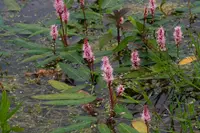
Amphibious bistort (Persicaria amphibia) is a versatile perennial that can grow both in shallow water and on damp soil. It forms spreading mats or loose clumps, depending on water depth. Leaves are oval and can float on the water surface or stand upright on land, while dense spikes of small pink flowers rise above the foliage in summer. This species occurs naturally in ponds, lakeshores, slow streams, and wet meadows across temperate regions of North America and Europe. It is generally easy to grow when given consistent moisture and space to spread, which helps when planning how to care for Amphibious Bistort. It prefers full sun to light shade and nutrient-rich, consistently damp or shallowly flooded substrates.

Care Difficulty
Easy Care

Light Preference
Full Sun

Water Requirements
Aquatic

Temperature Preference
Cold Hardy

Hardiness Zone
3–9

Soil Texture
Loamy, Silty, Organic-rich

Soil pH
Slightly acidic (6.5–7.0), Neutral (7.0)

Soil Drainage
Waterlogged tolerant

Fertilization
Minimal (feed rarely)
Scan your plant to receive care tips personalized for your specific plant
Available on iOS and Android
This aquatic and marginal plant prefers bright conditions but tolerates varied light in ponds and wet soils.
This species is adapted to consistently wet conditions and thrives in shallow water or saturated soil.
This hardy aquatic perennial tolerates a wide temperature range in temperate climates.
This semi-aquatic species handles a wide humidity range but grows best in consistently moist air near water.
Persicaria amphibia prefers saturated, organic-rich substrates that mimic pond margins or shallow wetlands.
This species can grow in containers if the setup mimics shallow, still water or saturated pond edges.
This adaptable aquatic and marginal plant needs only modest feeding in most garden soils.
Pruning helps manage spread and keep Persicaria amphibia stands healthy in ponds or wet margins.
This species is usually transplanted in the garden or pond rather than repotted frequently in containers.
Persicaria amphibia is commonly propagated to expand colonies or restore wetland areas.
This hardy perennial usually needs minimal winter care in most temperate climates.

Plant Health Check
Not sure what's wrong with your plant? Check your plant's health inside the app.
This species can live both rooted in shallow water as a floating-leaved aquatic and on exposed, moist soil as a terrestrial plant, switching growth form as water levels change.
Its floating leaves develop aerenchyma, a spongy tissue filled with air spaces that helps the blades stay buoyant and supplies oxygen to submerged stems and roots.
Dense stands can slow water movement and trap suspended particles, which stabilizes sediments and influences nutrient cycling in ponds, ditches, and slow streams.

Persicaria amphibia can spread rapidly through creeping rhizomes and detached stem fragments, allowing it to recolonize disturbed shorelines and waterbodies after flooding or mechanical damage.
This species spreads by creeping rhizomes and can form dense mats in shallow water or wet soil. In small ponds or naturalistic gardens, contain it with barriers, regular thinning, or by growing it in sunken containers.
Keep your plants happy and healthy with plant identification, disease detection, and easy care guidance.