


Edge Containment
Install a shallow plastic or metal edging strip 5–8 cm deep around planting areas to stop this creeping plant from invading nearby beds or lawns while still allowing it to form a dense groundcover.

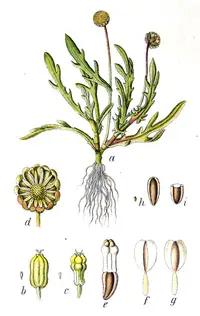
Buttonweed (Cotula coronopifolia) is a low, mat-forming perennial often used as a groundcover in mild, frost-free climates. It has fine, feathery foliage and small, yellow, button-like flower heads held on short stems. Native to coastal wetlands of South Africa, it has naturalized in many temperate regions, especially in damp or seasonally wet soils. The plant spreads quickly by creeping stems, which makes it useful for coverage but potentially invasive in favorable conditions. It prefers full sun to light shade and consistently moist, even boggy, soil. Gardeners who care for buttonweed need to manage its spread and provide adequate moisture to keep the foliage dense and healthy.

Care Difficulty
Moderate Care

Light Preference
Full Sun

Water Requirements
Aquatic

Temperature Preference
Warm Climate

Hardiness Zone
8–11

Soil Texture
Sandy, Loamy, Organic-rich

Soil pH
Slightly acidic (6.5–7.0), Neutral (7.0)

Soil Drainage
Waterlogged tolerant

Fertilization
Minimal (feed rarely)
Scan your plant to receive care tips personalized for your specific plant
Available on iOS and Android
Cotula coronopifolia prefers bright, open exposures with moderate protection from harsh afternoon sun.
This wetland species prefers consistently moist conditions but reacts poorly to stagnant, airless soil.
This species grows best in mild, frost-free climates with cool to warm temperatures.
Humidity is not a major concern for Cotula coronopifolia in typical outdoor conditions.
Cotula coronopifolia prefers consistently moist, well-drained, sandy to loamy soil.
This species can adapt well to container growing when moisture and drainage are balanced carefully.
Cotula coronopifolia is a modest feeder that benefits from light nutrition during its active growing season.
Cotula coronopifolia responds well to light pruning that keeps the mat dense and flowering well.
This low, spreading plant is more often transplanted in the garden than repotted indoors.
Cotula coronopifolia is commonly propagated to expand groundcover patches or renew older plantings.
In mild climates Cotula coronopifolia usually needs minimal winter care but dislikes severe, prolonged frost.

Plant Health Check
Not sure what's wrong with your plant? Check your plant's health inside the app.
This species naturally occurs in coastal saltmarshes and tidal flats, where it tolerates regular seawater flooding that would kill most non-halophytic plants.
Its creeping, somewhat succulent stems can form floating mats in shallow water, helping the plant survive in fluctuating water levels and mildly anoxic, or low-oxygen, mud.
Although native to southern Africa, it has naturalized and become locally invasive in parts of Europe, Australia, and North America, where it alters native saltmarsh plant communities.

In its native and introduced ranges, this plant often pioneers disturbed, saline mudflats and can quickly dominate bare, salty substrates, creating early-stage vegetation patches that change how sediment and organic matter accumulate in coastal wetlands.
This species spreads by creeping stems and self-seeding, especially in consistently moist or shallow water sites. In suitable conditions it can form dense mats, so use edging or containers if a controlled patch is preferred when growing buttonweed.
Keep your plants happy and healthy with plant identification, disease detection, and easy care guidance.

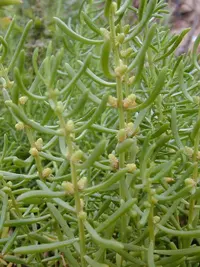
turtleweed
Batis maritima
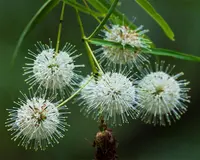
Mexican buttonbush
Cephalanthus salicifolius

Elephant Ear
Colocasia 'Coffee Cups'
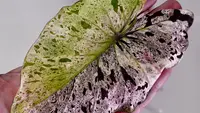
Elephant's Ear
Colocasia esculenta 'Mojito'
slenderleaf sundew
Drosera linearis
Cobra Lily
Darlingtonia californica

Elephant Ear
Colocasia esculenta Royal Hawaiian Black Coral

Imperial Taro
Colocasia esculenta 'Illustris'