slenderleaf sundew Care (Drosera linearis)

slenderleaf sundew

About slenderleaf sundew

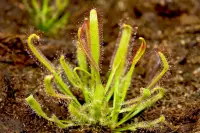
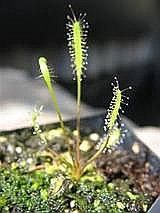
Slenderleaf sundew, Drosera linearis, is a cold-hardy carnivorous plant native to nutrient-poor bogs and fens in northern North America. It forms low rosettes of narrow, grass-like leaves covered in sticky hairs that trap small insects.

This species grows slowly and has a more delicate root system than many sundews, which makes it somewhat challenging in cultivation. It prefers cool conditions, consistently wet, acidic substrates, and very pure water similar to its natural bog habitat.

Gardeners who want to care for slenderleaf sundew need to pay close attention to temperature, water quality, and moisture levels to keep it healthy long term.

Main Plant Requirements

Care Difficulty

Hard Care

Light Preference

Full Sun

Water Requirements

Aquatic

Temperature Preference

Cool Climate

Hardiness Zone

3–6

Soil Texture

Sandy, Peaty, Organic-rich

Soil pH

Strongly acidic (4.5–5.5)

Soil Drainage

Waterlogged tolerant

Fertilization

Minimal (feed rarely)

Get Personalized Care Plan

Scan your plant to receive care tips personalized for your specific plant

Available on iOS and Android

How to Care for the slenderleaf sundew

This cold-climate carnivorous bog plant needs strong, direct light to maintain healthy growth and sticky leaves.

  • Provide 6–10 hours of direct sun daily; full sun exposure is ideal in open bog or lakeshore habitats.
  • Allow light afternoon shade in hot regions to reduce leaf scorch, but prioritize morning and midday sun to keep growth compact and colorful on slenderleaf sundew.
  • In early spring and late autumn, ensure plants are not shaded by taller vegetation, since low seasonal sun angles already reduce light intensity.

This species evolved in saturated, low-nutrient bogs, so water management centers on constant wet conditions without stagnation.

  • Keep soil permanently saturated with mineral-free water; do not let the surface crust or show dry patches, even in the top 1–2 cm.
  • Use rainwater, distilled, or reverse-osmosis water, since minerals and salts quickly damage Drosera linearis roots and reduce dew production.
  • In hot, windy weather, watch for dull, non-sticky leaves or slight leaf curling as signs of drying; increase water depth or frequency before the substrate contracts.

This temperate carnivorous plant experiences warm summers and cold winters, including natural freezing and dormancy.

  • Aim for active-season temperatures around 65–80°F (18–27°C), which support strong leaf and dew production in open, sunny bog conditions.
  • Tolerates summer heat up to about 86°F (30°C) if soil stays cool and saturated; prolonged hotter periods can cause stress and reduced trapping.
  • In winter, plants handle freezing and brief drops near 14°F (−10°C) when crowns are insulated by wet peat and snow, but repeated freeze–thaw without insulation can damage roots.

This species prefers cool, consistently moist air with moderate humidity.

  • Aim for 50–70% humidity; brief drops to 40% are tolerated if soil stays wet.
  • Low humidity causes tentacles to lose dew, leaf tips to brown, and growth to slow.
  • Increase humidity with a water tray near the pot or grouped bog plants, avoiding direct misting of leaves.

This carnivorous bog species needs nutrient-poor, acidic, water-retentive soil.

  • Use a mix of 1:1 sphagnum peat and coarse silica sand to mimic Drosera linearis bog conditions.
  • Ensure the mix is loose and fibrous so roots stay oxygenated despite constant surface moisture.
  • Maintain very acidic conditions, roughly pH 4–5.5, and strictly avoid added fertilizer or compost.
  • Do not use regular potting mix, bark, or perlite, which introduce minerals and can burn roots.

This species can be grown in containers if they are set up as mini bogs.

  • Choose a deep pot to provide a cool, saturated lower zone while keeping the crown slightly higher and less stagnant.
  • Use a solid, light-colored plastic pot to slow overheating and reduce evaporation from the sides.
  • Stand the container in a tray of rain or distilled water to keep the lower mix saturated without flooding the crown.

Drosera linearis is adapted to nutrient-poor bogs and usually performs best without added fertilizer.

Pruning Drosera linearis focuses on hygiene rather than shaping the plant.

  • Best timing is late winter or early spring, before strong new growth starts.
  • Use fine scissors or tweezers to remove dead, blackened leaves and flower stalks at the base.
  • Clear away decaying material to reduce mold and pests while keeping live leaves intact.

This species is seldom kept in pots and responds poorly to frequent disturbance, so transplant only when necessary.

  • Transplant in early spring when growth resumes and temperatures are cool but above freezing.
  • Move plants only if growth declines, the bog container is overcrowded, or the medium is breaking down.
  • Lift the root system with a wide plug of surrounding peat-sand mix to minimize root disturbance.
  • Replant at the same depth into saturated, acidic, low-nutrient medium and keep evenly wet afterward.

Drosera linearis is usually propagated by seed or careful division under controlled conditions.

  • Sow fresh seed on the surface of a peat-sand mix in late winter, keeping it constantly moist and bright.
  • Provide natural or artificial cold stratification at 35–41°F for 4–6 weeks to improve germination.
  • Use very gentle division only on mature, multi-crown clumps, keeping roots and surrounding medium intact.

This cold-hardy bog species forms a winter resting bud and tolerates freezing conditions when roots stay wet but not exposed.

  • In-ground plants in suitable climates generally need no extra insulation beyond natural snow cover.
  • In containers, sink pots into the ground or surround them with mulch to buffer freeze-thaw cycles.
  • Keep the medium damp, never dry, and avoid bringing plants into warm indoor conditions over winter.

Care Tips

Winter dormancy management

Provide a cold winter rest at 32–45°F by overwintering plants in an unheated but frost-protected space or cold frame, keeping the soil just damp so crowns do not rot yet still experience a natural dormancy period.

Shallow pot technique

Use wide, shallow pots or trays filled deeply with peat and sand so the long roots can extend horizontally and vertically, which reduces stress and improves long-term vigor.

Tray water depth

Maintain a consistent water table by keeping pots in a tray with 2–5 cm of rainwater or distilled water during the active season, then gradually lower the water level in late fall to transition the plants into dormancy.

Algae and moss control

Periodically top-dress with a thin layer of fresh peat and gently tease away thick moss or algae mats so that young rosettes and new growth points are not smothered.

Outdoor insect access

Whenever possible, place plants outdoors in the growing season so they can catch small flying insects naturally, which is more reliable than hand-feeding when growing slenderleaf sundew.

Common Pests and Diseases

Fungus gnats

These insects are attracted to constantly wet, peaty carnivorous plant media and their larvae can damage young roots and crowns. Symptoms include tiny black flies hovering over pots and decline in seedlings or small plants.

Solution

Allow only the upper surface of the medium to dry slightly between water tray refills while keeping the overall bog conditions wet, and remove algae or decaying debris on the surface. Use yellow sticky traps for adults and, if needed, a Bacillus thuringiensis israelensis (BTI) biological larvicide in the water to control larvae without harming the plant when growing slenderleaf sundew in containers.

Botrytis blight

This disease thrives in cool, still, very humid conditions and on dead insect remains stuck to leaves. Symptoms include gray, fuzzy mold on leaves or flower stalks and rapid collapse of affected tissue.

Solution

Promptly remove and discard any moldy or dead leaves and flower stalks, and avoid splashing water directly on the foliage. Improve air movement around container-grown plants and slightly reduce overcrowding to lower humidity around leaves while keeping the root zone wet and acidic.

Aphids

These insects occasionally colonize flower stalks and young leaves, sucking sap and causing distortion and stunting. Symptoms include sticky honeydew, deformed new growth, and clusters of small soft-bodied insects on tender tissue.

Solution

Rinse infested areas gently with low-pressure water or submerge above-ground parts briefly in clean, room-temperature water to dislodge insects. For persistent infestations, apply a dilute insecticidal soap or horticultural oil only to the affected areas, avoiding runoff into the water tray and rinsing the plant with pure water after treatment.

Powdery mildew

This disease can develop on stressed or overcrowded plants in still, humid air. Symptoms include white, powdery patches on leaves that reduce photosynthesis and can lead to leaf death if unmanaged.

Solution

Increase spacing and airflow around plants, especially in greenhouses or terraria, and remove heavily infected leaves. If needed, use a mild, sulfur-free fungicide labeled safe for sensitive ornamentals, testing on a small area first and keeping chemicals out of the water tray to protect the plant’s roots and soil microbiome.

Spider mites

These pests may appear on plants grown in too-warm, comparatively dry indoor air, especially in winter. Symptoms include fine stippling on leaves, reduced dew production, and very fine webbing on leaf surfaces or between leaves.

Solution

Lower stress by keeping plants cooler and in higher ambient humidity, then rinse leaves thoroughly with lukewarm water to remove mites and webs. Repeat rinsing every few days and, for severe cases, use insecticidal soap or a miticide labeled for ornamental use, applied carefully to avoid saturating the crown with chemicals.

Interesting Facts

Extremely narrow leaves

This species has unusually slender, grass-like leaves only a few millimeters wide, an adaptation to its cool, waterlogged habitats that distinguishes it from broader-leaved sundews.

Great Lakes specialist

It is native almost exclusively to marl fens and peatland edges around the upper Great Lakes region of North America, where it grows in open, calcium-influenced wetlands with cold, nutrient-poor water.

Hybridization with relatives

In parts of its range it naturally hybridizes with related sundews such as Drosera rotundifolia, forming intermediate plants that helped botanists understand its evolutionary relationships within the genus.

Botan icon

Did you know?

Drosera linearis is considered one of the rarest North American sundews, restricted to scattered, often vulnerable fen habitats, and is listed as threatened or endangered in several U.S. states and Canadian provinces due to wetland loss and habitat alteration.

FAQs about slenderleaf sundew

Lack of flowers usually relates to insufficient light intensity, too-warm winter conditions, or nutrient contamination from regular fertilizer or hard tap water. Provide strong light, a cool winter rest, and only pure water to restore normal flowering.

Grow Healthy Plants with Botan Care

Keep your plants happy and healthy with plant identification, disease detection, and easy care guidance.

Botan plant care app — identify plants on mobile

Explore More Plants