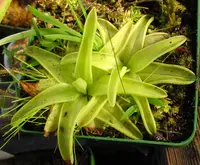
Use Shallow Trays
Grow this species in wide, shallow trays or saucers with 1–3 cm of soft, low-mineral water to maximize stolon spread and flower production while preventing the medium from going anaerobic.

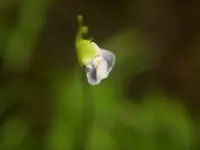
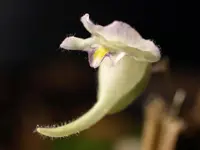
Bladderwort (Utricularia uliginosa) is a small, semi-aquatic carnivorous plant that often forms mats in very wet sand, peat, or shallow water. It produces delicate, grass-like leaves and tiny underwater bladders that trap minute aquatic organisms.
In nature it occurs across parts of Asia and Australia, usually in nutrient-poor bogs, rice fields, and swampy margins. Its need for consistently wet, low-mineral conditions makes it more suitable for experienced growers.
Those who want to learn how to care for bladderwort should know it prefers bright, indirect light, soft low-mineral water, and nutrient-poor, constantly moist to flooded substrates.

Care Difficulty
Hard Care

Light Preference
Partial Sun

Water Requirements
Aquatic

Temperature Preference
Tropical / Frost Sensitive

Hardiness Zone
10–12

Soil Texture
Sandy, Peaty, Organic-rich

Soil pH
Strongly acidic (4.5–5.5), Acidic (5.5–6.5)

Soil Drainage
Waterlogged tolerant

Fertilization
Minimal (feed rarely)
Scan your plant to receive care tips personalized for your specific plant
Available on iOS and Android
This small aquatic carnivorous plant prefers bright, gentle light that mimics open, shallow wetlands.
This wetland species depends on constant saturation rather than periodic drying of the substrate or water column.
This species favors warm, frost-free conditions similar to tropical or subtropical shallow wetlands.
This carnivorous bladderwort needs constantly high humidity to stay vigorous.
This species requires a permanently wet, low‑nutrient, airy medium rather than conventional potting soil.
This species adapts well to container culture when moisture and depth are managed carefully.
This carnivorous species is highly sensitive to nutrient buildup and is usually grown with no added fertilizer.
Pruning needs for Utricularia uliginosa are minimal and focus on hygiene rather than shaping.
Container-grown plants are transplanted mainly to refresh waterlogged substrate and manage spread rather than to relieve root binding.
This species is most often multiplied by vegetative division rather than by seed in home culture.
Winter needs depend strongly on climate and whether plants are grown outdoors or in controlled containers.

Plant Health Check
Not sure what's wrong with your plant? Check your plant's health inside the app.
This species is a very small, often barely visible, aquatic or semi-aquatic carnivorous plant that forms thin, thread-like stolons with minute bladder traps in shallow, nutrient-poor water and wet sand or mud across parts of Asia and Australia.
It is frequently found in seasonally wet, sandy depressions and along the margins of shallow pools, where fluctuating water levels expose and submerge its delicate shoots through the year.
The plant uses tiny underwater bladder traps that create negative pressure; when small aquatic invertebrates trigger sensory hairs, the trap door opens and the prey is sucked in within milliseconds, providing extra nutrients in oligotrophic, or nutrient-poor, conditions.

In some parts of its range, this species is considered an important indicator of relatively undisturbed, low-nutrient wetlands, because it tends to disappear when habitats are heavily fertilized, polluted, or subject to prolonged drainage.
Lack of flowers usually comes from low light, water that is too nutrient-rich, or temperatures outside its preferred warm range. Stable conditions and very low-mineral water are essential for growing bladderwort and encouraging reliable flowering.
Keep your plants happy and healthy with plant identification, disease detection, and easy care guidance.