Winter dormancy management
Provide a cool winter rest at 32–46°F for several months by moving pots to an unheated but frost-protected space such as a cold frame, and gradually reduce photoperiod and watering rather than changing conditions suddenly.

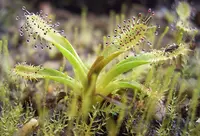
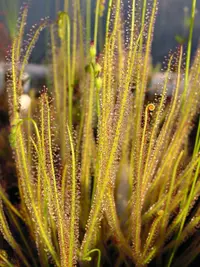
Drosera arcturi, commonly called the alpine sundew, is a small carnivorous plant native to cold, wet mountain regions of Australia and New Zealand. It forms low rosettes with narrow leaves covered in sticky, glistening hairs that trap small insects.
This species is adapted to nutrient-poor, waterlogged soils and relies on insect prey to supplement its nutrition. It prefers bright light, consistently wet conditions, and low-mineral, acidic substrates.
Due to its need for cool temperatures and very pure water, it can be more demanding than many other sundews. Beginners should first study how to care for Drosera arcturi before attempting long-term cultivation.

Care Difficulty
Hard Care

Light Preference
Full Sun

Water Requirements
Aquatic

Temperature Preference
Cold Hardy

Hardiness Zone
7–9

Soil Texture
Sandy, Peaty, Organic-rich

Soil pH
Strongly acidic (4.5–5.5)

Soil Drainage
Waterlogged tolerant

Fertilization
Minimal (feed rarely)
Scan your plant to receive care tips personalized for your specific plant
Available on iOS and Android
This alpine sundew needs strong, cool light to form healthy red traps and maintain compact growth.
This bog species requires constantly wet, low‑mineral conditions that never dry out around the roots.
This high‑altitude sundew is adapted to cool conditions and marked seasonal temperature shifts.
This alpine sundew needs consistently humid air to keep traps functional.
This species needs a nutrient-poor, acidic, permanently moist medium similar to sphagnum bogs.
This species is suitable for container growing when pot depth and moisture balance are managed carefully.
This alpine carnivorous species gains most nutrients from prey and usually needs no fertilizer.
Pruning needs for Drosera arcturi are minimal and focus on hygiene, not shaping.
Container-grown Drosera arcturi is best transplanted infrequently and with minimal root disturbance.
Propagation of Drosera arcturi is possible but slow, and often reserved for experienced growers.
This species is adapted to cold, snowy habitats and requires a cool to cold winter dormancy.

Plant Health Check
Not sure what's wrong with your plant? Check your plant's health inside the app.
This species is naturally restricted to cold, nutrient-poor bogs and seepage areas in alpine and subalpine zones of southeastern Australia and New Zealand, often growing beside melting snowfields during the short summer season.
It produces two distinct leaf forms: broad, flat carnivorous leaves in the growing season and narrow, grass-like non-carnivorous leaves that form a tight overwintering tuft when conditions become cold.
Mature plants can survive under winter snow cover, with the tight tuft and underground parts protecting the growth point from freezing temperatures typical of its high-altitude habitats.

Unlike many other sundews, this species is considered a glacial relict in parts of its range, meaning its current disjunct alpine populations are thought to be remnants from cooler climatic periods rather than recent colonists of high mountain habitats.
This alpine sundew performs best outdoors in cool, bright, wet conditions that mimic bog habitats. Indoors, it is challenging without strong light, cool temperatures, and high humidity, so outdoor culture suits most growers better than Drosera arcturi indoor care setups.
Keep your plants happy and healthy with plant identification, disease detection, and easy care guidance.