Winter dormancy rest
Allow the plant to die back into its underground tuber in late autumn, then keep the pot just barely moist and cool at 40–55°F through winter to prevent tuber rot and ensure strong regrowth next season.

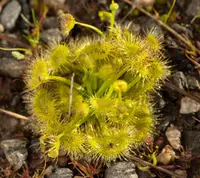
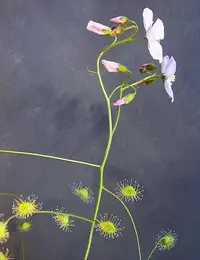
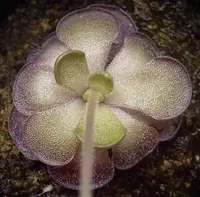
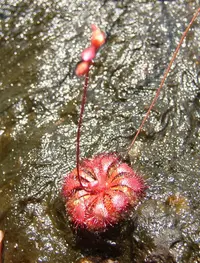
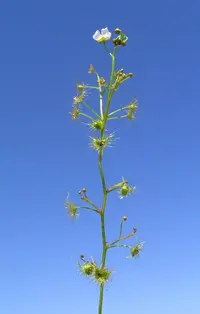
Grassland sundew, Drosera hookeri, is a temperate carnivorous plant that traps insects on sticky, glistening leaf tentacles. It helps supplement its nutrients by digesting small prey. This species forms upright or semi-erect rosettes and often grows in loose colonies, giving moist grasslands and heathlands a fine, sparkling appearance. Plants usually die back to an underground tuber in dry or cold seasons, then resprout when conditions improve. Drosera hookeri occurs naturally in southeastern Australia, especially in seasonally wet, open habitats with low-nutrient soils. It prefers full sun, consistently damp, acidic substrates, and very low mineral water. Understanding these needs is key to how to care for Grassland Sundew in cultivation.

Care Difficulty
Moderate Care

Light Preference
Full Sun

Water Requirements
Aquatic

Temperature Preference
Cool Climate

Hardiness Zone
7–10

Soil Texture
Sandy, Peaty, Organic-rich

Soil pH
Strongly acidic (4.5–5.5)

Soil Drainage
Waterlogged tolerant

Fertilization
Minimal (feed rarely)
Scan your plant to receive care tips personalized for your specific plant
Available on iOS and Android
This temperate sundew thrives in bright, cool conditions that mimic open grasslands.
This species prefers consistently wet, low‑nutrient conditions similar to its native boggy grasslands.
This temperate sundew experiences cool, moist winters and mild to warm summers in habitat.
This species prefers moderately humid air but adapts to many home environments if roots stay wet.
Drosera hookeri requires nutrient-poor, open, and consistently wet substrate rather than typical houseplant compost.
This species is suitable for container culture, especially in bog-style pots or trays.
Drosera hookeri grows in very nutrient-poor soils and usually performs best with no direct fertilization.
Pruning Drosera hookeri focuses on hygiene and maintaining healthy new growth rather than shaping.
Transplanting Grassland Sundew should be infrequent and done gently to avoid disturbing its sensitive roots.
Propagation of Drosera hookeri is possible through seed, division, and leaf cuttings under suitable conditions.
This species is cold-tolerant but benefits from thoughtful winter care, especially in containers or very cold regions.

Plant Health Check
Not sure what's wrong with your plant? Check your plant's health inside the app.
This species survives harsh Australian winters by dying back to an underground resting bud called a hibernaculum, which resprouts in the growing season when conditions improve.
Unlike many sundews that thrive in summer, this plant often shows strongest above-ground growth in the cooler, wetter months and can become almost invisible during hot, dry periods.
It forms a thickened, tuber-like root that stores water and nutrients, helping it endure seasonal drought and fire-prone grassland conditions.

Drosera hookeri was long confused with several related temperate Australian sundews and was only recognized as a distinct species in its current sense after detailed taxonomic revision in the early 21st century, highlighting how similar carnivorous plants can conceal hidden diversity.
Brown leaves usually result from low humidity, mineral-rich tap water, or excessive heat and drying winds. Use rain or distilled water, protect from hot, dry air, and allow the pot to sit in shallow, low-mineral water.
Keep your plants happy and healthy with plant identification, disease detection, and easy care guidance.