Tall sundew Care (Drosera auriculata)

Tall sundew

About Tall sundew

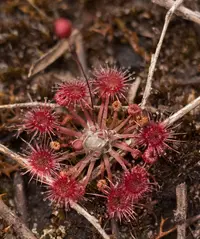
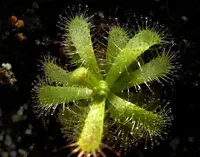
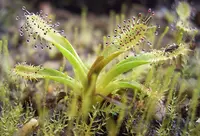
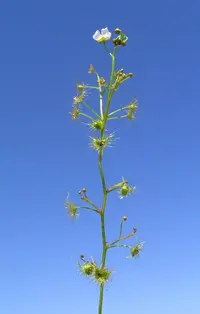
Tall sundew (Drosera auriculata) is an upright, tuberous carnivorous plant that captures small insects with sticky, glistening leaf glands. It typically grows as a slender, unbranched stem with whorls of rounded leaves, giving it a delicate, architectural look.

This species is native to southern Australia, where it inhabits seasonally damp, open habitats with low-nutrient soils. It is considered moderately challenging, as it has a distinct seasonal rest period and needs consistently moist, mineral-poor growing media.

Good light, pure water, and careful moisture control are the main factors that influence how to care for Tall sundew successfully in cultivation.

Main Plant Requirements

Care Difficulty

Hard Care

Light Preference

Full Sun

Water Requirements

Aquatic

Temperature Preference

Cool Climate

Hardiness Zone

8–10

Soil Texture

Sandy, Peaty, Organic-rich

Soil pH

Strongly acidic (4.5–5.5)

Soil Drainage

Waterlogged tolerant

Fertilization

Minimal (feed rarely)

Get Personalized Care Plan

Scan your plant to receive care tips personalized for your specific plant

Available on iOS and Android

How to Care for the Tall sundew

This scrambling carnivorous sundew prefers bright, cool conditions with several hours of direct sun.

  • Provide 4–6 hours of direct morning sun with bright, filtered light the rest of the day to maintain strong red coloration and active dew.
  • Tolerates light midday shade, especially in hotter regions, but prolonged deep shade leads to pale, weak growth and fewer traps on Tall sundew stems.
  • In winter, accept lower light and shorter days, but avoid full, dense shade; if grown in low sun, watch for elongated, floppy stems as a sign of insufficient light.

This species grows best in consistently wet, nutrient-poor substrate similar to its natural bog habitats.

  • Stand pots or planting trays in 1–3 cm of rainwater, distilled, or reverse-osmosis water so the soil surface stays moist and never fully dries.
  • Allow the water tray to empty briefly before refilling if the top 0.5–1 cm of soil just begins to lose surface sheen, avoiding both dust-dry and soupy, anaerobic conditions.
  • Reduce water depth slightly in cooler dormancy periods while keeping Drosera auriculata moist; yellowing, limp leaves can signal waterlogging, while crisp, curled leaves indicate underwatering.

This temperate sundew handles a wide range of outdoor conditions when protected from hard freezes and extreme heat.

  • Aim for active growth in 60–77°F (16–25°C); mild swings outside this range are acceptable if soil moisture and light remain stable.
  • Tolerates cool nights down to about 32°F (0°C) for short periods, but repeated hard frosts below 28°F (-2°C) can damage stems and growing points.
  • In hot spells above 86°F (30°C), protect from intense afternoon sun, maintain high soil moisture, and provide airflow to limit heat stress and leaf scorch.

This species prefers moderately humid conditions but adapts to many home environments if roots stay consistently wet.

  • Aim for 50–70% humidity; it tolerates brief dips to 40% if not combined with heat and strong airflow.
  • Low humidity causes weak or reduced dew drops and dull leaves on Tall sundew, even when otherwise healthy.
  • Increase humidity with nearby water trays or grouped plants, but avoid enclosing foliage to prevent stagnant, fungal-prone air.

This tuberous sundew needs a low-nutrient, airy, and consistently wet medium, not standard houseplant mix.

  • Use a mix of roughly 1:1 sphagnum peat moss and coarse silica sand to mimic its native, nutrient-poor habitat.
  • Ensure the mix is free-draining yet moisture retentive, with no compost, fertilizer, or manure, which can burn roots.
  • Keep pH slightly acidic, around 4.5–6.0, by avoiding lime-containing materials and ordinary garden soil.
  • For better aeration, include some fine perlite, but rinse it first to remove dust that may compact the surface.

This species is suitable for container culture, especially in deep pots that stay evenly wet during the growing season.

  • Choose a tall, narrow pot to provide vertical space for tubers and to keep the lower substrate cooler and more stable.
  • Use plastic or glazed ceramic containers, which slow evaporation and help maintain the consistently wet conditions this species needs.
  • Place pots in a tray of rain or distilled water, allowing only the lower 1–2 cm of the pot to stand in water to prevent stagnation near the crown.

Drosera auriculata gains nutrients mainly from insects, so use fertilizer sparingly and only in active growth.

  • Use a very dilute carnivorous-plant liquid fertilizer at 1/4 strength, never standard houseplant feeds or compost.
  • Apply to the soil surface or tray water, not directly onto the sticky leaves, every 4–6 weeks during the growing season.
  • Skip all fertilizer during summer dormancy and winter rest to avoid root damage and weak growth.
  • Rely primarily on natural insect prey; supplemental feeding is only a minor part of caring for Tall sundew.

Pruning for Drosera auriculata is minimal and focuses on hygiene rather than shaping.

  • In late season, remove dead or blackened leaves at the base with fine scissors or tweezers to limit mold.
  • Trim spent flower stalks once seeds have dropped if self-seeding is not desired or plants look untidy.
  • Avoid cutting healthy green growth, as this reduces energy storage for the next season.
  • Disinfect tools with alcohol before use to reduce the risk of introducing pathogens to the crown.

Container-grown plants or those in bog gardens sometimes need transplanting to maintain healthy tubers and soil conditions.

  • Check for crowded tubers, roots circling the pot, or declining vigor as signs that Drosera auriculata needs new space.
  • Plan repotting or transplanting during late dormancy before new shoots emerge, typically late summer to early fall.
  • Refresh the medium every 2–3 years using a low-nutrient mix such as 1:1 peat and sand or perlite.
  • Handle tubers gently, keep roots shaded and moist during the move, and water thoroughly after transplanting to limit stress.

Propagation of this tuberous sundew is possible but slower than many other carnivorous plants.

  • Sow fresh seeds in fall on the surface of a nutrient-poor peat and sand mix, keeping them bright and cool for germination.
  • Maintain evenly moist but not waterlogged conditions, with good air movement and 10–20°C temperatures.
  • Allow seedlings to form tubers undisturbed for at least 1–2 seasons before any disturbance.
  • Mature clumps can sometimes be divided during dormancy by carefully separating tubers and replanting each at similar depth.

This species has a natural summer dormancy and often experiences mild, wet winters in habitat, so winter care is usually straightforward.

  • In mild climates, plants can stay outdoors, provided the soil stays moist and does not freeze solid for long periods.
  • In colder regions, move pots to a cold, frost-free area such as an unheated bright garage or porch.
  • Avoid heavy mulching that stays waterlogged; aim for evenly moist, cool conditions around the tubers.

Care Tips

Seasonal dormancy setup

Provide a cool, bright, short-day period in late autumn by moving pots to a sheltered, unheated but frost-free area so tubers can form and rest properly before resprouting in late winter.

Use tall support

As stems can exceed 30–60 cm, place thin bamboo canes or a mesh grid at the back of the pot and loosely guide the climbing stems to prevent lodging and damage to the sticky trapping leaves.

Top-dress for tubers

After flowering, add a thin 0.5–1 cm layer of clean silica sand on the surface of the pot to protect forming tubers from temperature swings and to reduce moss and algae growth.

Rainwater tray management

During the active growing season, stand pots in a shallow tray and let it dry for 1–2 days between refills, then in summer dormancy keep the tray empty and only lightly moisten the medium from the side to avoid rotting the resting tubers.

Staggered repotting plan

Repot and divide only a portion of the collection each year, leaving the rest undisturbed, so there is always a backup plant in case some tubers are accidentally damaged while growing Tall sundew in containers.

Common Pests and Diseases

Aphids

These insects cluster on tender flower stalks and leaf bases, sucking sap and weakening growth, especially on plants grown in nutrient-richer mixes or sheltered spots.

Solution

Rinse plants gently with rainwater or distilled water to dislodge colonies, then place them in a breezier, brighter position; for persistent infestations, use a dilute insecticidal soap, keeping it off the sticky trap surfaces as much as possible and repeating after 5–7 days if needed.

Fungus gnats

These insects lay eggs in wet peat or sphagnum around the tuber, and the larvae can damage fine roots and young shoots while the flying adults can become a nuisance around indoor or greenhouse setups.

Solution

Allow the surface of the medium to approach just-damp between waterings during dormancy, improve air movement, and use yellow sticky traps above the pots; for heavy infestations, a biological control such as Bacillus thuringiensis israelensis (BTi) in the water can safely reduce larval numbers without harming the plant.

Botrytis blight

This disease appears as grey, fuzzy mold on old leaves, spent flowers, or injured tissue, favored by cool, humid, still air in winter-growing conditions.

Solution

Promptly remove and discard affected leaves or flower stalks, increase air circulation, and avoid overhead watering that wets the foliage; in severe cases, apply a low-toxicity fungicide labeled for ornamental use, testing on a small area first because carnivorous plants are sensitive to many chemicals.

Powdery mildew

This disease causes pale whitish patches on leaves and stems, which can reduce photosynthesis and distort new growth under crowded or poorly ventilated indoor or greenhouse conditions.

Solution

Thin overcrowded pots, improve airflow, and avoid large temperature swings that stress plants; for ongoing problems, use a gentle treatment such as a potassium bicarbonate-based fungicide at reduced strength, applying in the cooler part of the day and monitoring for any leaf sensitivity.

Interesting Facts

Seasonal climbing habit

This species begins growth as a low rosette in autumn, then produces a slender climbing stem that can reach more than 30 cm before dying back in late spring as the soil dries.

Winter-growing sundew

Unlike many carnivorous plants, it is active in the cool, wet winter of southern Australia and survives the hot, dry summer as an underground tuber known as a corm-like storage organ.

Self-pollination strategy

Flowers usually open only briefly in the warmer part of the day and can self-pollinate, which allows isolated plants in fragmented habitats to still set viable seed.

Botan icon

Did you know?

This species often uses nearby grasses, sedges, or low shrubs as living supports, twining its sticky, insect-trapping stem through surrounding vegetation to gain height and access more flying and crawling prey.

FAQs about Tall sundew

Lack of flowering often comes from insufficient winter dormancy, low light, or nutrient buildup from hard water or fertilizer. Cooler, drier winter conditions and very bright light usually restore normal flowering. Avoid adding fertilizer to the soil.

Grow Healthy Plants with Botan Care

Keep your plants happy and healthy with plant identification, disease detection, and easy care guidance.

Botan plant care app — identify plants on mobile

Explore More Plants