Alpine Butterwort Care (Pinguicula alpina)

Alpine Butterwort

About Alpine Butterwort

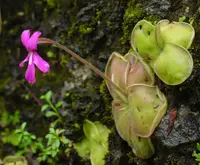
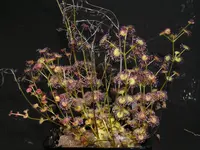
Alpine butterwort (Pinguicula alpina) is a small carnivorous perennial that forms a low rosette of pale green, sticky leaves. These leaves trap tiny insects, which provide nutrients in its naturally poor soils.

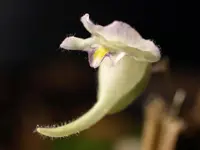
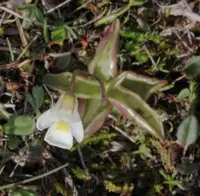
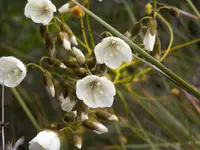
The plant produces delicate white flowers with yellow markings on slender stalks above the foliage. It usually grows in cold, sunny, lime-rich mountain habitats such as wet meadows, seeps, and rocky slopes in European and Asian alpine regions.

Its need for cool conditions, constant moisture, and mineral-rich but low-organic substrates makes it more challenging than many common houseplants. Anyone who wants to learn how to care for Alpine Butterwort should first understand its preference for bright light, cool temperatures, and evenly damp, airy soil.

Main Plant Requirements

Care Difficulty

Hard Care

Light Preference

Partial Sun

Water Requirements

Keep Soil Moist

Temperature Preference

Cold Hardy

Hardiness Zone

3–7

Soil Texture

Sandy, Rocky, Peaty

Soil pH

Strongly acidic (4.5–5.5)

Soil Drainage

Waterlogged tolerant

Fertilization

Minimal (feed rarely)

Get Personalized Care Plan

Scan your plant to receive care tips personalized for your specific plant

Available on iOS and Android

How to Care for the Alpine Butterwort

This high-mountain carnivorous species needs bright, cool light that mimics open alpine meadows.

  • Provide 4–6 hours of gentle morning sun with light shade or filtered light in the hotter afternoon, especially at low elevations.
  • Tolerates partial shade, but in deep shade rosettes stretch, leaves pale, and insect-trapping efficiency drops noticeably.
  • In exposed sites, intense midday summer sun can scorch leaves; use nearby rocks, grasses, or dappled cover to protect Alpine Butterwort while keeping it bright.

This species prefers consistently moist, cool conditions but not stagnant or waterlogged soil.

  • Keep the soil evenly moist, allowing only the top 0.5–1 cm to lose surface sheen before watering again, especially during active growth.
  • Use free-draining, low-mineral substrate; signs of overwatering include limp, yellowing leaves and foul-smelling, blackened roots.
  • In cooler seasons, reduce frequency as evaporation slows; slight curling or drooping at the leaf edges indicates the plant is becoming too dry.

This cold-tolerant carnivorous plant is adapted to cool summers and cold, often snowy winters.

  • Aim for cool growing temperatures around 50–65°F (10–18°C) during the main growing season for compact, healthy rosettes.
  • The plant tolerates near-freezing conditions and can survive brief drops to about 20°F (-6°C) under insulating snow or mulch.
  • Heat above 77°F (25°C), especially with dry air, stresses the plant; provide shade, extra humidity, and cooler airflow during hot spells.

This carnivorous species needs consistently moist air to maintain effective leaf traps and healthy growth.

  • Aim for 60–80% humidity, especially in warm conditions or during active growth.
  • It tolerates brief dips to 40–50% but prolonged dry air causes leaf edge browning and reduced insect trapping in Alpine Butterwort.
  • Increase humidity with a nearby open tray of water, grouped plants, or a cool-mist humidifier rather than misting the leaves.

This species needs a mineral-poor, sharply drained yet constantly moist medium that mimics alpine seepage habitats.

  • Use a mix such as 2 parts inert sand or fine grit to 1 part peat or sphagnum, with no added fertilizer or compost.
  • Ensure very fast drainage so water moves through within seconds, while the mix still stays lightly moist, not waterlogged.
  • Maintain slightly acidic conditions around pH 5.5–6.5 to support nutrient-sensitive Pinguicula alpina roots.
  • Avoid dense, clay-like, or nutrient-rich potting media, and add extra sand or perlite if the mix feels heavy or compacted.

This species can be grown in containers if moisture and drainage are carefully controlled.

  • Choose a relatively deep pot to keep roots cool and allow a stable, evenly moist zone below the crown.
  • Use a rigid pot material such as plastic or glazed ceramic to slow evaporation and maintain consistent moisture in the lean mix.
  • Raise the pot on feet or mesh so excess water drains freely and does not wick back from a standing saucer.

This carnivorous species gains most nutrients from captured insects, so Alpine Butterwort needs very little supplemental fertilizer.

  • Avoid standard houseplant fertilizers; use only very dilute (1⁄8–1⁄4 strength) balanced NPK if growth is clearly weak.
  • Apply a light feed at most once a month in the active growing season, never onto the leaves, only into the moist substrate.
  • Do not fertilize during winter dormancy, as inactive roots and reduced metabolism increase the risk of root burn.

Pruning Pinguicula alpina is minimal and focuses on hygiene rather than shaping.

  • In late winter or early spring, gently remove dead or blackened leaves to limit fungal problems.
  • Pinch or cut off spent flower stalks at the base with fine scissors to conserve energy for leaf and root growth.
  • Avoid heavy cutting into healthy tissue; this plant naturally keeps a compact rosette form without structural pruning.

Container-grown Pinguicula alpina is sensitive to disturbance, so repotting or transplanting should be infrequent and gentle.

  • Check for roots circling the pot, substrate breakdown, or stalled growth as signs it needs a larger or refreshed container.
  • Plan repotting for early spring, just as new growth starts, and aim for a 2–3 year interval at most.
  • Use a cool, free-draining, low-nutrient mix, handling the fragile roots and crown with minimal disturbance.
  • Water thoroughly after moving, keep light slightly reduced for 3–5 days, and maintain stable moisture to reduce stress.

Pinguicula alpina is usually propagated in cultivation by division or leaf cuttings under cool, stable conditions.

  • In early spring, gently divide larger clumps, ensuring each section has its own crown and roots.
  • Take healthy outer leaves with a small piece of base tissue, then lay them flat on damp, low-nutrient medium.
  • Maintain high humidity, bright indirect light, and cool temperatures for several weeks to encourage plantlet formation.
  • Seed propagation is possible but slow and requires fresh seed, cool stratification, and consistent moisture for germination.

This cold-adapted species forms a resting bud and is quite hardy, so winter care mainly supports its natural dormancy.

  • In the ground, a light mulch of fine gravel or leaf litter can insulate the crown without keeping it waterlogged.
  • Container plants are more vulnerable; move pots to a cold, frost-free but bright place if winters drop far below freezing.
  • Keep the medium just barely moist in dormancy, avoiding both saturation and complete drying to protect the resting bud.

Care Tips

Cool root zone

Place the pot inside a slightly larger clay or ceramic cachepot with damp sand or gravel between them to buffer root temperature and keep this alpine species cooler in warm rooms.

Winter dormancy setup

Provide a distinct cool, bright winter rest by moving the plant to a 35–45°F space such as an unheated windowsill or cold room, and keep the substrate just barely damp to avoid rotting the compact winter rosette.

Targeted insect feeding

If natural prey is scarce, use fine tweezers to place a few small, soft-bodied insects (such as dead fruit flies) on several leaves every few weeks rather than overloading the plant with large or frequent feedings.

Mineral control in water

Group this plant with other sensitive carnivores and use the same tested low-mineral water source for all of them, periodically checking for white crust on the pot rim and flushing with pure water if any buildup appears.

Alkaline substrate maintenance

Refresh or top-dress the pot each year with a fresh mix that includes washed limestone grit or crushed marble chips to maintain the slightly alkaline, mineral-poor conditions preferred when growing Alpine Butterwort.

Common Pests and Diseases

Fungus gnats

These insects are attracted to constantly wet, organic-rich substrates used for temperate carnivores and their larvae feed in the upper soil layer around the roots and crown. Symptoms include tiny black flies around the pot and slow, weakened growth in young rosettes.

Solution

Let the surface of the medium approach damp rather than waterlogged, improve air movement, and use top-dressing materials like sand to reduce suitable breeding sites. Trap adults with yellow sticky cards and, if needed, use a biological control such as Bacillus thuringiensis israelensis (BTI) in the water to target larvae without harming the plant, which is an effective approach in Pinguicula alpina care instructions.

Gray mold (Botrytis)

This disease develops in cool, humid, low-airflow conditions and can quickly attack old leaves or flower stalks. Symptoms include fuzzy gray growth on decaying tissue, especially in dense rosettes and during low-light seasons.

Solution

Remove and discard all affected leaves and flowers, then increase ventilation and reduce overhead watering to keep foliage drier. Space plants so rosettes do not touch, and in persistent cases use a targeted fungicide labeled for ornamental plants, applied carefully to avoid wetting the leaf surface more than necessary.

Powdery mildew

This disease sometimes appears in cooler greenhouse or indoor conditions with poor air exchange. Symptoms include white, powdery patches on older leaves that can reduce photosynthesis and stress the plant if left untreated.

Solution

Improve air circulation, avoid temperature swings, and keep humidity moderate rather than stagnant and high. Gently wipe affected leaves with a soft cloth dampened in a mild bicarbonate solution, remove heavily affected foliage, and only if needed apply a low-toxicity fungicide suitable for delicate ornamentals.

Aphids

These insects may colonize flower stalks and young leaves, feeding on sap and distorting new growth. Symptoms include sticky honeydew, deformed flowers, and clusters of soft-bodied insects on tender parts.

Solution

Physically remove aphids by rinsing flower stalks and leaves with a gentle stream of water, taking care not to damage the soft carnivorous surface. For persistent infestations, use insecticidal soap or a dilute horticultural oil, applied sparingly and tested on a small area first, as the leaves are sensitive.

Spider mites

This pest becomes a problem in overly dry, warm indoor or greenhouse conditions and is less obvious on small rosettes. Symptoms include very fine webbing, stippled or faded leaves, and general decline despite correct watering and light.

Solution

Increase ambient humidity slightly, avoid hot dry air, and rinse the plant gently under lukewarm water to remove mites from both leaf surfaces. If needed, apply a miticide or insecticidal soap labeled for spider mites in light, repeated treatments, monitoring the plant closely for stress due to its delicate leaf tissue.

Interesting Facts

Arctic insect specialist

This species often grows near melting snow in subalpine and alpine zones, timing its growth so that newly emerged insects from cold habitats supply essential nutrients to its sticky leaves.

Limestone-loving carnivore

It is strongly associated with calcareous, lime-rich substrates and frequently colonizes wet limestone rocks and seepages, which is unusual among carnivorous plants that more often prefer acidic bogs.

Dual leaf strategy

The plant produces broad, sticky summer leaves for insect capture, then forms compact, non-carnivorous winter buds called hibernacula that help it survive prolonged cold and snow cover.

Botan icon

Did you know?

Its natural distribution stretches from montane regions of central Europe to subarctic Fennoscandia and parts of northern Asia, making it one of the carnivorous plants with the most cold-tolerant and wide-ranging alpine to subarctic habitats.

FAQs about Alpine Butterwort

Lack of flowering usually comes from insufficient cold dormancy, overly warm winter conditions, or low light intensity. This species forms buds after a cool rest period, so mimicking alpine temperature and light seasonality is important for reliable blooms.

Grow Healthy Plants with Botan Care

Keep your plants happy and healthy with plant identification, disease detection, and easy care guidance.

Botan plant care app — identify plants on mobile

Explore More Plants