Seasonal Rosette Management
During the winter succulent phase, reduce disturbance and avoid repotting, then gently remove only dead outer leaves in spring so new carnivorous leaves are not shaded or crowded.


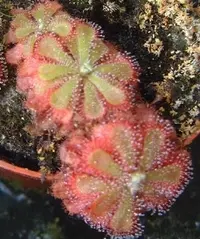
Pinguicula hirtiflora is a small carnivorous plant that forms a flat rosette of soft, sticky leaves used to trap tiny insects. The leaves often look glossy or slightly greasy due to the insect-catching glands on their surface.
This species is native to parts of southern Europe, where it grows on moist limestone rocks, cliffs, and seepage areas with constant humidity. It stays compact, which makes it suitable for terrariums and small indoor setups.
Its specialized leaves and need for consistently damp, mineral-poor substrate make it slightly more demanding than common houseplants, but still manageable for patient growers. Understanding how to care for Pinguicula hirtiflora starts with providing bright light, high humidity, and low-nutrient, airy growing media.

Care Difficulty
Hard Care

Light Preference
Partial Shade

Water Requirements
Keep Soil Moist

Temperature Preference
Tropical / Frost Sensitive

Hardiness Zone
Unknown

Soil Texture
Peaty, Sandy, Organic-rich

Soil pH
Strongly acidic (4.5–5.5)

Soil Drainage
Waterlogged tolerant

Fertilization
Minimal (feed rarely)
Scan your plant to receive care tips personalized for your specific plant
Available on iOS and Android
This species prefers bright but gentle light that mimics open, rocky habitats with some shading.
Watering should support moist, airy conditions without leaving the roots in stagnant water for long periods.
Stable, cool to mild temperatures support healthy growth and seasonal cycles for this species.
This species prefers moderately humid air but adapts to typical indoor levels if extremes are avoided.
This species needs an airy, low-nutrient, fast-draining mix that stays slightly moist but never waterlogged.
This species is well suited to container growing when moisture and drainage are carefully managed.
This carnivorous species gains most nutrients from prey, so fertilization should stay very light and infrequent.
This plant needs only minimal pruning, aimed at hygiene rather than reshaping.
Repotting is infrequent but important to maintain an airy, low-nutrient medium for this carnivorous rosette.
This species is commonly multiplied by leaf pullings and division under stable, humid conditions.
Cool winter conditions with mild protection support the natural rest phase of this Mediterranean butterwort.

Plant Health Check
Not sure what's wrong with your plant? Check your plant's health inside the app.
This species is native to limestone cliffs and moist rock faces in the central and southern Balkans, especially in Albania and northern Greece, where it grows in thin, calcareous substrates constantly flushed by seepage water.
Pinguicula hirtiflora forms two distinct leaf types: flat, sticky carnivorous leaves in the growing season and compact, non-carnivorous winter rosettes that help it survive cold, drier periods.
The species name hirtiflora refers to its noticeably hairy flower stalks and floral parts, which bear fine, often glandular hairs that help distinguish it from closely related European butterworts.

This species often grows in dense sheets on vertical or overhanging rock walls, forming large, mat-like colonies that can visually dominate entire seepage faces in its limited Balkan range, yet it remains very localized and is considered regionally rare in the wild.
This species grows best in controlled indoor or greenhouse conditions, where humidity, water quality, and light can be managed precisely. Outdoors, it usually struggles with rain mineral content, temperature swings, and competition from mosses and algae.
Keep your plants happy and healthy with plant identification, disease detection, and easy care guidance.