Pondo Bladderwort Care (Utricularia sandersonii)

Also known as: Sandersons Bladderwort
Pondo Bladderwort

About Pondo Bladderwort

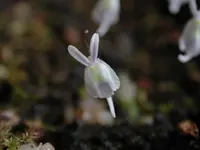
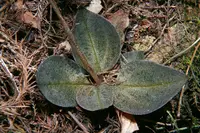
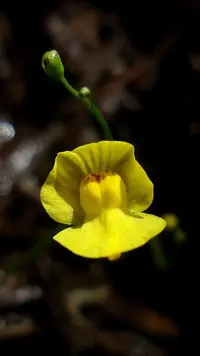
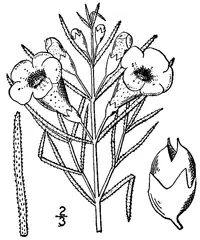
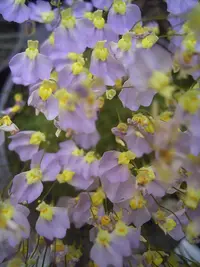
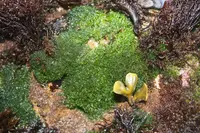
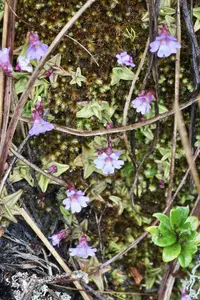
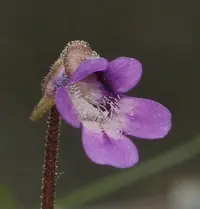
Utricularia sandersonii is a small carnivorous plant from South Africa, often grown as a terrestrial or semi-aquatic species in pots or terrariums. It forms dense, flat mats of tiny green leaves and produces delicate, rabbit-eared pale blue to white flowers that appear above the foliage.

This species naturally occurs in wet, nutrient-poor grasslands and seepage areas, where it uses microscopic bladder traps on its roots to capture small aquatic organisms. It stays compact and is considered relatively easy to grow for a carnivorous plant, provided it has constant moisture, low-mineral substrate, and soft, low-mineral water. Understanding how to care for Utricularia sandersonii mainly involves recreating its cool, bright, and consistently damp natural habitat.

Main Plant Requirements

Care Difficulty

Hard Care

Light Preference

Bright Indirect Light

Water Requirements

Aquatic

Temperature Preference

Tropical / Frost Sensitive

Hardiness Zone

Unknown

Soil Texture

Peaty, Organic-rich

Soil pH

Strongly acidic (4.5–5.5)

Soil Drainage

Waterlogged tolerant

Fertilization

Minimal (feed rarely)

Get Personalized Care Plan

Scan your plant to receive care tips personalized for your specific plant

Available on iOS and Android

How to Care for the Pondo Bladderwort

This small terrestrial bladderwort prefers bright, indirect light that mimics open, lightly shaded bogs.

  • Provide 4–6 hours of bright, filtered light daily, such as dappled shade or morning sun with light afternoon shade to prevent leaf scorch.
  • Tolerates partial shade, but in very low light growth becomes weak and flowering declines; move slightly closer to a bright window or brighter greenhouse bench if stems stretch.
  • In summer, protect from harsh midday sun behind a sheer curtain or under 30–40% shade cloth; in winter, shift to the brightest available spot to compensate for shorter days.

This species thrives in consistently wet, low-mineral conditions, similar to shallow bog or marsh edges.

  • Keep the substrate saturated using low-mineral water (rain, distilled, or reverse osmosis); a shallow tray with 0.5–1 in of water maintains constant moisture without covering the foliage.
  • Avoid letting the medium dry out; pale, wilting leaves or slowed trap formation suggest underwatering, while sour odor or blackened roots indicate stagnation and the need for fresher, better-aerated medium.
  • In cooler months, reduce tray depth slightly so the medium stays very moist rather than flooded, especially in low light, to limit algae and prevent oxygen-poor conditions around the roots.

This carnivorous plant prefers mild, frost-free conditions with stable temperatures.

  • Aim for 65–80°F (18–27°C) for steady growth; short spikes to 85°F (29°C) are tolerated if humidity stays high and the substrate remains wet.
  • Protect from cold below 45°F (7°C); brief dips may be survived, but frost can damage foliage and traps and may kill the plant if the medium freezes.
  • In hot summers above 85°F (29°C), increase air movement, avoid direct midday sun, and keep water slightly cooler to prevent stress while maintaining active growth.

This species prefers consistently moist, high-humidity conditions to grow well.

  • Aim for 60–80% humidity, which supports continuous growth and flowering.
  • It tolerates brief dips to 40–50%, but prolonged dry air slows growth and may cause brown leaf edges.
  • Increase humidity with a nearby tray of water, grouped plants, or a small humidifier rather than misting the foliage.

Use a soft, water-retentive but airy carnivorous plant mix for Utricularia sandersonii.

  • Choose a fine-textured, fibrous medium such as 2 parts sphagnum peat to 1 part silica sand or fine perlite.
  • Keep the mix evenly moist and poorly drained by design, but avoid dense compaction that excludes all air from the root zone.
  • Target a mildly acidic pH around 4.5–6.0, which supports nutrient-poor conditions this species is adapted to.
  • Avoid compost, fertilizers, bark, or standard potting mixes, which add nutrients the plant cannot tolerate.

This species is very suitable for container growing, including small trays and shallow pots.

  • Select a wide, shallow pot to accommodate its creeping growth and allow the stolons to spread evenly near the surface.
  • Use plastic or glazed ceramic containers to slow evaporation and keep the substrate consistently damp.
  • Place the pot in a tray with 0.5–2 cm of water, letting the container wick moisture while preventing full submersion.

This small carnivorous species gains most nutrients from captured prey, so conventional fertilization is minimal and must be very dilute.

  • Use a very weak balanced liquid fertilizer (around 1/8–1/4 strength) labeled safe for carnivorous plants, applied to the medium, not the leaves.
  • Feed only during active growth in spring–summer, no more than once every 4–6 weeks, and skip entirely if prey is abundant.
  • Stop all feeding in winter or cool, low‑light periods to avoid salt buildup and root damage from unused nutrients.

Pruning needs for Utricularia sandersonii are light and mostly hygienic rather than structural.

  • Trim dead or yellowing foliage and old flower stalks at the base whenever they appear to keep mats clean and reduce mold risk.
  • Remove any decaying or algae‑covered surface growth to maintain good air movement and light penetration to the leaves.
  • Use clean, sharp scissors or small snips and avoid disturbing the wet medium more than necessary during trimming.

Repotting focuses on refreshing the wet, nutrient-poor medium and maintaining healthy, spreading growth.

  • Plan to repot every 1–2 years, or when growth thins, algae takes over the surface, or the medium compacts and drains poorly.
  • Best timing is late winter to early spring, just before strong new growth begins, to limit stress on the fine roots and stolons.
  • Gently lift and divide the mat into sections, keeping roots and attached medium intact, then place onto fresh, saturated carnivorous-plant mix.
  • Keep the plant shaded and evenly moist for 1–2 weeks after repotting to support recovery and stable Utricularia sandersonii care.

Propagation is commonly done by division and small plant sections rather than by seed in home collections.

  • Divide dense mats in spring–summer, separating into small clumps that each carry healthy leaves and stolons.
  • Lay thin sections of healthy mat on fresh, saturated carnivorous-plant mix, ensuring good contact with the surface.
  • Maintain bright, indirect light, high humidity, and consistently wet medium to support rapid spreading and new leaf formation.
  • Seeds are rarely used, but if available, surface-sow on pure, wet medium and do not cover, as light encourages germination.

This species is frost-sensitive and is best treated as a warm-temperate to subtropical plant in winter.

  • Move outdoor containers indoors before temperatures drop below 45°F, providing bright, indirect light and high humidity.
  • Keep the medium cool to mildly warm (50–68°F) and evenly wet, avoiding both freezing and drying of the root zone.
  • Do not use heavy mulches; instead, rely on stable indoor conditions and good air circulation to prevent rot during short, darker days.

Care Tips

Tray water management

Use a shallow tray and keep the water level just touching or slightly below the pot base rather than flooding the pot, which keeps the stolons moist while maintaining enough air in the medium for healthy root and trap development.

Divide dense carpets

When the mat becomes thick and growth slows, gently tear or cut it into several sections and repot each piece, which reduces self-shading and encourages faster, more even regrowth across the surface.


Encourage ground cover

Plant in a wide, shallow container and lightly press small plugs of the mat into the surface at several points, allowing the plant to spread laterally into a continuous carpet instead of forming a tight mound in one spot.

Support steady prey supply

Place the pot near other small potted plants or in a greenhouse area where fungus gnats and other tiny insects are naturally present, so the plant’s underground bladders receive a regular food source without manual feeding.

Seasonal growth checks

At least twice a year, gently lift a small edge of the mat and inspect the underlying medium for sour smell, blackened stolons, or compaction, and refresh the top layer or repot if needed to maintain a loose, oxygenated substrate for growing Utricularia sandersonii.

Common Pests and Diseases

Fungus gnat larvae

This pest attacks the wet, peaty media of Utricularia trays, where larvae feed among the fine roots and stolons. Symptoms include stalled growth, thinning mats, and poor flowering in very wet setups.

Solution

Reduce organic material in the mix, allow the surface to dry slightly between tray refillings, and use yellow sticky traps to monitor adults. For persistent problems, apply a biological control such as Bacillus thuringiensis israelensis (Bti) to the water tray according to label directions while maintaining the low-mineral conditions needed for Utricularia sandersonii care instructions.

Spider mites

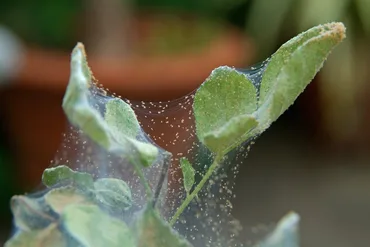
These insects appear in warm, dry indoor air and can colonize the tiny leaves, causing pale, stippled foliage and webbing on dense patches. Damage is often worse under strong light with low humidity.

Solution

Increase humidity, rinse foliage gently but thoroughly under lukewarm water, and isolate the pot from other plants. If needed, use a mild insecticidal soap on the foliage, avoiding heavy runoff into the tray to keep minerals away from the roots.
Botrytis (gray mold)

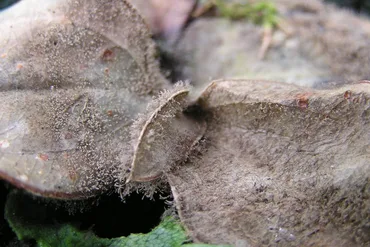
This disease develops in cool, stagnant, very humid conditions, especially where old flower stalks and dead leaves remain on the mat. Symptoms include soft, browning tissue and a fuzzy gray growth on leaves, stolons, or spent flowers.

Solution

Remove and discard all affected and dead plant material, then improve air movement around the pot while keeping the medium moist. If outbreaks recur, space plants farther apart and consider a targeted fungicide suitable for carnivorous plants, testing on a small area first.

Algal overgrowth

This problem arises in constantly wet trays and high light, where green algae coats the substrate surface and can smother young leaves and stolons. Symptoms include a slick green film on the medium and weaker new growth trying to emerge through it.

Solution

Physically scrape or rinse off the top layer of algae and replace it with fresh, clean, low-mineral medium. Reduce direct sun on the pot surface, keep water depth shallow rather than flooding, and avoid added fertilizers that encourage algal growth.

Slugs and snails

These pests may attack outdoor or greenhouse-grown mats, leaving irregular holes and grazed patches in the fine foliage, often overnight. Symptoms include missing sections of the mat and slime trails around pots or trays.

Solution

Hand-pick slugs and snails at night and remove hiding places such as loose debris under trays. Use barriers like copper tape around benches or pots, and if necessary apply iron phosphate slug baits placed where they cannot fall into the water trays.

Interesting Facts

Clickless carnivorous traps

This species has tiny underwater bladder traps that open passively without a mechanical trigger, relying on a constant pressure difference to suck in microorganisms in a fraction of a second.

Habitat in South Africa

It is native to wet, nutrient-poor grasslands and seepage areas in eastern South Africa and Lesotho, where it often forms dense, mat-like colonies in saturated soil or shallow water.

Continuous flowering habit

In cultivation, this plant often produces its small, rabbit-shaped flowers almost year-round under stable conditions, which makes it one of the more floriferous terrestrial bladderworts compared with many relatives that flower only seasonally.
Botan icon

Did you know?

The upper petal lobes and long antenna-like projections of its flowers strongly resemble the head and ears of a cartoon rabbit, which has led growers to widely use the informal name bunny bladderwort and helped popularize Utricularia sandersonii indoor care among carnivorous plant enthusiasts.

FAQs about Pondo Bladderwort

This species spreads slowly to moderately by stolons in wet, low-nutrient media, forming a dense mat over time. It usually stays contained in pots or trays and is not considered aggressive in typical indoor or greenhouse conditions.

Grow Healthy Plants with Botan Care

Keep your plants happy and healthy with plant identification, disease detection, and easy care guidance.

Botan plant care app — identify plants on mobile

Explore More Plants