Great Sundew Care (Drosera anglica)

Also known as: English sundew
Great Sundew

About Great Sundew

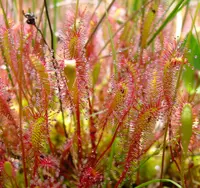
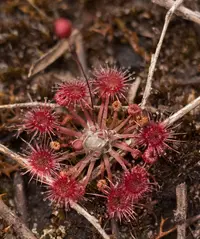
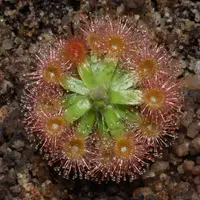
Great sundew, Drosera anglica, is an insectivorous bog plant that naturally grows in cool, nutrient-poor wetlands in northern Europe and North America. It uses sticky, gland-covered leaves to trap small insects, then slowly curls around them to digest and absorb nutrients.

Plants form a low rosette of narrow, red-tinged leaves and produce slender stalks with small white flowers in season. Growth is strongest in long, bright days and consistently wet conditions.

Its need for pure, low-mineral water and very moist, acidic substrate makes it more demanding than typical houseplants, but still manageable for growers familiar with how to care for Great Sundew.


Main Plant Requirements

Care Difficulty

Hard Care

Light Preference

Full Sun

Water Requirements

Aquatic

Temperature Preference

Cool Climate

Hardiness Zone

3–8

Soil Texture

Sandy, Peaty, Organic-rich

Soil pH

Strongly acidic (4.5–5.5)

Soil Drainage

Waterlogged tolerant

Fertilization

Minimal (feed rarely)

Get Personalized Care Plan

Scan your plant to receive care tips personalized for your specific plant

Available on iOS and Android

How to Care for the Great Sundew

This carnivorous bog plant needs strong light to keep leaves compact and dewy.

  • Provide 6–10 hours of direct sun daily, ideally full morning sun with some light afternoon shade in hotter regions.
  • Tolerates bright, hazy conditions or very light filtered sun, but weak, elongated leaves signal insufficient light for Great Sundew.
  • In summer, protect from scorching late-afternoon sun in heatwaves; in winter, give the brightest site available to compensate for shorter days.

This species is adapted to constantly wet, low-nutrient bog conditions.

  • Keep the root zone saturated using rainwater or distilled water; soil surface should never dry and may stand in 1–3 cm of water.
  • In warm months, watch for pale, wilting, or less sticky leaves as early signs of underwatering, especially in exposed sites.
  • In cooler seasons, maintain very damp soil with a shallow water level; black, collapsing roots or sour smell suggest chronic overwatering in stagnant, anaerobic conditions for Drosera anglica.

This temperate sundew experiences cool to mild summers and cold winters in nature.

  • Aim for 60–77°F (16–25°C) during active growth; short spikes to 86°F (30°C) are tolerated if soil stays wet and roots shaded.
  • The plant withstands cold down to about 23°F (-5°C) when acclimated, dying back above ground but regrowing from the crown.
  • Allow a cool winter rest around 32–50°F (0–10°C), avoiding repeated freeze–thaw cycles and sudden swings from warm indoor air to hard frost.

This bog carnivorous species needs consistently high humidity to keep functional dew-covered leaves.

  • Aim for 60–90% humidity; lower levels quickly reduce dew production and trap efficiency.
  • Plants tolerate only brief dips into 40–50% before leaf tips dry and tentacles lose stickiness.
  • Crisping leaf margins, dull or absent dew, and stalled growth signal humidity stress.
  • Use trays of water, grouped plants, or a ventilated terrarium to raise humidity without stagnant air.

This species needs a nutrient-poor, consistently wet, airy medium that mimics acidic bog soil.

  • Use a mix of 1:1 unfertilized sphagnum peat moss and silica sand or perlite for Drosera anglica.
  • Ensure the mix stays wet but not compacted; coarse sand or perlite improves drainage and aeration while keeping capillary moisture.
  • Keep pH acidic, roughly 4.0–5.5, and never add lime, compost, or standard potting mix that introduce nutrients and raise pH.
  • Avoid fertilizers, manures, bark-based mixes, and hard tap water, which collectively burn roots and favor algae or moss overgrowth.

This species grows very well in containers that can maintain a stable, wet root zone.

  • Choose a tall container so the wet soil column allows for a saturated lower layer and slightly less-saturated upper layer.
  • Use plastic pots rather than unglazed clay to slow evaporation and keep the peat-based mix evenly moist.
  • Place pots in a tray with 1–3 cm of low-mineral water to maintain constant saturation without flooding the rosette.

Drosera anglica is adapted to nutrient-poor bogs and usually performs best without conventional fertilizer.

Pruning Drosera anglica focuses on hygiene and maintaining healthy, active growth rather than shaping.

  • Cut dead or blackened leaves at the base with small sterile scissors during the growing season to limit mold.
  • Remove old flower stalks after seed set if vigor declines, directing energy back into new leaf growth.
  • Thin out decaying or crowded plant debris around the crown to improve air flow and reduce fungal issues.

Container-grown Great Sundew benefits from careful, infrequent repotting to refresh its acidic, low-nutrient substrate.

  • Plan to repot every 2–3 years in late winter or early spring, before strong new growth begins.
  • Check for roots circling the pot, stalled growth, or a sour smell as signs the medium is exhausted.
  • Use a peat and sand or peat and perlite mix, keep roots shaded and moist during transfer, and avoid root teasing.
  • Water thoroughly with distilled or rainwater after repotting, then keep in bright light but avoid intense heat for 1–2 weeks.

Propagation of Drosera anglica is commonly done by leaf cuttings and seed under stable, humid conditions.

  • Take healthy leaf cuttings in late spring, lay them on wet long-fiber sphagnum, and cover with clear plastic for humidity.
  • Keep cuttings or seeds in bright, indirect light at about 65–75°F to encourage steady rooting or germination.
  • Sow fresh seeds on the surface of damp peat-based mix, do not bury, and maintain constant moisture with pure water.
  • Once plantlets form several leaves, transplant gently into individual plugs, disturbing roots as little as possible.

Drosera anglica is a cold-hardy carnivorous plant that tolerates natural winter dormancy in many temperate climates.

  • In-ground plants in suitable zones usually need no extra insulation beyond consistently moist soil.
  • Mulch lightly with pine needles or dead sphagnum in very exposed sites to buffer freeze–thaw cycles at the root zone.
  • Move containers into a cold frame, unheated garage, or sheltered porch where temperatures remain around 32–45°F.

Care Tips

Winter dormancy management

In cold climates, overwinter plants in an unheated but frost-free space (35–45°F) with reduced light so they complete dormancy without freezing solid, then gradually reintroduce stronger light and warmth in spring to avoid shock.

Live sphagnum top-dressing

Add a thin layer of live sphagnum moss on top of the potting mix to buffer moisture, slightly acidify the surface, and reduce algae growth that can smother young rosettes.

Water table setup

Place pots in a deep tray or basin with a stable 1–3 cm water table using rain or distilled water, which keeps roots consistently wet while allowing some air exchange compared with fully submerged culture.

Insect feeding strategy

If natural insect capture is low, offer a very small soft-bodied insect (like a gnat or fruit fly) to a few leaves every 3–4 weeks during active growth and avoid overfeeding, which can cause leaf burn in sensitive carnivorous species.

Division and rejuvenation

Every 2–3 years, divide crowded clumps in early spring by gently teasing apart rosettes and replanting them separately, which improves air flow, reduces rot risk, and is an efficient method to grow Drosera anglica without seed.

Common Pests and Diseases

Aphids

These insects cluster on young leaves and flower stalks, sucking sap and weakening the plant while leaving sticky honeydew on the foliage and tentacles.

Solution

Rinse plants gently with rainwater or distilled water to dislodge aphids, then place the pot in a breezy, well‑lit spot to help the foliage dry. For persistent infestations on outdoor clumps, use a dilute insecticidal soap or horticultural oil that is safe for carnivorous plants, applying only to the infested areas and avoiding contact with the root zone as much as possible.

Fungus gnats

These insects are attracted to constantly wet peat substrates, with larvae feeding in the upper soil layer and occasionally damaging fine roots or young plants.

Solution

Allow the surface of the peat to stay wet but not flooded, and remove algae or decaying organic debris that attracts adults. For ongoing problems, use yellow sticky traps to catch flying adults and, if necessary, apply a carnivorous-plant-safe biological control such as Bacillus thuringiensis israelensis (BTi) to the water used for tray watering to reduce larvae in the medium.

Botrytis blight

This disease appears as gray, fuzzy mold on old leaves, flower stalks, or trapped insects, especially in cool, stagnant, and very humid air.

Solution

Remove and discard all affected leaves and flower stalks, and improve air movement around the plants while maintaining high light and pure water. Avoid splashing water on foliage, thin crowded rosettes, and in severe or recurrent cases consider a targeted fungicide labeled safe for carnivorous plants, applied according to label directions.

Leaf spot fungus

Symptoms include small brown or black spots on leaves that may enlarge and cause localized tissue death, often starting on older or shaded foliage in humid, low‑airflow conditions.

Solution

Trim off and discard spotted leaves, then increase light and air circulation to keep foliage drier while maintaining the wet substrate that Drosera anglica requires. If new spots continue to develop, use a low-toxicity fungicide compatible with bog plants, testing on a small section first to confirm the plant tolerates the treatment.

Spider mites

This pest can occur in warmer, drier indoor setups, causing dull, stippled leaves, loss of dew, and very fine webbing on the leaf surfaces.

Solution

Increase ambient humidity and gently rinse foliage with distilled or rainwater to remove mites and webs, repeating several times over a week. When populations are high, consider using a targeted miticide or insecticidal soap suitable for delicate carnivorous plants, applying in the cooler part of the day and monitoring leaves closely for any sensitivity.

Interesting Facts

Hybrid origin confirmed

Genetic studies show that this species arose as a natural hybrid between Drosera rotundifolia and Drosera linearis, followed by chromosome doubling that stabilized it as its own fertile species.

Boreal bog specialist

This plant is strongly tied to cold, nutrient-poor, calcareous to slightly basic fens and bogs in northern regions, unlike many other sundews that prefer more acidic peatlands.

Circumboreal distribution

Its natural range circles the Northern Hemisphere across parts of North America and northern Europe, but in many areas it is now rare and confined to a small number of intact wetland sites.

Botan icon

Did you know?

Unlike several other carnivorous plants that rely largely on insects for nitrogen, field studies have shown that this species still obtains a substantial share of its nitrogen from its wetland substrate, indicating a more mixed nutritional strategy than many carnivorous relatives.

FAQs about Great Sundew

Brown leaves usually result from mineral-rich tap water, low humidity, or prolonged dryness. Use rain, distilled, or reverse-osmosis water, keep the soil consistently moist, and avoid fertilizer, which burns roots and leaf tissue over time.

Grow Healthy Plants with Botan Care

Keep your plants happy and healthy with plant identification, disease detection, and easy care guidance.

Botan plant care app — identify plants on mobile

Explore More Plants