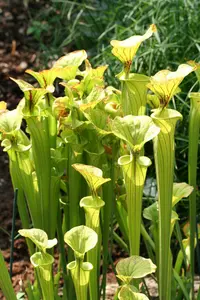
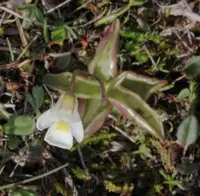
Cool winter dormancy
Provide a true dormancy by keeping plants outdoors or in an unheated space at 35–50°F for 3–4 months, and gradually reduce water so the pot stays damp, not flooded, to avoid crown rot during this rest period.

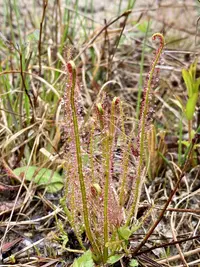
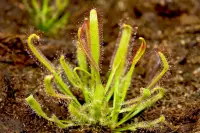
Threadleaf sundew (Drosera filiformis var. filiformis) is a temperate carnivorous plant that naturally grows in nutrient-poor bogs and fens of eastern North America. It forms upright, grassy clumps of very narrow leaves covered in sticky droplets that trap small insects.
This species dies back to a winter resting bud and re-sprouts in spring, which can confuse new growers who care for threadleaf sundew. It prefers strong light, consistently wet conditions, and low-mineral, acidic substrates, which makes it best suited to growers who can provide stable moisture and avoid tap water with high mineral content.

Care Difficulty
Moderate Care

Light Preference
Full Sun

Water Requirements
Aquatic

Temperature Preference
Cold Hardy

Hardiness Zone
6–8

Soil Texture
Sandy, Peaty, Organic-rich

Soil pH
Strongly acidic (4.5–5.5)

Soil Drainage
Waterlogged tolerant

Fertilization
Minimal (feed rarely)
Scan your plant to receive care tips personalized for your specific plant
Available on iOS and Android
This temperate carnivorous species needs abundant direct sun to form strong, dewy leaves.
This bog species requires consistently wet, low-mineral conditions, similar to a shallow, sunny marsh.
This species is a cold-hardy, temperate sundew that needs a cool winter dormancy and warm, not hot, summers.
This species prefers moderate to high humidity to keep its sticky traps functional.
This carnivorous species needs nutrient-poor, acidic, consistently wet soil.
This species grows very well in containers when moisture and depth are managed correctly.
This carnivorous species obtains most nutrients from prey, so fertilizer use must be minimal and very dilute to avoid root damage.
Drosera filiformis var. filiformis needs only light pruning to remove dead material and maintain healthy rosettes.
This bog species prefers infrequent repotting, as disturbance can stress its fine roots and hibernaculum.
This species is commonly propagated by seed, leaf cuttings, and division of clumps or hibernacula.
This temperate sundew requires a cool winter dormancy and is fairly cold hardy when roots stay moist but not frozen solid.

Plant Health Check
Not sure what's wrong with your plant? Check your plant's health inside the app.
This threadlike sundew is naturally restricted to acidic, nutrient-poor bogs and wet sand barrens along the Atlantic coastal plain, especially in New Jersey and nearby states, where it forms dense, often locally abundant populations in open, sunny microsites.
Its extremely narrow, filamentous leaves can reach 20–45 cm long in the wild, maximizing surface area for insect capture while minimizing shading of neighboring leaves, which helps the plant thrive in crowded bog vegetation.
Unlike many tropical sundews, this variety survives freezing winters by forming a tight hibernaculum, a resting bud at soil level, allowing it to re-sprout each spring in climates that regularly drop below 32°F.

Some New Jersey populations of this sundew have been studied as model systems for understanding how fire-maintained coastal plain habitats support rare carnivorous plants, because it often declines quickly when natural fire regimes are suppressed and competing shrubs take over its open bog habitat.
Brown leaves usually result from low humidity, mineral buildup from hard water, or strong, hot sun drying the mucilage. Remove dead foliage, switch to rain or distilled water, and provide bright light without prolonged midday scorch to support recovery.
Keep your plants happy and healthy with plant identification, disease detection, and easy care guidance.