Mounting for airflow
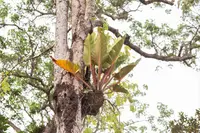
Mount plants on cork or hardwood slabs with a thin pad of long-fiber sphagnum to mimic their epiphytic habit and keep roots better aerated, which reduces rot risk in dense clumps.

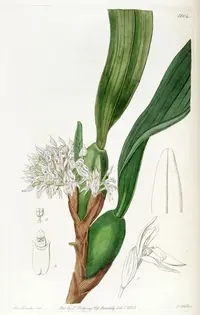
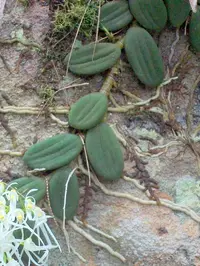
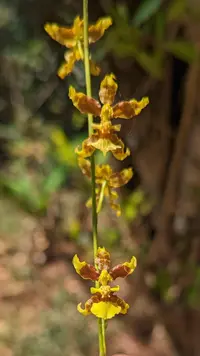
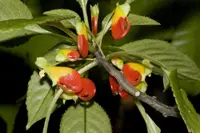
Crowded maxillaria (Maxillaria densa) is a compact epiphytic orchid that forms tight clumps of slender pseudobulbs and narrow grass-like leaves. It produces small, close-set flowers that can appear in clusters along the plant, giving it a dense, crowded look.
This species is native to montane forests of Central and South America, where it grows on trees in cool to mild, humid conditions. It is considered moderately challenging, mainly because it dislikes stale air, drying out completely, or staying waterlogged.
Those learning how to care for crowded maxillaria should focus on stable humidity, good air movement, and bright, filtered light in a very free-draining orchid substrate.

Care Difficulty
Moderate Care

Light Preference
Partial Shade

Water Requirements
Moderate Water

Temperature Preference
Tropical / Frost Sensitive

Hardiness Zone
Unknown

Soil Texture
Loamy, Peaty, Organic-rich

Soil pH
Acidic (5.5–6.5)

Soil Drainage
Moist but well-drained

Fertilization
Light (every 4–6 weeks)
Scan your plant to receive care tips personalized for your specific plant
Available on iOS and Android
Maxillaria densa prefers bright, indirect light similar to bright forest shade.
This orchid needs consistent moisture around the roots without staying waterlogged.
This species prefers cool to intermediate temperatures with stable, gentle fluctuations.
This orchid prefers moderately high, stable humidity to maintain healthy foliage and pseudobulbs.
This species grows best in a loose, airy orchid substrate rather than standard potting soil.
This orchid is well suited to container culture due to its compact, clumping root system.
Maxillaria densa benefits from light, consistent feeding during its active growth period.
Maxillaria densa needs only light, maintenance-focused pruning to stay healthy and neat.
This orchid prefers tight conditions and is repotted infrequently to avoid disturbing its roots.
Maxillaria densa is usually propagated by division rather than from seed in home conditions.
This species dislikes frost and needs cool, frost-free winter conditions with adjusted watering.

Plant Health Check
Not sure what's wrong with your plant? Check your plant's health inside the app.
This species naturally forms dense, tufted clumps of short, slender pseudobulbs and leaves, giving it a low, cloud-like appearance rather than the more open, arching look seen in many other Maxillaria species.
The plant produces numerous small, tightly packed flowers along the clump, creating a clustered floral display that is more about mass effect than individual showy blooms.
It is native to higher-elevation habitats in Central and South America, where it experiences cool to intermediate temperatures and high atmospheric moisture, which influences recommended Maxillaria densa care in cultivation.
Lack of blooms usually comes from insufficient seasonal temperature drop, inadequate light intensity, or depleted nutrients. Provide a cooler, slightly drier rest period, stable moderate light, and light orchid fertilizer to support bud formation and regular flowering.
Keep your plants happy and healthy with plant identification, disease detection, and easy care guidance.