tall tickseed Care (Coreopsis tripteris)

Also known as: tall coreopsis
tall tickseed

About tall tickseed

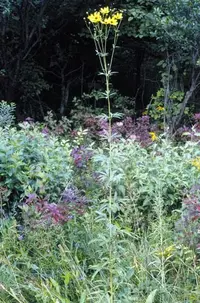
Tall tickseed, Coreopsis tripteris, is a clump-forming perennial from North America, often found in prairies, open woods, and roadsides. It typically grows upright with branched stems and narrow leaves, topped with many small yellow daisy-like flowers in late summer.

This species spreads gradually by rhizomes and self-seeding, forming airy, informal stands that attract bees and butterflies. It is generally easy to grow because it tolerates poor soils, summer heat, and short dry spells.

Tall tickseed prefers full sun, moderately moist, well-drained soil, and benefits from some wind protection due to its height. These traits make it straightforward to care for tall tickseed in most garden settings.

Main Plant Requirements

Care Difficulty

Easy Care

Light Preference

Full Sun

Water Requirements

Low Water

Temperature Preference

Cold Hardy

Hardiness Zone

3–8

Soil Texture

Sandy, Loamy, Clay

Soil pH

Acidic (5.5–6.5), Slightly acidic (6.5–7.0)

Soil Drainage

Well-drained

Fertilization

Minimal (feed rarely)

Get Personalized Care Plan

Scan your plant to receive care tips personalized for your specific plant

Available on iOS and Android

How to Care for the tall tickseed

Coreopsis tripteris performs best in open, bright conditions with long daily sun exposure.

  • Provide 6–8 hours of direct sun daily; morning sun plus light afternoon shade helps prevent stress in very hot summers.
  • Plant tall tickseed where it gets at least 4 hours of unshaded light; dense partial shade reduces flowering and causes lanky, floppy stems.
  • In cooler climates, full sun all day is ideal, while in hotter regions, protection from harsh late-afternoon sun reduces leaf scorch and drought stress.

Coreopsis tripteris prefers moderately dry to evenly moist soil rather than constant saturation.

  • Allow the top 3–5 cm of soil to dry before watering again; the plant should not sit in standing water at any time.
  • During the first growing season, water deeply when foliage begins to droop slightly; once established, rely mainly on rainfall except in prolonged drought.
  • Use well-drained soil or amended beds to prevent root rot; yellowing lower leaves and mushy stems suggest overwatering, while crisp, browning tips indicate underwatering.

This species is a hardy perennial adapted to a wide outdoor temperature range in temperate climates.

  • Active growth and flowering occur best around 65–80°F (18–27°C), typical of late spring through late summer in many regions.
  • The plant tolerates winter lows below 0°F (-18°C) once dormant, but new spring shoots are sensitive to hard frost and may be damaged by sudden cold snaps.
  • In hot spells above 90°F (32°C), flowering can slow and foliage may wilt midday; mulching and consistent soil moisture help buffer extreme heat.

This species handles low to moderately humid air and rarely needs special humidity management outdoors.

This tall perennial prefers moderately fertile, well-drained soil that never stays waterlogged.

  • Use a loose loam or sandy loam with 20–30% compost to balance fertility and drainage.
  • Aim for slightly acidic to neutral pH, around 6.0–7.5, which supports nutrient uptake for Coreopsis tripteris.
  • In heavier ground, mix in coarse sand or fine gravel to improve aeration and reduce standing water around roots.
  • Avoid compacted clay, sites that puddle after rain, or mixes rich in peat that hold prolonged moisture.

This species can grow in containers if the pot is large and stable enough for its height.

  • Choose a deep, heavy container at least 30–40 cm wide to counteract wind and top-heavy stems.
  • Use a fast-draining mix of standard potting soil with 25–40% coarse sand or grit to prevent soggy roots.
  • Position the container where it will not tip, such as against a wall or railing, if exposed to strong wind.

Coreopsis tripteris needs only light feeding in average garden soil to maintain healthy flowering growth.

  • Apply a thin layer of compost or well-rotted manure around plants in early spring to refresh nutrients.
  • Use a balanced slow-release fertilizer (e.g., 10-10-10) once in spring at half the label rate in poorer soils.
  • Avoid additional feeding after late summer so tall tickseed can harden off before cold weather.
  • Do not fertilize during winter dormancy; excess nutrients can weaken stems and reduce long-term vigor.

Pruning Coreopsis tripteris helps maintain height control, tidier form, and prolonged blooming.

  • Deadhead spent flower stems through summer using clean hand pruners to encourage continued flowering.
  • In late fall or very early spring, cut back dead, brown stems to near ground level to refresh growth.
  • Remove damaged, weak, or badly crossing stems at the base to improve air flow and reduce disease risk.
  • If plants flop, lightly shear or stake midseason to support upright growth while preserving flower display.

This species is usually grown in the ground, so transplanting mature clumps is more common than container repotting.

  • Plan divisions or transplants in early spring or early fall when temperatures are mild and soil is workable.
  • Look for overcrowded clumps, reduced flowering, or slow growth as signs that plants benefit from lifting and dividing.
  • Dig widely around the clump, lift carefully, and split into sections with several shoots and healthy roots each.
  • Replant divisions at the same depth, water thoroughly, and keep soil evenly moist for 2–3 weeks to limit transplant stress.

Coreopsis tripteris is most often propagated by division or seed under suitable outdoor conditions.

  • Divide established clumps in early spring or early fall, replanting sections promptly into prepared soil.
  • Collect ripe seeds from dry flower heads, then sow outdoors in fall or early spring for natural cold stratification.
  • Provide well-drained soil and consistent light moisture for divisions and seedlings until established.
  • For indoor seed starting, chill seeds in moist medium for 4–6 weeks, then germinate under bright light and moderate warmth.

This hardy perennial needs minimal winter care in most temperate climates.

  • Plants tolerate typical freezing conditions in USDA zones where they are commonly grown.
  • After hard frost, stems can be left standing for wildlife interest or cut back to 5–10 cm for a neater look.
  • Apply a 5–7 cm mulch layer around the root zone in late fall, especially in colder or exposed sites.
  • Container-grown plants benefit from moving to a sheltered, unheated but frost-free area to prevent root damage.

Care Tips

Staking Tall Stems

Install discreet stakes or a low peony ring early in the season and loosely tie stems with soft garden ties to prevent lodging in wind and heavy rain once plants reach 60–90 cm.

Managed Self-Seeding

Leave some seed heads on sturdy stems to dry fully, then shake them over desired areas or collect and store the seed to intentionally direct where new plants appear instead of letting them spread randomly.

Division For Vigor

Every 3–4 years in early spring or fall, lift and divide congested clumps with a sharp spade, replanting only the most vigorous outer sections to maintain strong flowering and prevent overcrowding.

Targeted Deadheading

Rather than shearing the whole plant, selectively remove only the spent upper flower clusters to encourage a lighter flush of new blooms while preserving height and structure.

Seasonal Pest Checks

During warm, humid periods, inspect lower foliage weekly for leaf spots or aphids and promptly remove affected leaves or use a targeted insecticidal soap so that caring for tall tickseed remains low-maintenance over time.

Common Pests and Diseases

Aster yellows

This disease is caused by a phytoplasma that disrupts normal growth, leading to distorted, stunted stems and deformed, chlorotic flower heads. Symptoms include green, malformed blooms, witches-broom growth, and general loss of vigor.

Solution

Remove and destroy symptomatic plants as soon as they are recognized, since there is no cure once infected. Control leafhopper vectors with insecticidal soap or pyrethrin-based sprays, reduce nearby weedy hosts, and avoid replanting Coreopsis tripteris in the same spot if infection was severe.

Leafhoppers

These insects feed on plant sap, causing pale stippling, leaf curling, and sometimes transmitting aster yellows. Symptoms include scattered yellow or white spots on foliage and sudden decline in overall plant vigor.

Solution

Use a strong stream of water to dislodge adults and nymphs from stems, then monitor regularly. If populations stay high, apply insecticidal soap or a neem oil product in the evening, ensuring good coverage of both leaf surfaces, and keep nearby weeds in check to reduce breeding sites.

Powdery mildew

This disease appears as white, powdery patches on leaves and stems, often during warm days with cool, humid nights. Symptoms include dull, gray-green foliage that may yellow and decline prematurely.

Solution

Improve air circulation by thinning crowded stems and avoiding overhead watering, especially in the evening. Remove heavily infected leaves, clean up plant debris in fall, and use a labeled fungicidal spray such as potassium bicarbonate or neem oil at the first sign of infection if conditions remain favorable for disease.

Leaf spot

This disease causes small brown, tan, or purple spots on leaves that can merge into larger blotches, reducing photosynthesis. Symptoms include premature leaf drop and a somewhat tattered, thin-looking clump later in the season.

Solution

Remove and discard affected leaves, especially at the end of the season, to reduce overwintering spores. Water at the soil level, increase spacing for better airflow, and, in recurring cases, apply a copper-based or chlorothalonil fungicide according to label directions during prolonged wet periods.

Aphids

These insects cluster on young stems and flower stalks, extracting sap and excreting sticky honeydew that can attract sooty mold. Symptoms include distorted new growth, sticky residue, and presence of ants tending the aphids.

Solution

Spray colonies off with a firm stream of water, repeating every few days until numbers drop. For persistent infestations, use insecticidal soap or horticultural oil, making sure to coat the undersides of leaves and tender shoot tips while avoiding treatments during high heat to prevent leaf burn.

Interesting Facts

Wind-adapted flowering stalks

The tall, slender stems of this species can reach 150–200 cm and flex easily in the wind, allowing the flower heads to sway without breaking, which helps protect the plant in exposed prairie and roadside habitats.

Specialist bee visitor

In its native range, this species is an important pollen source for the specialist bee Andrena beameri, which relies heavily on Coreopsis pollen during its flight period.

Late-season nectar resource

This plant typically blooms from mid to late summer into early fall in many regions, providing nectar and pollen for butterflies and other insects when many earlier-blooming prairie species have already finished.

Botan icon

Did you know?

This species is naturally distributed across a broad swath of eastern and central North America, from dry upland prairies to open woodland edges and roadsides, which shows a high ecological tolerance compared with many other coreopsis species that occupy narrower habitat niches.

FAQs about tall tickseed

This species spreads steadily by self-seeding and short rhizomes, forming large clumps over time. It is usually manageable in home gardens if spent flower heads are removed and unwanted seedlings are pulled each season.

Grow Healthy Plants with Botan Care

Keep your plants happy and healthy with plant identification, disease detection, and easy care guidance.

Botan plant care app — identify plants on mobile

Explore More Plants