Autumn ground marking
Mark clump locations with discreet labels or stones in late summer so you do not disturb the dormant crowns when digging, mulching, or replanting nearby in autumn and winter.

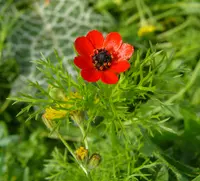
Yellow pheasant's-eye, Adonis microcarpa, is a small annual wildflower from the Mediterranean region and parts of Western Asia. It typically grows in open fields, rocky slopes, and light scrub.
The plant forms upright stems with finely divided, feathery foliage and bright yellow, glossy, daisy-like flowers in early spring. Its compact size and showy blooms make it suitable for rock gardens and naturalistic plantings.
This species prefers sunny, open sites with well-drained, often calcareous or sandy soil and does not tolerate waterlogging. Due to its need for specific drainage and a marked dry period, some gardeners find it moderately challenging to care for Yellow Pheasant's-eye.

Care Difficulty
Moderate Care

Light Preference
Full Sun

Water Requirements
Moderate Water

Temperature Preference
Cool Climate

Hardiness Zone
6–8

Soil Texture
Sandy, Loamy, Rocky

Soil pH
Slightly acidic (6.5–7.0), Neutral (7.0)

Soil Drainage
Well-drained

Fertilization
Minimal (feed rarely)
Scan your plant to receive care tips personalized for your specific plant
Available on iOS and Android
This spring-blooming perennial prefers bright, cool sun to light shade in open garden sites.
This species prefers evenly moist but never waterlogged soil during its active spring growth.
This hardy perennial is adapted to cool winters and mild springs, with good tolerance of seasonal outdoor variation.
Humidity is not a major factor for Adonis microcarpa, which is adapted to relatively dry air.
Adonis microcarpa prefers light, fast-draining mineral soils that do not stay wet.
This species can be grown in containers if the pot mimics its preference for shallow, sharply drained conditions.
This spring-blooming perennial from poor soils needs only light feeding in cultivation, so caring for Yellow Pheasant's-eye focuses more on soil quality than fertilizer.
Adonis microcarpa requires very little pruning, mainly cleanup after flowering.
This species is best left undisturbed, so transplanting should be rare and carefully timed.
Adonis microcarpa is usually propagated from seed, with division used sparingly due to its dislike of disturbance.
This hardy perennial tolerates typical temperate winters and usually needs minimal attention once established.

Plant Health Check
Not sure what's wrong with your plant? Check your plant's health inside the app.
This annual species is native to the eastern Mediterranean region, where it grows in open fields, disturbed soils, and light scrub, often appearing after seasonal rains.
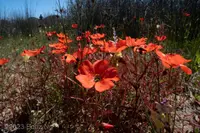
It produces solitary, vivid red flowers with a dark basal blotch in early spring, contributing to colorful spring displays in its native grassland and steppe-like habitats.
As a member of the Ranunculaceae (buttercup family), it contains toxic compounds typical of the group, which help deter herbivores from feeding on the plant.

In parts of its native range, this species is considered an indicator of traditional, low-intensity agriculture, since its populations tend to decline where fields are heavily fertilized or intensively managed.
All parts of this species are poisonous if eaten. It contains cardiac glycosides, which affect the heart. Keep it away from children and pets, and avoid using it near grazing animals or in edible gardens.
Keep your plants happy and healthy with plant identification, disease detection, and easy care guidance.