Aquilegia viscosa Care

Aquilegia viscosa

About Aquilegia viscosa

Aquilegia viscosa is a perennial flowering plant in the buttercup family, known for its nodding, spurred flowers and delicate, divided foliage. It typically forms loose clumps and sends up slender flowering stems above the leaves.

This species occurs naturally in parts of southern Europe, often in mountain or subalpine habitats on rocky, lime-rich soils. It is generally moderate in difficulty, as it needs cool conditions, consistent moisture, and well-drained soil to thrive.

Gardeners who learn how to care for Aquilegia viscosa usually focus on providing dappled light, avoiding extreme heat, and protecting plants from prolonged drought or waterlogging.

Main Plant Requirements

Care Difficulty

Moderate Care

Light Preference

Partial Shade

Water Requirements

Moderate Water

Temperature Preference

Cool Climate

Hardiness Zone

5–8

Soil Texture

Sandy, Loamy, Rocky

Soil pH

Acidic (5.5–6.5), Slightly acidic (6.5–7.0)

Soil Drainage

Well-drained

Fertilization

Minimal (feed rarely)

Get Personalized Care Plan

Scan your plant to receive care tips personalized for your specific plant

Available on iOS and Android

How to Care for the Aquilegia viscosa

This mountain columbine prefers bright conditions with protection from harsh midday sun.

  • Provide 4–6 hours of direct morning sun with light or dappled shade from midday onward, especially in warmer regions.
  • Tolerates partial shade, but in very dense shade flowering declines and stems stretch; choose a spot with shifting or filtered light under open trees.
  • In hot summers, reduce exposure to strong afternoon sun to prevent leaf scorch and premature wilting, but avoid deep shade that keeps foliage damp for long periods.

This species prefers steadily moist but not saturated soil, especially during active growth and flowering.

  • Water when the top 3–5 cm of soil feels dry, aiming for consistently damp soil around the roots without standing water.
  • Increase watering in late spring and early summer when flowering, then allow slightly drier conditions after flowering while avoiding complete soil drying.
  • Watch for yellowing, limp foliage and persistent wet soil as signs of overwatering, and crisp, drooping leaves plus dry, crumbly soil as signs of underwatering around Aquilegia viscosa.

This hardy perennial is adapted to cool to mild climates with distinct seasons.

  • Optimal growth occurs in 55–70°F (13–21°C), with best flowering where summers stay relatively cool and nights regularly drop below 60°F (16°C).
  • Established plants tolerate winter lows near 0°F (−18°C) under reliable snow cover or mulch, but young plants benefit from protection during their first cold season.
  • Heat above 85°F (29°C) can stress plants; provide afternoon shade and maintain soil moisture during hot spells to reduce leaf scorch and early dieback.

This species tolerates a wide humidity range and rarely needs special humidity management outdoors.

  • Target 40–60% humidity, which is typical of most outdoor garden conditions in temperate climates.
  • Plants tolerate short dry spells in the air, but prolonged hot, very dry winds can cause marginal leaf scorch and quicker wilting.
  • In unusually arid spots, group plants with other perennials or use low windbreaks to slightly raise local humidity and reduce leaf moisture loss.

Aquilegia viscosa prefers loose, humus-rich, well-drained soil that stays evenly moist but not waterlogged.

  • Use a loamy mix with 40–50% garden loam, 30–40% mature compost, and 10–20% sharp sand to keep the structure open and moisture-retentive without becoming heavy.
  • Aim for slightly acidic to neutral pH around 6.0–7.0, avoiding strongly alkaline soils that can reduce nutrient availability and weaken growth.
  • Improve drainage in heavy clay by incorporating coarse sand or fine grit plus organic matter into the top 20–25 cm before planting.
  • Avoid compacted, soggy, or purely sandy soil, since poor aeration or fast drying stresses roots and shortens the plant’s flowering life.

This species can be grown in containers outdoors for short-term ornamental display.

  • Choose a container at least 25–30 cm deep to accommodate the taproot and prevent the plant from becoming unstable in wind.
  • Use a heavier material pot, such as clay or ceramic, to reduce tipping and slightly increase moisture buffering in sunny, exposed sites.
  • Elevate the pot on risers so drainage holes stay clear, which helps excess water escape quickly and prevents root zone stagnation after rain.

This woodland perennial usually manages with modest nutrition, so fertilizing Aquilegia viscosa should stay light and targeted.

  • Use a balanced, slow-release fertilizer (around 10-10-10) or a thin topdress of compost in early spring.
  • Feed once at spring growth, then again lightly in early summer if soil is poor or flowering is weak.
  • Dilute liquid feeds to 1/2 strength to avoid soft, floppy growth and salt buildup in the root zone.
  • Stop feeding in late summer so plants can harden off before dormancy and remain unfertilized in winter.

Pruning Aquilegia viscosa is simple and focuses on cleanliness and extending the flowering display.

  • In late spring to early summer, deadhead spent flower stems down to a leafy node to encourage further blooms and reduce self-seeding.
  • Remove dead, damaged, or diseased foliage whenever seen, using clean, sharp scissors or hand pruners.
  • After flowering, cut back straggly or yellowing leaves to improve shape and airflow, leaving healthy basal foliage.
  • In late autumn, trim old, collapsed stems at ground level, allowing new basal growth to overwinter undisturbed.

This species is better suited to garden beds than long-term containers, so focus Aquilegia viscosa care on careful outdoor transplanting.

  • Plan transplanting for early spring or early autumn, when temperatures are mild and soil is moist but not waterlogged.
  • Look for signs like stalled growth or roots circling a small nursery pot as indicators that planting out or upsizing is needed.
  • Lift plants with a wide soil ball, disturb roots as little as possible, and replant at the same depth to limit shock.
  • Water thoroughly after transplanting, then keep soil evenly moist and shaded for 1–2 weeks while roots re-establish.

Propagation of Aquilegia viscosa is most practical from seeds, with some potential for careful division of mature clumps.

  • Sow fresh seeds in late summer to autumn in trays or pots outdoors, allowing natural cold stratification over winter.
  • Use a free-draining seed mix, keep it just moist, and provide bright, indirect light for germination in spring.
  • Transplant seedlings when they have 2–3 true leaves, handling roots gently to avoid disturbance.
  • Divide established clumps only in early spring, lifting with a broad soil ball and replanting divisions immediately.

This hardy perennial tolerates normal winter conditions in most temperate gardens and usually needs minimal special care.

  • Aquilegia viscosa foliage naturally dies back after frost; remove mushy leaves to reduce disease carryover.
  • Apply a light mulch layer (2–5 cm) of leaves or compost over the root zone in late autumn, especially in colder regions.
  • Container-grown plants in very cold areas benefit from moving against a sheltered wall or into an unheated garage to avoid root freeze.

Care Tips

Prevent crown rot

Plant slightly raised above surrounding soil level and keep mulch pulled back 5–8 cm from the crown to reduce excess moisture around the growing point and prevent rot in heavy or wet sites.

Encourage self‑seeding

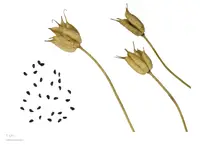
After peak bloom, leave some spent flower stems standing until seed pods brown and begin to split, then shake or crumble them over nearby bare soil to maintain a natural colony without replanting each year.

Control leaf miners

Inspect foliage weekly in spring for pale, winding trails and immediately remove and dispose of affected leaves to break the life cycle of columbine leaf miner before damage spreads across the clump.

Support in exposed sites

In windy or sloping gardens, insert discreet thin stakes behind taller flowering stems and tie them loosely with soft ties to prevent lodging and stem breakage during storms.

Plan for short lifespan

Because individual plants are relatively short‑lived, stagger sowing or planting every 1–2 years in nearby pockets of soil so that caring for Aquilegia viscosa results in a continuous display as older plants decline.

Common Pests and Diseases

Leaf miners

This pest tunnels inside columbine leaves, creating pale, winding trails that reduce photosynthesis and weaken the plant.

Solution

Remove and destroy affected leaves as soon as tunnels appear to break the life cycle, and keep plants vigorous with consistent watering and nutrition. In areas with recurring problems, use fine mesh or row covers over young plants in spring and introduce or encourage natural predators such as parasitic wasps rather than using broad-spectrum insecticides.

Powdery mildew

This disease causes a white, powdery coating on leaves, often starting on lower foliage in crowded or shaded plantings and leading to yellowing and premature leaf drop.

Solution

Improve air circulation by thinning crowded plants and avoid overhead watering, especially in the evening. Remove and discard heavily infected leaves, then apply a sulfur or potassium bicarbonate fungicide labeled for ornamentals if conditions stay humid and mild.

Columbine sawfly

These insects defoliate plants by chewing along leaf edges and between veins, often leaving foliage skeletonized in late spring or early summer.

Solution

Inspect plants regularly in late spring and handpick or shake larvae into a container of soapy water at the first signs of damage. For heavy infestations, use a targeted insecticidal soap or spinosad spray, coating the undersides of leaves and repeating according to label directions to protect the foliage when growing Aquilegia viscosa in mixed borders.

Downy mildew

This disease produces yellow or pale blotches on the upper leaf surface with a grayish, fuzzy growth underneath, leading to distorted leaves and plant decline in cool, damp weather.

Solution

Remove and discard infected leaves promptly and avoid overhead irrigation to keep foliage as dry as possible. Increase spacing between plants, and in severe or repeated outbreaks consider using a phosphonate or copper-based fungicide labeled for downy mildew on ornamentals, applied preventively during cool, wet periods.

Aphids

These insects cluster on young shoots and flower stems, sucking sap and causing curling, distortion, and sticky honeydew that can lead to sooty mold on leaves.

Solution

Spray affected parts with a strong stream of water to dislodge aphids, and prune out heavily infested shoot tips. If populations remain high, apply insecticidal soap or horticultural oil, making sure to cover all sides of the leaves and stems and repeating as needed according to label instructions.

Interesting Facts

Endemic Pyrenean species

Aquilegia viscosa is a narrow endemic columbine restricted to high mountain areas of the central and eastern Pyrenees, where it grows on moist, shaded rock ledges and montane stream banks.

Sticky leaf surfaces

The leaves and stems bear glandular hairs that exude a sticky substance, which can trap small insects and detritus and may help reduce herbivory or pathogen spread.

Hybridization with relatives

In the wild, this species can hybridize with other Aquilegia taxa occurring in the Pyrenees, which sometimes produces intermediate forms and complicates field identification for botanists.

FAQs about Aquilegia viscosa

Poor flowering is usually linked to too much shade, nutrient‑rich soil with excess nitrogen, or plants that are still immature. Older clumps may also bloom less and benefit from division and replanting every few years.

Grow Healthy Plants with Botan Care

Keep your plants happy and healthy with plant identification, disease detection, and easy care guidance.

Botan plant care app — identify plants on mobile

Explore More Plants