silver sage Care (Salvia argentea)

silver sage

About silver sage

Silver sage, Salvia argentea, is a short-lived perennial herb grown mainly for its striking silver-white foliage. It forms a low, wide rosette of large, soft, felted leaves that create a bold, textural accent in borders or gravel gardens.

In its native range around the Mediterranean, it grows in sunny, dry, well-drained sites, which explains its preference for similar conditions in cultivation. Once established, it is fairly drought tolerant but dislikes heavy, wet soils.

Gardeners who learn how to care for silver sage usually find it reasonably easy, provided it has plenty of light and good drainage. It is often treated as a biennial or short-lived ornamental rather than a long-term landscape plant.

Main Plant Requirements

Care Difficulty

Moderate Care

Light Preference

Full Sun

Water Requirements

Low Water

Temperature Preference

Cool Climate

Hardiness Zone

5–8

Soil Texture

Sandy, Loamy, Rocky

Soil pH

Slightly acidic (6.5–7.0), Slightly alkaline (7.0–7.5)

Soil Drainage

Well-drained

Fertilization

Minimal (feed rarely)

Get Personalized Care Plan

Scan your plant to receive care tips personalized for your specific plant

Available on iOS and Android

How to Care for the silver sage

This Mediterranean species needs strong light to keep its leaves compact and silvery.

  • Provide 6–8 hours of direct sun daily; morning and midday sun suit silver sage best in most temperate climates.
  • In very hot regions, give full sun until early afternoon, then light shade to prevent leaf scorch and excessive wilting.
  • Avoid deep shade; plants grown with fewer than 4–5 hours of direct sun become leggy, flatten out, and lose dense hairiness.

This plant prefers dryish conditions and is sensitive to persistent moisture around the roots.

  • Water only when the top 3–5 cm of soil are completely dry; in free-draining ground this often means several days to a week between deep soakings in summer.
  • Use sharply drained soil or raised beds so excess water runs off quickly; Salvia argentea rots easily in heavy clay or waterlogged sites.
  • Reduce watering strongly in cool or wet seasons; yellowing, limp foliage and a sour smell indicate overwatering, while crisp, drooping leaves signal underwatering.

This Mediterranean biennial handles a range of outdoor temperatures but dislikes extreme cold and prolonged humidity.

  • Ideal growing temperatures are 65–80°F (18–27°C), which support compact rosettes and healthy root growth.
  • Plants tolerate brief light frosts down to about 20–25°F (-6 to -4°C) if soil drains well, but prolonged freezes may kill the crown.
  • Silver foliage endures dry heat up to about 90–95°F (32–35°C) if soil is not soggy, though extended hot, humid spells increase rot risk; provide air movement in such periods.

This species prefers dry air and rarely needs humidity adjustment when grown outdoors.

  • Aim for 30–50% humidity; avoid persistently damp, enclosed spots such as unventilated bathrooms or tight terrariums.
  • Dry indoor air is usually tolerated, but prolonged exposure above 60% humidity can favor leaf rot at the woolly surface.
  • If leaves stay wet and begin browning at the base, increase air flow with a fan or more spacing rather than adding moisture.

Salvia argentea grows best in lean, very free-draining soil that mimics its native rocky habitats.

  • Use a gritty mix such as 50–60% sandy or loamy garden soil blended with 40–50% mineral material like coarse sand, fine gravel, or perlite.
  • Aim for slightly alkaline to neutral pH around 6.8–7.5, avoiding strongly acidic mixes that reduce vigor and resilience.
  • Incorporate only a small amount of mature compost, around 10–20%, to supply nutrients without creating waterlogged, organic-heavy conditions.
  • Avoid heavy clay, peat-dominant, or compacted soils; if existing soil is dense, raise the planting area and mix in sharp sand and gravel to improve aeration and drainage.

This species can be grown in containers if the pot is set up to drain and dry quickly.

  • Choose a wide, shallow pot that allows the rosette to spread while keeping the root zone close to the surface, where it dries faster between waterings.
  • Select unglazed terracotta rather than plastic or glazed ceramic so the pot walls wick away excess moisture from the root zone.
  • Place the container on pot feet or bricks so drainage holes stay clear and water cannot pool under the base after rain or watering.

This drought-tolerant perennial needs only light feeding to maintain healthy rosettes and foliage.

  • Use a balanced, low-strength fertilizer (around 10-10-10) or a thin layer of compost in spring as new growth starts.
  • Apply once at the beginning of the growing season; a second light feed in midsummer is enough for caring for silver sage.
  • Dilute liquid fertilizer to 1/2–1/4 strength to avoid soft, weak growth and salt buildup in the soil.
  • Stop feeding in late summer and do not fertilize during winter dormancy to let plants harden and rest.

Pruning helps maintain a compact, healthy Salvia argentea rosette and reduces fungal problems.

  • Cut back spent flower stalks to the base in late summer to conserve energy and keep plants tidy.
  • Remove dead, diseased, or badly damaged leaves whenever seen using clean, sharp scissors or hand pruners.
  • Thin out congested inner leaves slightly in dry weather to improve air flow and reduce rot risk.
  • Avoid cutting deeply into the crown; focus on surface leaves so the growing point stays intact.

This species is usually grown in the ground, so focus on careful transplanting rather than frequent repotting.

  • Transplant young plants in spring once frost risk has passed, when roots just fill their cells but are not circling heavily.
  • Choose a sunny, sharply drained site, amending heavy soil with grit or coarse sand to prevent winter wet around the crown.
  • Lift plants with a generous soil ball, handle the brittle taproot gently, and replant at the same depth to reduce shock.
  • Water in once to settle soil, then keep only slightly moist; avoid overwatering while roots re-establish over 1–2 weeks.

Most gardeners renew this short-lived perennial by seed rather than division.

  • Sow fresh seeds in late winter to early spring under cover at 60–68°F in bright, indirect light.
  • Use a very free-draining mix, barely cover the seed, and keep evenly but lightly moist until germination in 2–4 weeks.
  • Prick out seedlings once they have 2–3 true leaves, pot into individual cells, and harden off gradually before planting out.
  • Division is rarely successful because the plant forms a single taproot and resents disturbing mature roots.

This plant tolerates moderate cold but struggles in wet, freezing conditions.

  • Hardy to about 10–15°F when grown in very free-draining soil; prolonged wet frost increases crown rot risk.
  • In late fall, apply a light, dry mulch of gravel or coarse bark around, not on top of, the crown.
  • Avoid heavy organic mulches that trap moisture against the leaves over winter.
  • Move container plants under a cold frame or unheated porch to keep them cold but relatively dry.

Care Tips

Rosette protection

Place a flat stone or gravel mulch directly under the rosette to keep the woolly leaves off wet soil and reduce rot in the crown during rainy periods.

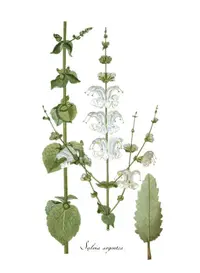
Flower spike timing

If the goal is longer-lived foliage, cut emerging flower spikes when they are 10–15 cm tall to delay flowering and extend the plant’s vegetative life.

Winter wet management

In regions with cold, wet winters, grow Salvia argentea on a slight mound or raised bed and avoid overhead irrigation from late fall to early spring to prevent crown and root rot.

Self-seeding control

If you do not want it to self-sow, remove spent flower spikes before seed set; if you do, leave a few to mature, then shake the dry spikes over the desired area and lightly press seeds into the soil surface.

Pest monitoring routine

During active growth, inspect the undersides of leaves weekly for aphids and caterpillars, and remove pests by hand or with a targeted insecticidal soap spray before they damage the felted foliage, which is important when caring for silver sage.

Common Pests and Diseases

Powdery mildew

This disease often appears in humid, still conditions on the felted leaves, even when soil is relatively dry. Symptoms include white, floury patches on the upper leaf surfaces that can distort or stunt new growth.

Solution

Remove and discard heavily infected leaves and avoid overhead watering so foliage stays as dry as possible. Improve air circulation around plants, thin crowded rosettes, and, if needed, apply a sulfur or potassium bicarbonate fungicide labeled for ornamentals according to product instructions as part of broader Salvia argentea care instructions.

Downy mildew

This disease favors cool, damp weather and dense foliage. Symptoms include pale or yellow blotches on the upper leaf surface with grayish or purplish fuzzy growth on the underside, causing leaves to collapse early.

Solution

Promptly remove affected leaves and debris, then space plants to allow faster drying after rain or irrigation. Water at the base in the morning, not in the evening, and in severe or recurring cases use a phosphonate or copper-based fungicide labeled for downy mildew, rotating products to reduce resistance risk.

Aphids

These insects cluster on young stems and leaf bases, feeding on sap and distorting the soft, silvery foliage. This pest also excretes sticky honeydew that can attract sooty mold on the hairy leaves.

Solution

Dislodge colonies by spraying the plant with a firm stream of water, then repeat every few days as needed. For persistent infestations, treat with insecticidal soap or a light horticultural oil, making sure to coat the undersides of leaves while avoiding spraying during high heat or direct midday sun.

Spider mites

These pests are more common in hot, dry spots and can be hard to see on the dense hairs of the leaves. Symptoms include fine speckling, a dull or bronzed look to the foliage, and very fine webbing between leaves or at the crown.

Solution

Increase ambient humidity slightly around the plant and rinse foliage thoroughly with water, focusing on the undersides of leaves. If damage continues, apply insecticidal soap or a miticide labeled for spider mites, repeating at intervals to catch newly hatched mites while also reducing heat and drought stress.

Leaf spot

This disease develops as irregular brown or tan lesions on the broad, woolly leaves, often starting where moisture lingers longest. Symptoms include spotting that can coalesce into larger dead patches, causing leaves to yellow and die back prematurely.

Solution

Remove and dispose of spotted leaves and any dense mat of old foliage at the plant base to reduce humidity and inoculum. Water at soil level, improve airflow around rosettes, and if the problem persists, apply a broad-spectrum fungicide labeled for foliar leaf spots, following label directions and avoiding unnecessary repeat treatments.

Interesting Facts

Basal rosette specialist

This species forms a large, flat rosette of felted leaves that can reach around 60 cm across, while flowering stems appear only in its second year and then the plant usually dies after setting seed, making it functionally biennial or short-lived perennial.

Extreme leaf hairiness

Its silvery, woolly look comes from a very dense covering of non-glandular hairs that reflect light, reduce water loss, and protect the leaf surface from intense sun and wind in its native Mediterranean habitats.

Mediterranean dry-steppe native

Salvia argentea occurs naturally on dry, rocky slopes and open grasslands in southern Europe, especially around the Mediterranean basin, where it is adapted to shallow, well-drained, often calcareous soils with hot, dry summers.

Botan icon

Did you know?

In some European botanical and ornamental gardening traditions, Salvia argentea has been valued primarily for its foliage architecture, and plantings are sometimes cut back before flowering to prolong the dramatic silver rosette stage rather than grown for their tall, relatively inconspicuous flower spikes.

FAQs about silver sage

Lack of flowering often comes from too much shade, rich nitrogen-heavy soil, or excessive watering. This species blooms best in full sun, lean well-drained soil, and after experiencing a period of cool conditions over winter.

Grow Healthy Plants with Botan Care

Keep your plants happy and healthy with plant identification, disease detection, and easy care guidance.

Botan plant care app — identify plants on mobile

Explore More Plants