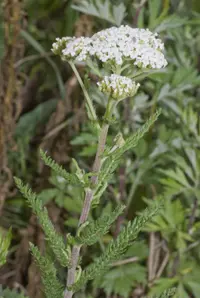
rattlesnake master Care (Eryngium yuccifolium)

Also known as: rattlesnake master, button snake-root
rattlesnake master

About rattlesnake master

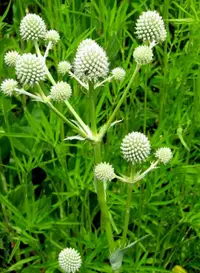
Rattlesnake master, Eryngium yuccifolium, is a long-lived prairie perennial in the carrot family, valued for its tough nature and unusual texture. It forms clumps of stiff, narrow, yucca-like leaves and sends up tall, branched stems topped with round, pale green to whitish flower heads. Native to tallgrass prairies and open meadows of central and eastern North America, it supports many pollinators, especially bees and butterflies. This species prefers full sun, lean to moderately fertile soil, and good drainage, and it tolerates drought once established. Its durable taproot and low-maintenance habit make it relatively easy to grow for gardeners who learn how to care for rattlesnake master.

Main Plant Requirements

Care Difficulty

Easy Care

Light Preference

Full Sun

Water Requirements

Low Water

Temperature Preference

Cold Hardy

Hardiness Zone

3–8

Soil Texture

Sandy, Loamy, Rocky

Soil pH

Slightly acidic (6.5–7.0), Neutral (7.0)

Soil Drainage

Well-drained

Fertilization

Minimal (feed rarely)

Get Personalized Care Plan

Scan your plant to receive care tips personalized for your specific plant

Available on iOS and Android

How to Care for the rattlesnake master

This prairie perennial develops strongest stems and flowering when grown in bright, open conditions.

  • Provide full sun for 6–8 hours per day; rattlesnake master stays compact and flowers best in unobstructed sun exposure.
  • Tolerates light afternoon shade in hotter regions, but dense shade leads to weak, floppy growth and reduced blooming.
  • Site plants where surrounding vegetation will not cast heavy shade as trees leaf out in spring and summer, adjusting placement if stems begin leaning toward the light.

This deep-rooted species prefers dry to moderately moist conditions and is sensitive to prolonged wet soil.

  • Allow the top 5–8 cm of soil to dry between waterings; established plants in the ground often need no extra water except during extended drought.
  • Use sharply drained, sandy or gravelly soil to reduce the risk of root rot; standing water or heavy clay that stays wet is unsuitable for Eryngium yuccifolium.
  • Watch foliage for cues: yellowing, soft stems suggest overwatering, while crisp, browning leaf tips and wilting in dry soil indicate the plant needs a thorough soak.

This hardy prairie plant copes with a wide temperature range once established.

  • Active growth is strongest in 65–85°F (18–29°C); consistent warmth supports sturdy stems and abundant flower stalks.
  • Mature plants tolerate winter lows near -20°F (-29°C) in the ground, with the crown surviving underground while foliage dies back seasonally.
  • Handles summer heat up to about 95°F (35°C) if soil is well drained; in extreme heat and drought, expect slowed growth but usually no permanent damage.

Humidity is largely irrelevant for this prairie species and typical indoor or outdoor levels are acceptable.

This species prefers lean, mineral, well-drained soil that mimics dry prairie conditions.

  • Use sandy or gravelly loam with low to moderate organic matter to prevent excess moisture retention.
  • Ensure very sharp drainage; raised beds or berms help water run off quickly, especially in regions with heavy rain.
  • Keep soil pH roughly neutral to slightly alkaline (pH 6.5–7.8) and avoid strongly acidic mixes for Eryngium yuccifolium.
  • Improve aeration by blending coarse sand or fine gravel into compacted native soil and avoid heavy, unamended clay.

This species can be grown in containers, but long-term performance is usually better in open ground than in pots.

  • Choose a deep, narrow container to accommodate the strong taproot while limiting unnecessary excess surface soil that can stay wet.
  • Use a heavy, stable pot material or add weight at the base because tall flower stalks can make the container top-heavy in wind.
  • Fill with a very fast-draining mix dominated by mineral components like coarse sand and grit so water passes through within seconds.

This prairie perennial is adapted to lean soils and usually needs little or no fertilizer once established.

Pruning helps maintain tidy clumps and supports flowering performance in Eryngium yuccifolium.

  • In late winter or very early spring, cut back old, dry stems to just above ground level using clean, sharp pruners.
  • Remove any dead, broken, or diseased stems during the growing season to reduce pest and disease pressure.
  • Thin severely crowded stems at the base to improve air flow and keep the plant more upright.
  • Optional: leave some seed heads standing through winter for structure and wildlife, then cut them back before new growth.

This deep-taprooted species dislikes disturbance, so transplant Eryngium yuccifolium only when clearly necessary.

  • Look for signs like slow recovery after watering, stunted growth, or roots circling and emerging from drainage holes in containers.
  • Plan any transplanting for early spring or early fall, when temperatures are mild and soil moisture is steady.
  • Expect to transplant infrequently; choose a permanent sunny site with well-drained soil to avoid repeated moves.
  • Dig deep and wide to keep as much taproot intact as possible, replant promptly, and water thoroughly to settle soil and limit root stress.

Reproduction is most reliable from seed, although mature clumps of this species can sometimes be divided with care.

  • Collect ripe seeds in late summer, then sow outdoors in fall so natural winter cold provides stratification, which breaks dormancy.
  • For controlled sowing, cold-stratify seeds in a refrigerator for 6–8 weeks, then sow in a free-draining mix under bright light.
  • Keep the seed mix just lightly moist; germination may be slow and uneven, so maintain stable conditions.
  • Division of older plants is best attempted in early spring, splitting only large, vigorous clumps and replanting divisions immediately.

This cold-hardy prairie perennial tolerates typical winters in most temperate climates with minimal attention.

  • Rattlesnake master is hardy in-ground and handles freezing temperatures once established, especially in well-drained soil.
  • After hard frost, stems can be left standing for winter interest, then cut back in late winter before new growth.
  • In colder or exposed sites, apply a light 2–5 cm mulch after the ground cools to buffer freeze–thaw cycles, keeping mulch off the crown.
  • Container plants experience colder root temperatures, so move pots to a sheltered, unheated spot and avoid waterlogged media.

Care Tips

Deep taproot protection

Mark the planting spot clearly and avoid cultivating or digging within 30–40 cm of the crown, as the deep taproot resents disturbance and this helps the plant live longer in the same location.

Leave winter seedheads

Allow the dried flower stalks to remain through winter to protect the crown, provide wildlife habitat, and only cut them back to the basal leaves in late winter before new growth starts.

Sparse staking strategy

In windy, exposed sites, place 2–3 discreet stakes in a triangle around taller clumps and link them with green twine to support the stems without tying individual flower stalks.

Targeted division timing

Only divide established plants if absolutely necessary, and do it very early in spring while growth buds are just visible, replanting divisions immediately at the same depth to reduce taproot shock.

Self‑seeding management

If you want controlled patches instead of random seedlings, deadhead most flower heads after they brown and leave just a few to set seed where you want to grow Eryngium yuccifolium.

Common Pests and Diseases

Leaf spot

This disease causes scattered brown or black lesions on leaves that may merge and lead to premature leaf decline, especially in humid or wet conditions.

Solution

Remove and discard affected leaves, avoid overhead watering, and increase spacing for better air flow; in persistent cases, apply a copper- or chlorothalonil-based fungicide labeled for ornamental perennials, following the product directions carefully.

Powdery mildew

This disease produces a white or grayish powdery coating on leaves and stems, often during warm days with cool, humid nights.

Solution

Improve air circulation by thinning crowded stems and nearby plants, water at the base in the morning, and, if needed, use a sulfur or potassium bicarbonate fungicide at the first signs of infection.

Aphids

These insects cluster on young stems and flower stalks, sucking sap and causing distortion, sticky honeydew, and sometimes sooty mold on nearby surfaces.

Solution

Spray plants with a strong stream of water to dislodge colonies, remove heavily infested stems, and use insecticidal soap or a neem-based product, making sure to coat the undersides of leaves and repeating as necessary.

Spider mites

This pest is more common in hot, dry conditions and causes fine stippling on leaves, slight bronzing, and delicate webbing between leaf bases or on flower stalks.

Solution

Increase humidity around the plant with occasional overhead rinsing, hose down foliage to knock mites off, and apply insecticidal soap or horticultural oil, ensuring thorough coverage of all plant surfaces.

Leafhoppers

These insects feed on foliage and flowering stems, causing pale stippling, marginal leaf browning, and sometimes transmitting leaf yellowing or distortion.

Solution

Remove plant debris around the base to reduce hiding places, use a strong water spray to dislodge nymphs and adults, and, if needed, apply a pyrethrin-based spray in the evening when beneficial insects are less active, following label directions for Eryngium yuccifolium care.

Interesting Facts

Prairie remnant indicator

This species is strongly associated with high-quality tallgrass prairie remnants, so its presence in a field often signals that the site has never been deeply plowed or heavily disturbed.

Unusual yucca-like leaves

Despite being in the carrot family (Apiaceae), it has long, fibrous, yucca-like leaves with parallel veins, a rare leaf form within this plant family and the origin of its species name yuccifolium.

Specialist insect relationships

Its dense, bristly flower heads support specialized herbivores and pollinators, including the rattlesnake-master stem borer moth (Papaipema eryngii), which relies almost exclusively on this plant for its life cycle.

Botan icon

Did you know?

Indigenous peoples of the central United States historically used the tough leaf fibers of this species to make cordage and woven items, taking advantage of the plant’s unusually strong, yucca-like foliage.

FAQs about rattlesnake master

This species spreads slowly by clump expansion and by seed, but it is not considered aggressive in typical garden conditions. Deadhead spent flowers and remove unwanted seedlings if tighter control of its spread is desired.

Grow Healthy Plants with Botan Care

Keep your plants happy and healthy with plant identification, disease detection, and easy care guidance.

Botan plant care app — identify plants on mobile

Explore More Plants